How to Review Vocabulary Fast: A One-Minute Drill
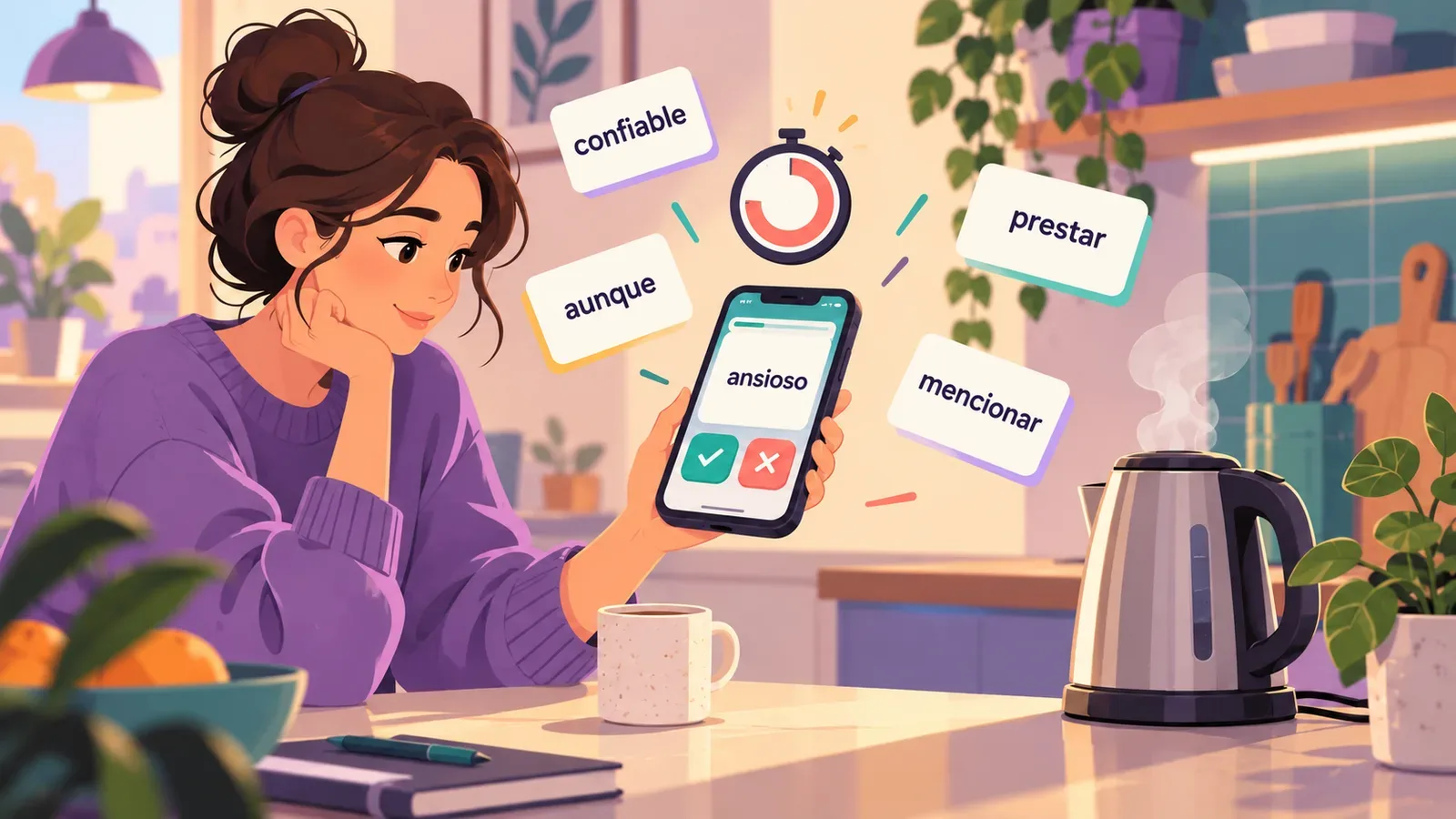
You get a spare minute many times a day: in the elevator, in line at the checkout, waiting for the kettle, while a video call loads. Usually your feed eats that minute. You can give it to vocabulary instead, and it won't be wasted as long as you know what a minute can and can't do.
The short answer: a minute is great for refreshing words you already know and catching the ones that are starting to slip. It won't teach you a new word. Below is how to set up the drill, when it's enough, and what to do with your mistakes.
What you can get done in one minute
At two or three seconds per word, a minute covers 20–30 words. That's a lot, but only if the question is simple. You see a word with a translation, decide whether it's right, and tap. No typing, no sentences.
This format trains recognition: you see confiable — reliable and confirm the pair is correct. It's weaker than recall, where you only see reliable and have to pull the Spanish word out of memory yourself. But recognition has one big advantage: it's fast, and it shows you honestly which words are getting shaky.
| Recognition | Recall | |
|---|---|---|
| What it looks like | A word and a translation: right or wrong? | You see the translation and produce the word yourself |
| Time per word | 2–3 seconds | 5–15 seconds |
| What it gives you | Refreshes words and finds the forgotten ones | Locks a word into long-term memory |
| When to use it | One-minute breaks, warm-ups | Your main review |
The difference between the two is covered in detail in the article on how to review words: recall or reread. For the one-minute drill, just keep in mind that it adds to your main review rather than replacing it.
How the one-minute drill works
- Use words you already know. Ones you studied last week or last month. At this pace, new words just flash past.
- Set a timer. Exactly 60 seconds. The limit stops you from mulling over each pair: either you know the word right away or you don't, and finding that out is useful too.
- Answer fast and don't second-guess. If you hesitate for more than a couple of seconds, count the word as a miss. A word that takes that long to come back won't show up when you're actually talking.
- Keep your mistakes. They're the real output of the minute. The words you stumbled on need to go into your regular review, where you'll have to recall them on your own.
The last step is the one people skip most often. Without it, the minute turns into a game that leaves nothing behind: you've confirmed the words you know, and the forgotten ones stay forgotten.
A ready-made option: the True or false game
You can put together cards and a timer yourself, but it's easier to use something ready-made. VibeLing has a free game, True or false, built for exactly this format. You see a Spanish word and a translation and tap "True" or "False". You get 60 seconds and three lives, and each mistake costs one.
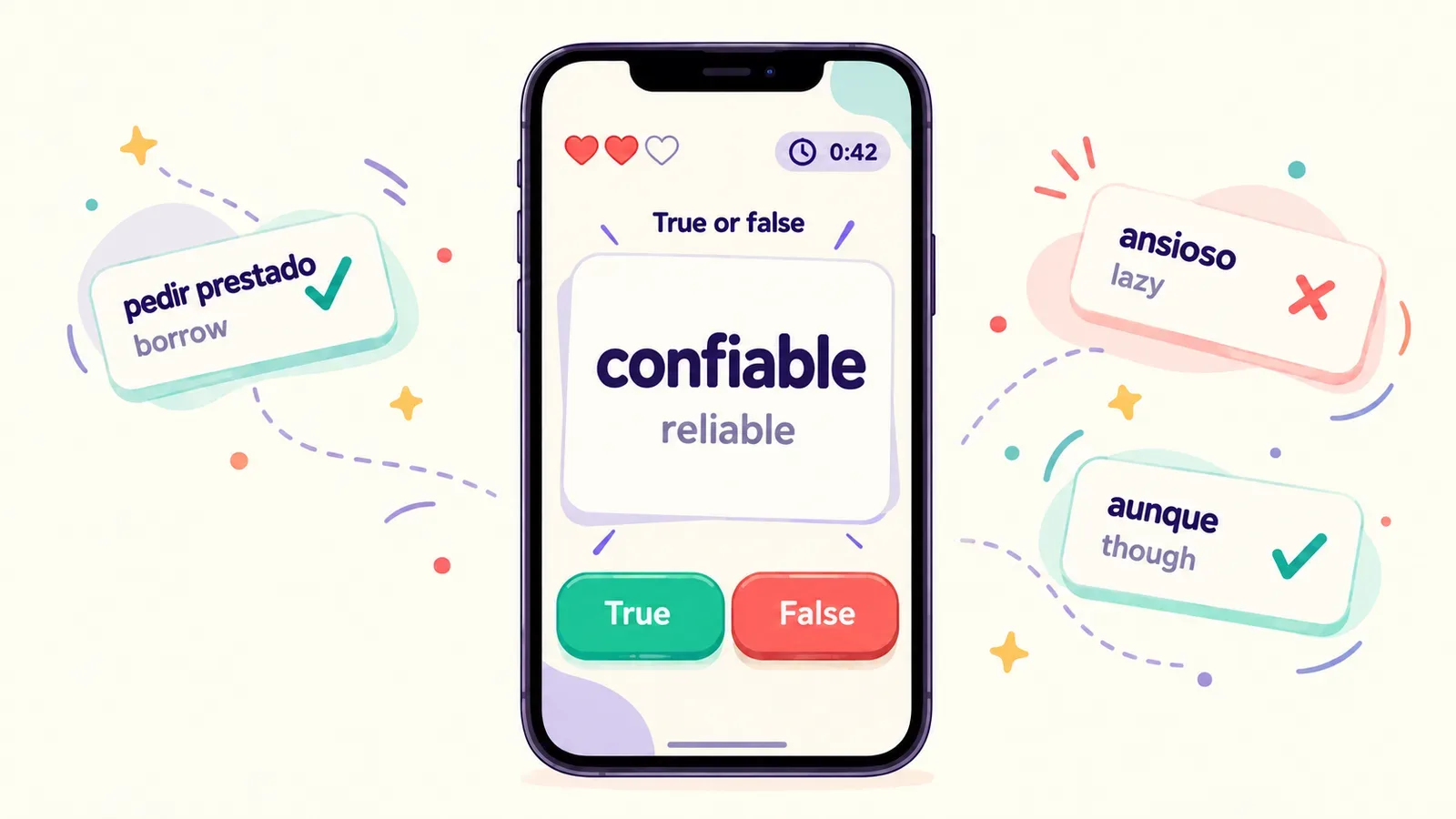
The three lives work as a filter. If you lose them in the first twenty seconds, those words aren't settled yet and deserve a calm review without a timer. If you reach the end of the minute without losing any, it's time to refresh the set because it's too easy for you now. The game runs right in the browser with no sign-up. Other one- or two-minute formats, like timed pairs or an audio sprint, are in the games section.
When a minute is enough and when it isn't
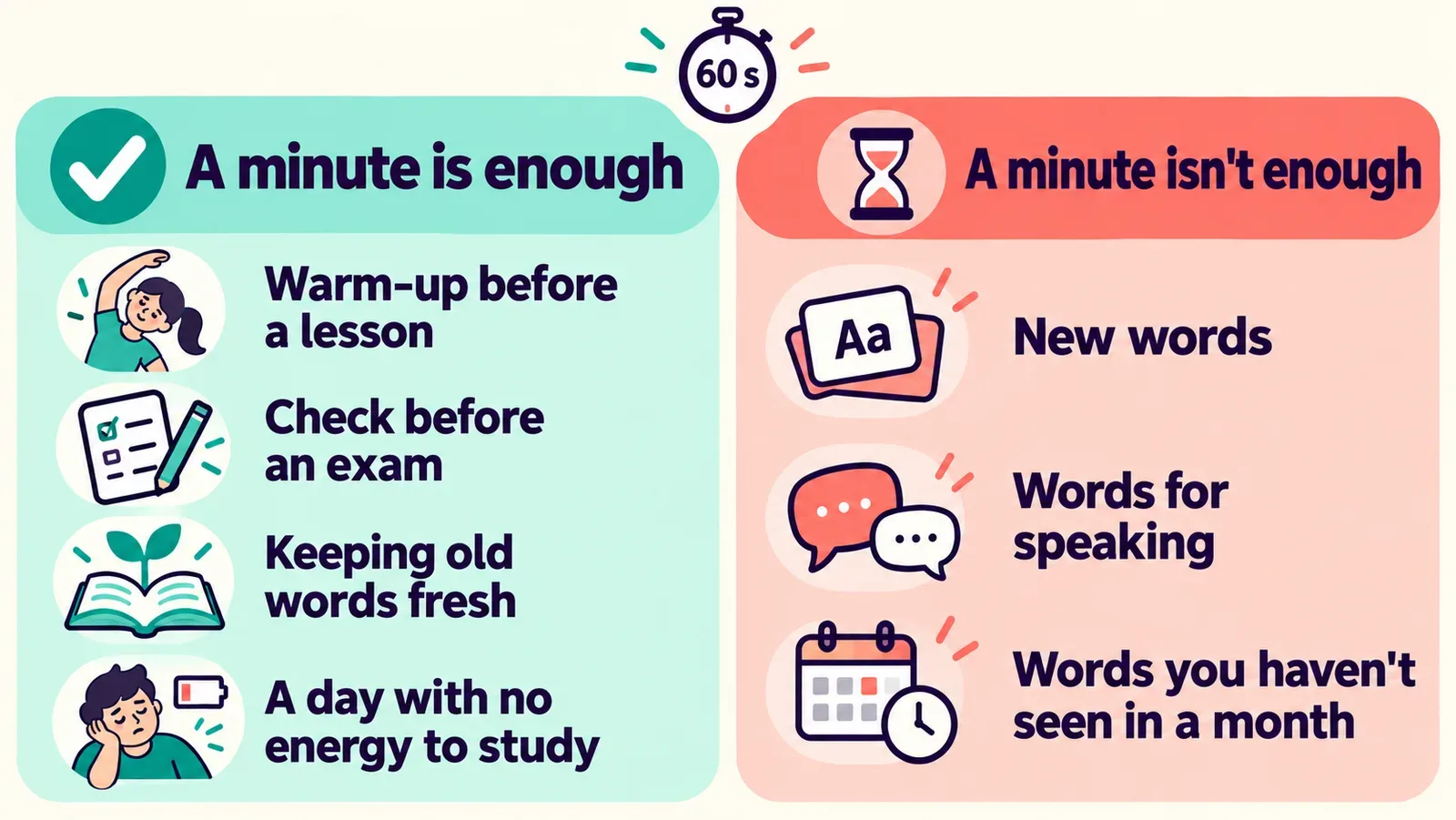
A minute works well in a few situations:
- A warm-up before a lesson. A minute of familiar words switches your head into Spanish faster than opening a textbook.
- A check before an exam or an interview. Run through a topic set quickly and see which words need attention right now.
- Keeping old words alive. Words you know well don't need long reviews. It's enough for them to cross your path now and then.
- Days when you have no energy for a real session. A minute beats skipping: your streak stays intact, and it's easier to get back to your usual routine tomorrow.
And situations where a minute falls short:
- New words. A new word needs time: reading an example, hearing how it sounds, recalling it a few times over the first days.
- Words for speaking. Recognizing a word next to its translation and putting it into a sentence yourself are different skills. The second one only grows through recall and use.
- Words you haven't seen in a long time. If a word hasn't come up for a month, one minute won't save it. You can see how quickly words fade without review on the Ebbinghaus forgetting curve.
How to fit a minute into your day
One-minute drills stick best when they're tied to something that already happens every day. Not "when I have time", but a specific moment.
| Moment | What to do |
|---|---|
| While the kettle boils | One 60-second game |
| Waiting for the elevator or the bus | Run through the words you learned yesterday |
| Before a lesson or study session | A warm-up on a familiar set |
| Before bed | Go over the day's mistakes |
Three or four of these minutes a day already add up to 60–100 words. And none of them requires you to sit down and get in the mood.
Common mistakes
- Chasing a high score. The point of the minute is to find weak words, not to rack up points. If you guess at random to go faster, the drill shows you nothing.
- Drilling the same set over and over. After a week you'll remember the pairs and their order, not the words. Refresh the set.
- Letting the minute replace everything else. If one-minute drills are all you do, your vocabulary stops growing: you keep refreshing old words while new ones never settle.
- Doing nothing with your mistakes. We covered this above, but it's the most common problem.
How to do this in VibeLing
In the app, the one-minute drill and your main review are connected. Words you missed in the game go into your personal dictionary with one tap. From there VibeLing brings them back for review on a spaced schedule, and not just in the easy "pick the translation" format, but also in recall mode, where you see a single word with no hints and have to answer honestly: "Remember" or "Don't remember".
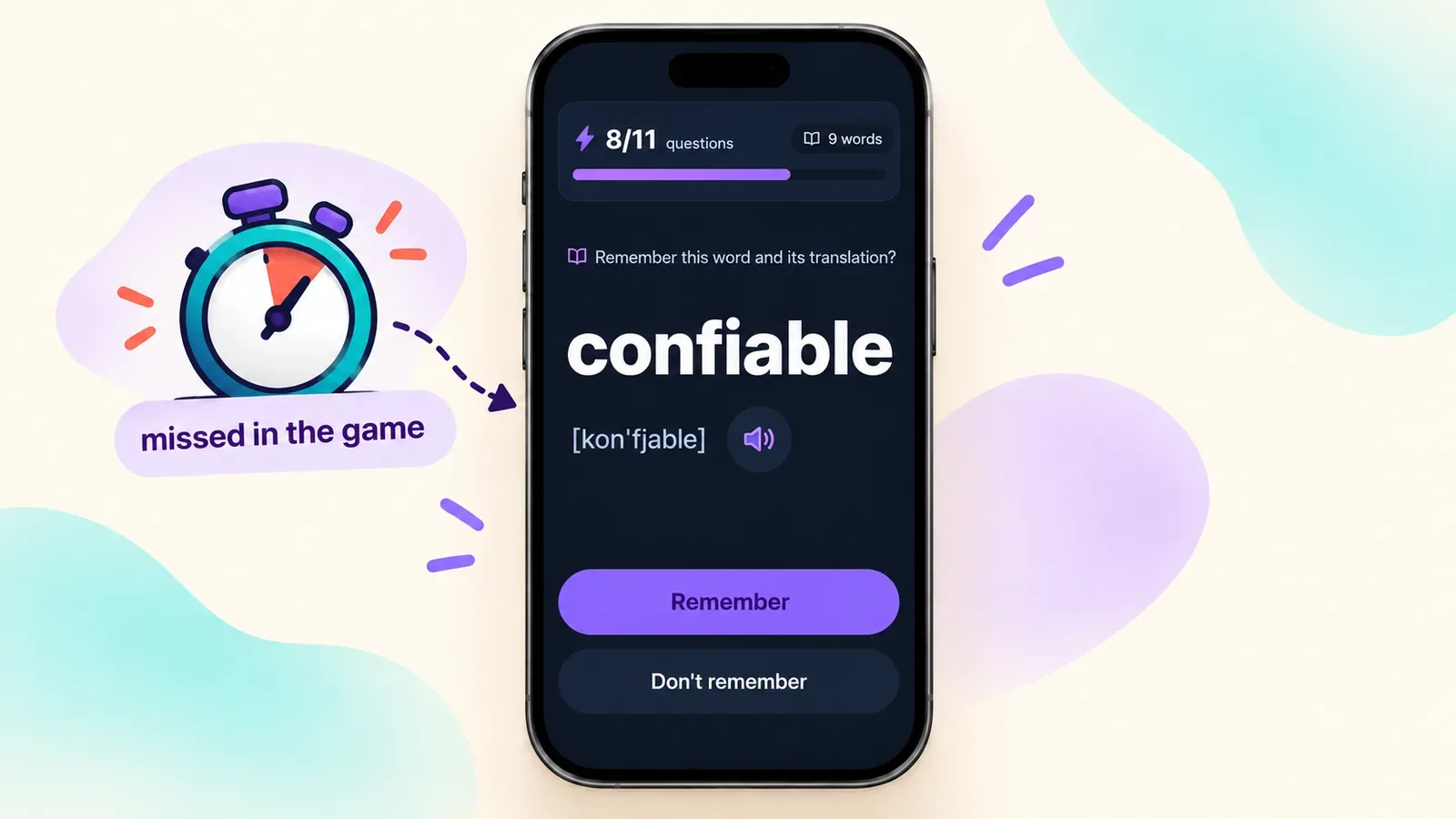
It makes a simple loop: a minute in the game shows what you've forgotten, and the app makes sure those words come back to you on time. If you want to try it, start with one game today and save your mistakes in VibeLing. Within a week you'll see which words are really sticking.