How to Keep a Spanish Vocabulary Notebook
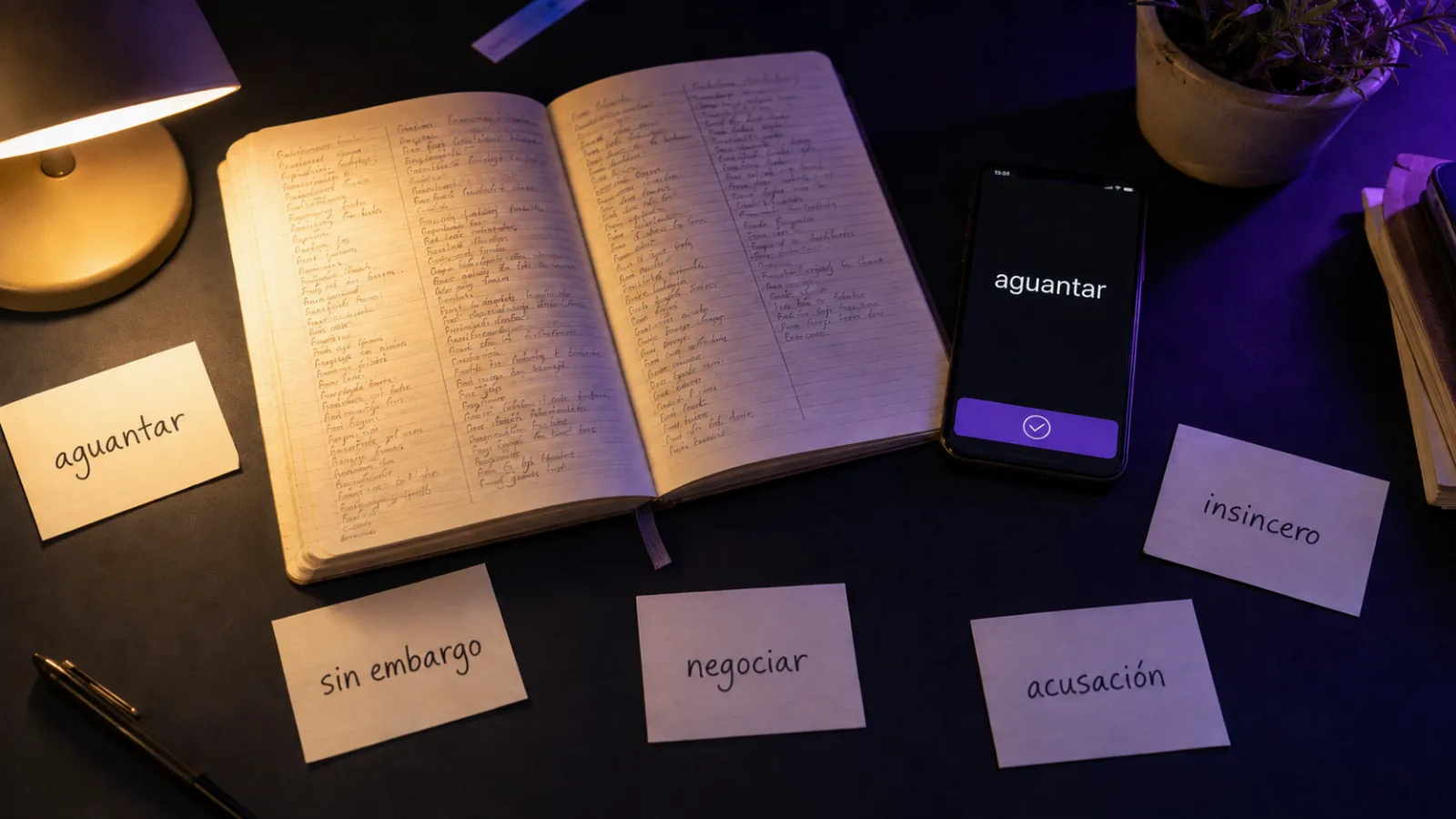
A notebook for words is the first thing almost everyone starts with. Word on the left, translation on the right, and after forty pages there is a pleasant feeling that things are moving. Then the notebook runs out, and it turns out almost nothing from it comes up when you speak.
The notebook is not the problem. The problem is that writing a word down and learning a word are separate operations, and the first does not lead to the second on its own. Here is what to write, how to store it and what to do with your entries afterwards so that the notebook starts working.
What to write besides the translation
The line "aguantar — to hold" looks complete, but it is close to useless. When you meet aguantar in a text, your memory produces "to hold" and you get stuck: hold a cup? hold a meeting? In reality aguantar is closer to "to endure, to put up with, to hold out": no pude aguantar el ritmo, aguanta un poco más.
One English word opposite a Spanish one almost always lies. The minimum that lets you actually use the word later:
- The word in its base form.
- The sentence you met it in. The real one, not an invented example.
- The translation in that specific sense, not the whole dictionary list.
- Where you met it — a show, an article, a message from a colleague. Memory hooks onto the source much harder than you would expect.
- Pronunciation, if the word is not read the way it is written.
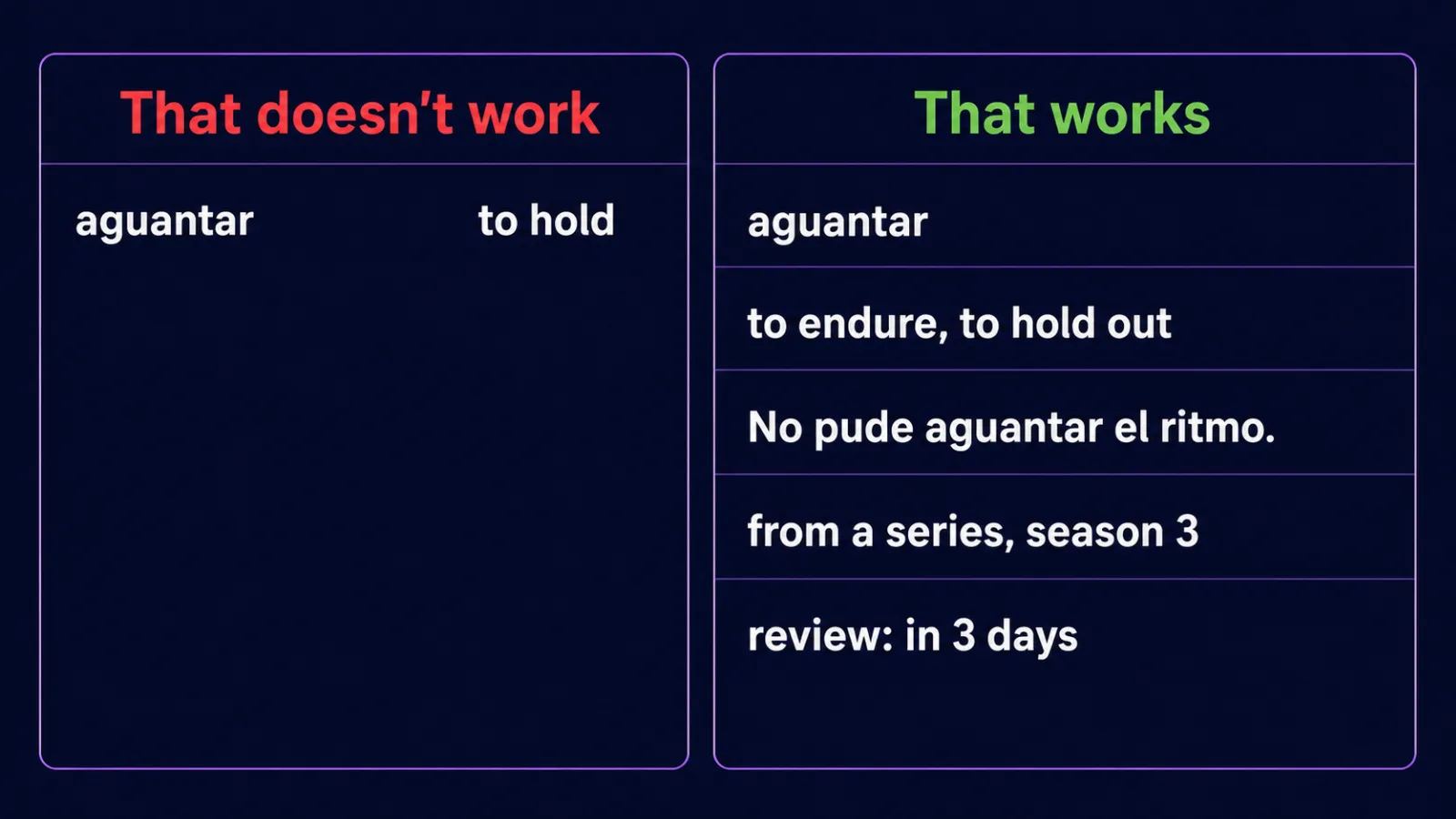
An entry like this takes longer, but the word lands in your notebook already half-learned. Fifty of these beat five hundred lines in a column.
What not to write
The second way to kill a notebook is to put everything in it. A month later it holds efímero, inefable and soslayar mixed in with aunque and bastante, and you no longer want to open it.
The filter is simple: a word goes in if you met it in real text and you can picture yourself saying it. A beautiful word from a list of "100 advanced Spanish words" does not pass. A word that turned up twice in work messages passes immediately.
Phrases deserve a separate decision. Darse cuenta, tener ganas de, echar de menos are not two or three words each, they are one unit, and they go in whole. There is a separate piece on why your own collections beat ready-made lists if you want the longer argument.
Notebook, spreadsheet or app
The medium does not decide everything, but it decides a lot — above all how easy it is to come back to what you wrote.
| Method | Upside | Where it breaks |
|---|---|---|
| Paper notebook | You write by hand, which helps memory on its own | No search, no shuffling, and reviewing means starting from page one |
| Google Sheets | Search, sorting, access from your phone | You have to organise reviews yourself, and usually that never happens |
| Notes app | Always at hand, a word takes five seconds to save | Turns into a dump with no structure |
| Vocabulary app | Saving, search and reviews in one place | You need one where the list is yours, not a stock deck |
Paper loses not because it is paper. It loses because a notebook cannot bring a word back exactly when you are about to forget it. Without that return, everything else stops mattering.
The main thing: a notebook is not only for filling
This is where most vocabulary notebooks break. People keep them and never open them. Words pile up, the feeling of work is there, the result is not.
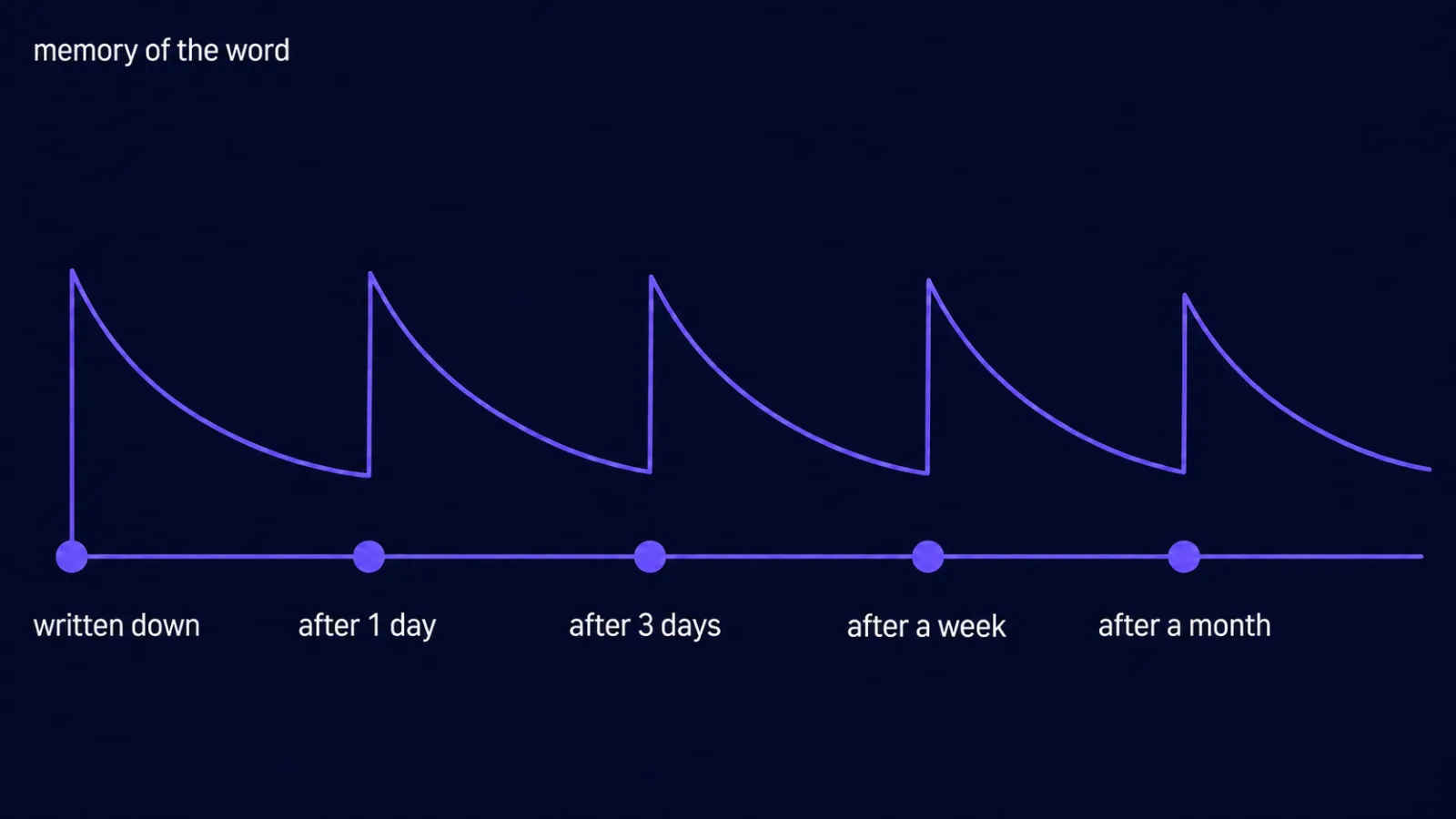
Forgetting follows a fairly predictable shape: a fresh word holds for about a day, after one review for a few days, after a second for a week or more. Hit that moment with a review and the word settles. Open the notebook a month later and you will find unfamiliar words in your own handwriting.
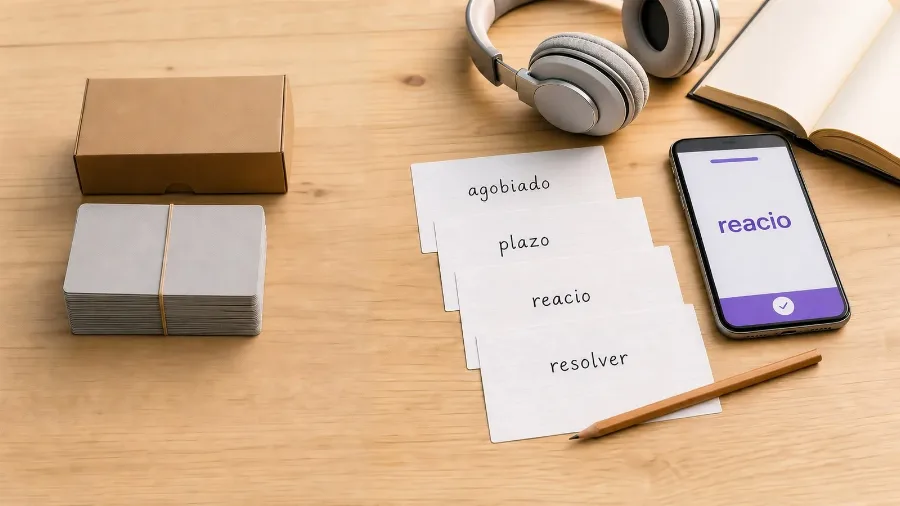
Hence the rule that matters more than all the others: every word you write down needs a date when you will come back to it. Pencil in the margin is fine. The simplest working schedule is a day, three days, a week, two weeks, a month. A tidier version of the same principle is the Leitner system with its boxes of cards: a word you remembered moves to a further box, a word you forgot comes back to the nearest one.
How to check that a word is actually learned
Recognising a word in a text and producing it yourself are two different skills, and the first arrives much earlier. So checking your notebook by reading it is pointless: looking at the page, you recognise everything and conclude that you know it all.
The reverse check works. Cover the Spanish column and go down the English one: if you can name the Spanish word yourself, it is yours. Better still, build a sentence with it about your own day. A word that will not stand up in a live phrase is only learned by sight.
How this works in an app
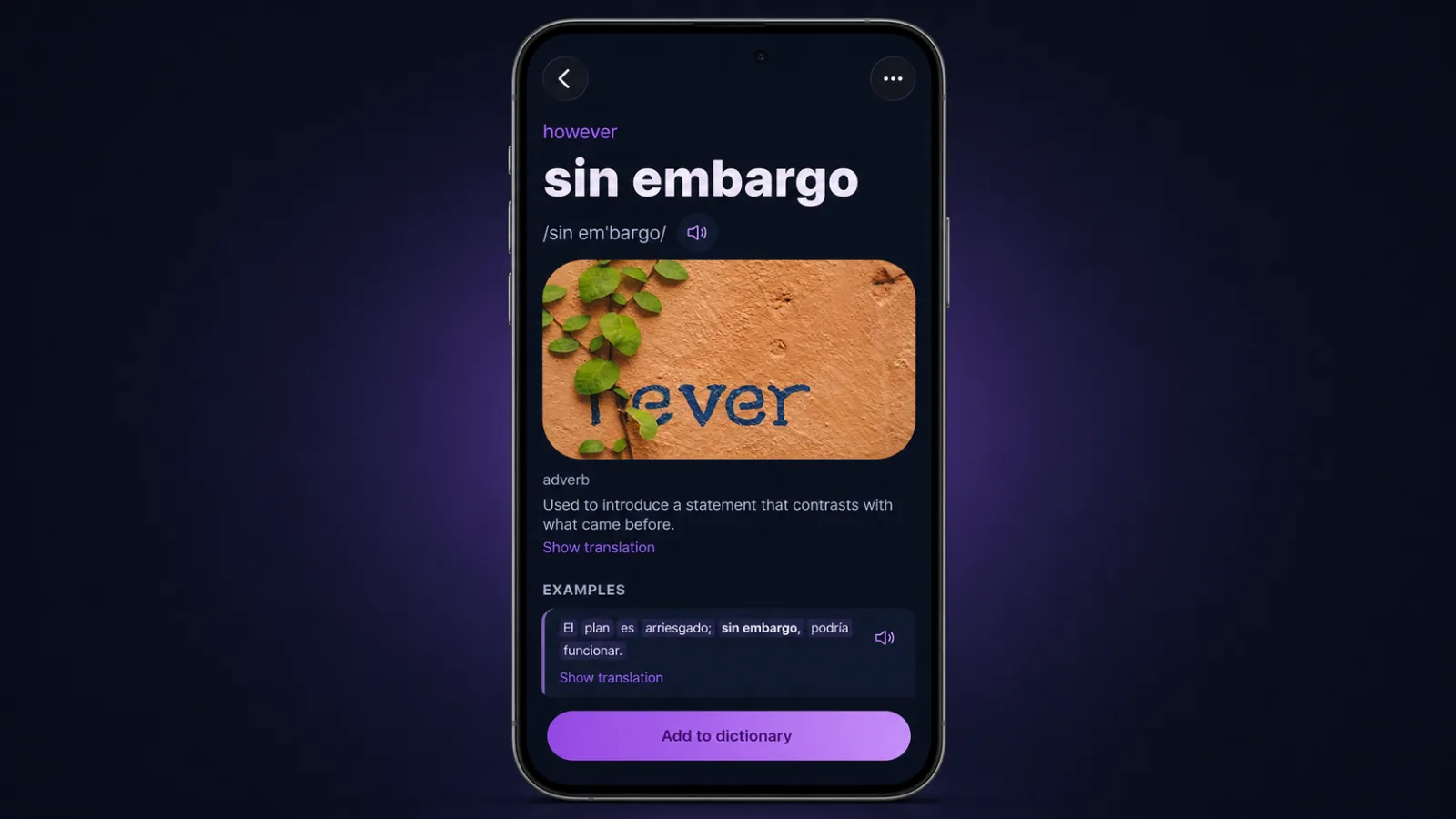
All of the above can be done by hand — but these exact steps are the ones that automate cleanly. In VibeLing the notebook is built from words you add yourself: you type a word or phrase, the app pulls the translation, transcription, audio and an example sentence, so the entry ends up complete without the manual work.
Then comes the part a notebook cannot do. Every word gets its own review schedule, and the app brings it back when it is about to be forgotten rather than when you happen to reach the right page. It works out difficulty from your answers — speed, mistakes, hints — instead of asking "easy or hard", a question everyone answers at random.
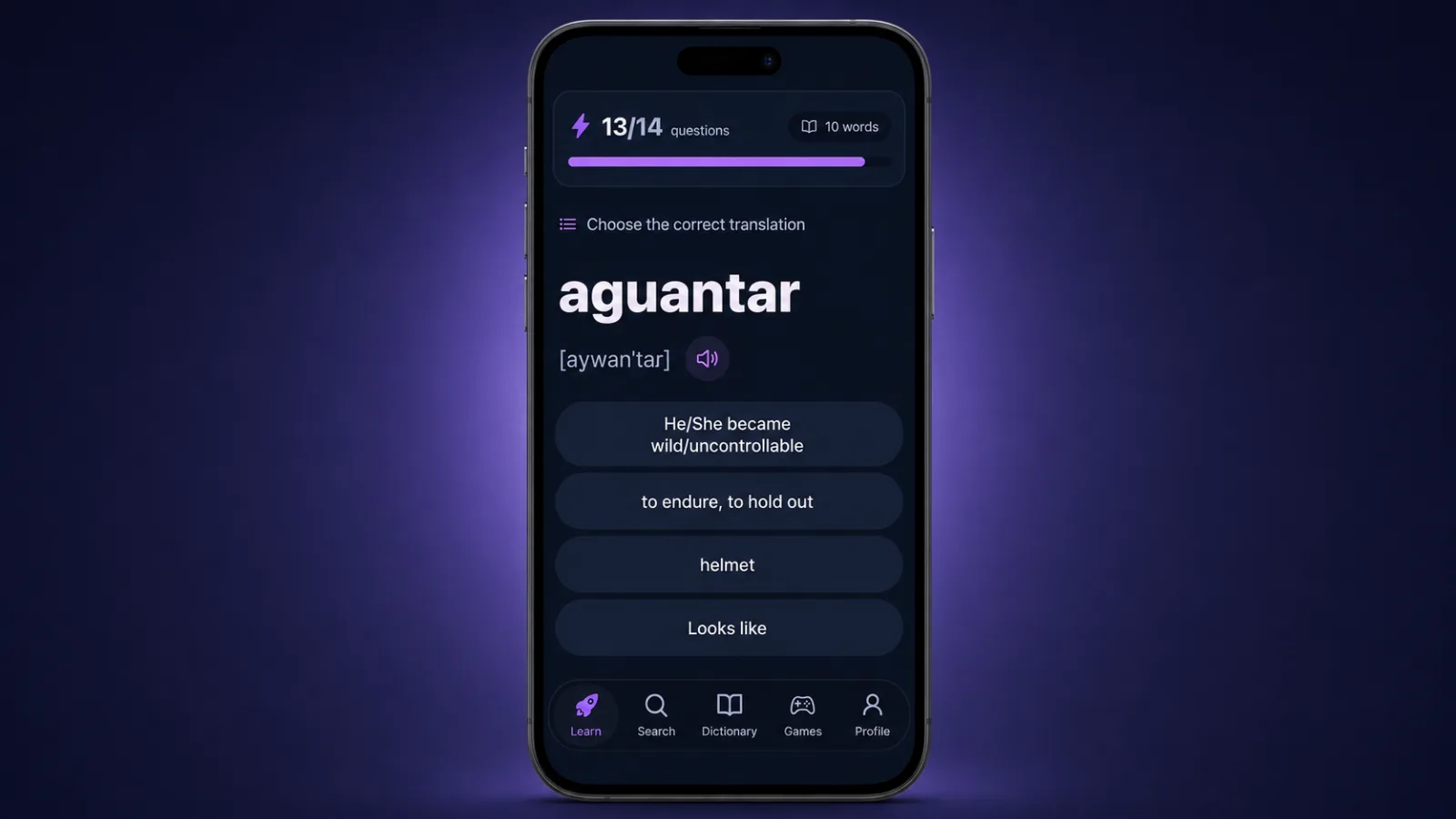
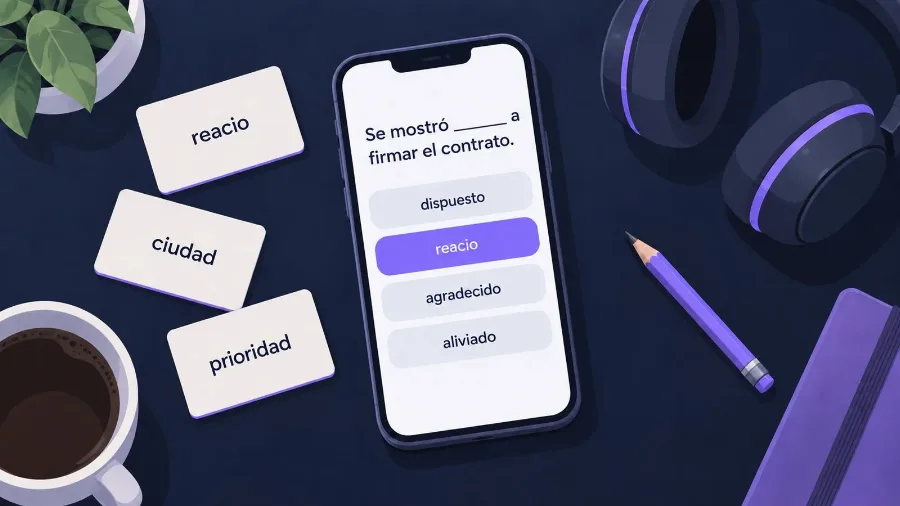
Checking runs on production rather than recognition too: pick the translation, fill the gap in a sentence, assemble the word from letters, say it out loud into the microphone. These are the same reverse checks you would otherwise have to invent for yourself.
In short
- Write the word with the sentence you met it in, not in a column with a single translation.
- Do not write everything down: take what turned up in real text and what you will use yourself.
- Save phrases whole, not word by word.
- Every word needs a return date, otherwise the notebook becomes an archive.
- Test yourself from English to Spanish, not the other way round.
If keeping all of this by hand does not appeal, it is easier to keep the notebook in an app and leave yourself only one decision — which word to add.