Anki vs Quizlet: Which Is Better? (2026)
Anki and Quizlet are the two names that come up first whenever someone asks how to memorize anything with flashcards. They look similar from a distance — both show you a card, you try to recall the other side — but they are built for different jobs. Anki is a spaced repetition engine you configure yourself. Quizlet is a study platform with millions of ready-made sets and game-like modes.
Here is how they compare on the things that decide which one you should use: how a card gets made, how reviews are scheduled, what each costs, and how to move from one to the other. Prices were checked on 10 October 2026.
The short answer
- Pick Anki if you want the strongest long-term memory tool and do not mind building your own cards and learning the settings. It is free everywhere except iPhone.
- Pick Quizlet if you study a school or exam subject that someone has already made sets for, and you want to start in a minute.
- For foreign words from real life, neither is ideal: both leave the card to you or to someone else’s set. More on that below.
Anki vs Quizlet at a glance
| Anki | Quizlet | |
|---|---|---|
| Making a card | By hand, with any template; or download a shared deck | Type a term and definition, or copy one of millions of shared sets |
| Spaced repetition | Yes: SM-2 or FSRS, tunable down to each interval | An adaptive Learn mode rather than intervals you control |
| Study modes | Question and answer; the rest via templates and add-ons | Flashcards, Learn, Test, Match and other game-like modes |
| Platforms | Windows, Mac, Linux, Android, iPhone, web | Web, iPhone, Android |
| Free plan | Everything except the iPhone app | Yes, with limits |
| Paid plan (US) | AnkiMobile for iPhone, $24.99 once | Quizlet Plus, about $36–45 a year depending on where you buy |
| Setup before the first review | Decks, note types, daily limits | Almost none |
| Best for | Large amounts of material over years: medicine, languages, exams | Studying a given list for a test or a course |
How Anki works
Anki is a flashcard program with a serious scheduling algorithm. Every time you review a card, you rate how hard it was, and Anki decides when to show it next — tomorrow, in a week, in three months. Newer versions offer the FSRS algorithm, which models your memory more precisely than the classic SM-2.
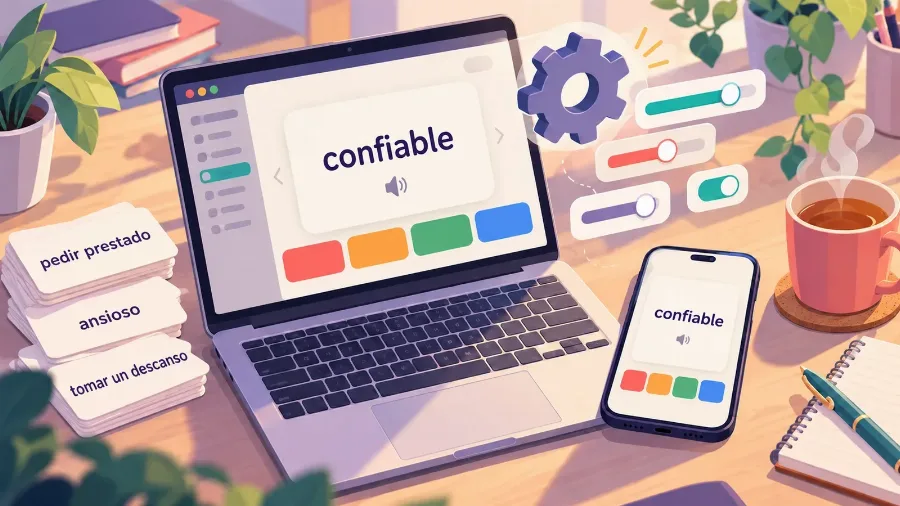
You make the cards yourself: front, back, and whatever fields you add. Templates, card types, tags and hundreds of add-ons let you shape it into almost anything. Shared decks exist too, but most serious users build their own.
- Pros: the most precise review scheduling, works fully offline, free on desktop, Android and the web, no limits on cards.
- Cons: every card is manual work; the settings take time to learn; AnkiMobile for iPhone costs $24.99; the interface is plain.
How Quizlet works
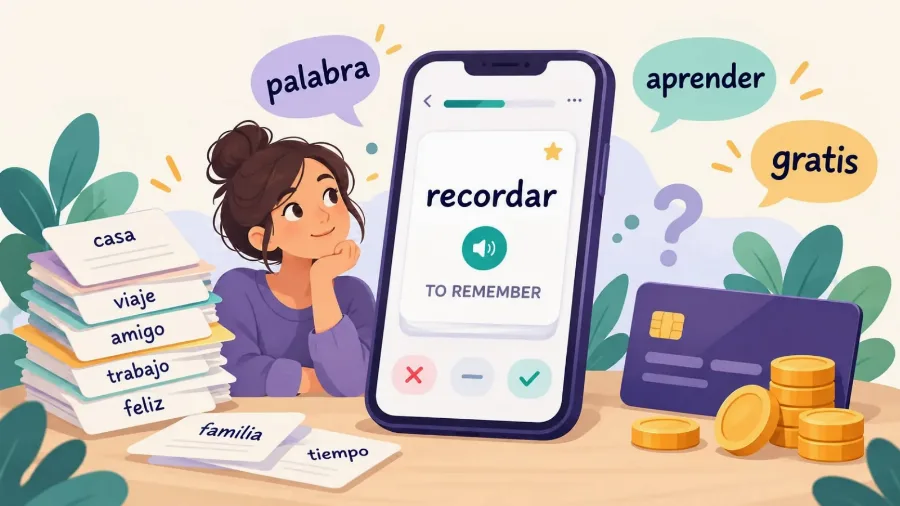
Quizlet starts from a library. For almost any subject someone has already made a set, so you can search, copy and study in a minute. You can also make your own set by typing terms and definitions.
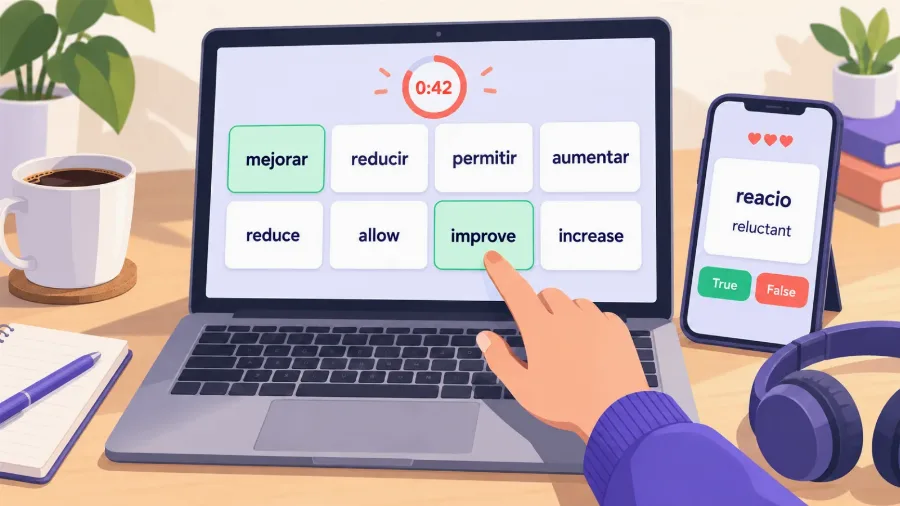
Studying happens in modes: classic flashcards, the adaptive Learn mode that keeps bringing back what you miss, a practice test, and quick matching games. That variety makes short sessions easy and works well before an exam.
- Pros: instant start, huge shared library, varied and friendly study modes, good for classes and groups.
- Cons: no Anki-style control over intervals; the quality of shared sets varies a lot; a card is still two text fields that you or a stranger filled in; the full feature set needs Plus.
Card creation: the real difference
On paper the gap between them is the algorithm. In daily use it is the card. In Anki you build each card yourself, field by field. Here is the word bridge being added:
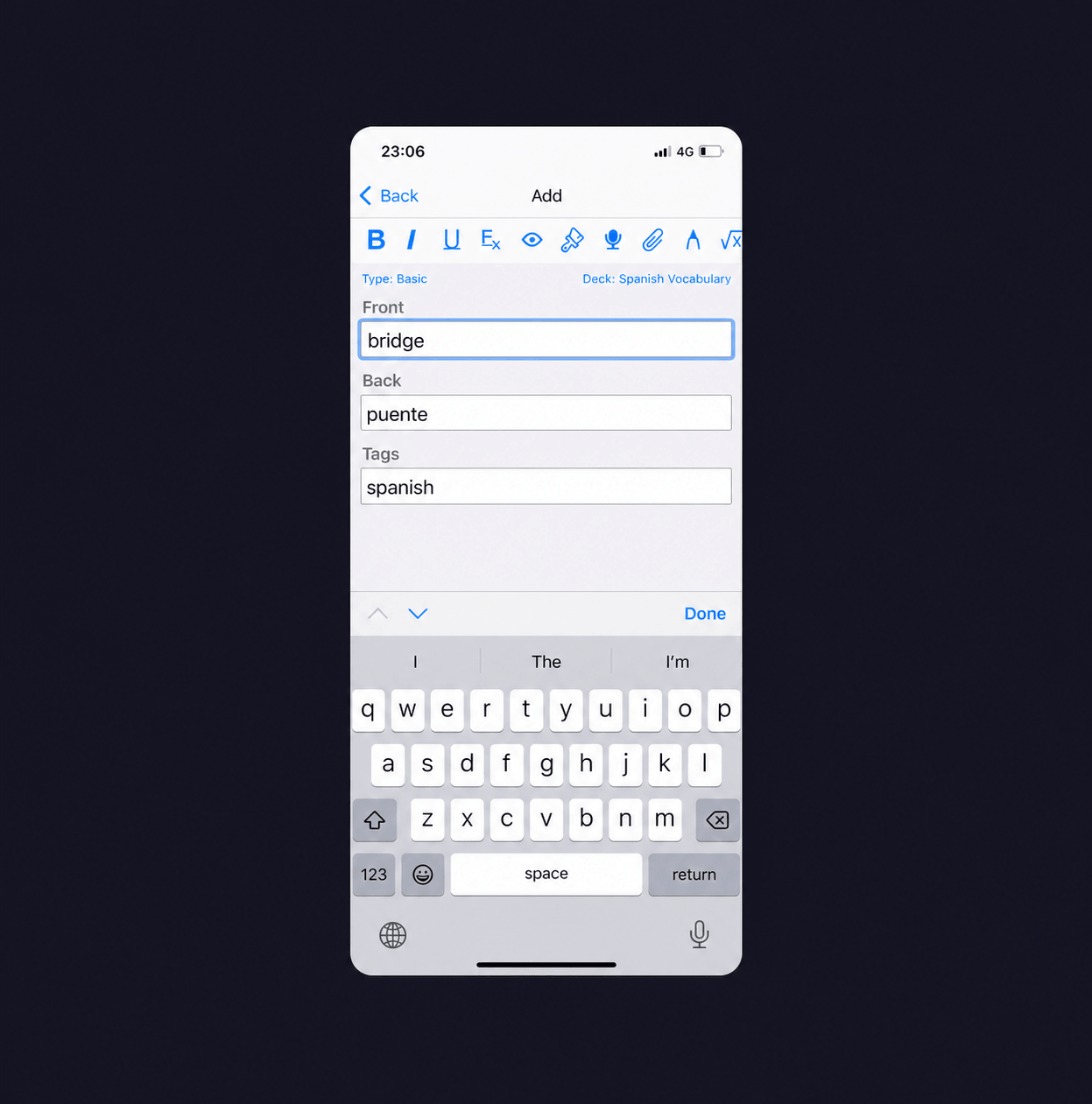
In Quizlet you type the same two fields, or you pick a set someone else made and hope it matches what you need. Either way, an example sentence, audio or a picture is extra work, and a word with several meanings is one card unless you split it yourself.
That is fine for exam lists. It is where both tools get heavy for vocabulary you meet in real life: a word from a show or a message needs a translation, an example and pronunciation before it is worth reviewing, and that is the part neither app does for you.
Spaced repetition compared
Anki is built around spaced repetition. It shows each card just before you would forget it, and with FSRS you can even set the retention you are aiming for. If you stick to the daily reviews, it is very hard to beat for long-term memory.
Quizlet’s Learn mode adapts to your mistakes within a study session and brings missed terms back more often, but it is designed around getting through a set, not around exact intervals over months. For a test next Friday that is enough. For vocabulary you want to keep for years, Anki’s approach holds up better. If you want to know why, see the science of spaced repetition.
Price in 2026
Anki is free on Windows, Mac, Linux, Android (AnkiDroid) and the web (AnkiWeb). The only paid part is the official iPhone and iPad app, AnkiMobile: $24.99 once in the US App Store, more in several European stores. There is no subscription.
Quizlet has a free plan with limits and a paid Quizlet Plus subscription, roughly $36–45 a year in the US depending on whether you buy on the web or in the app. Quizlet’s own page did not load for us, so check the current price in the app before buying.
Quizlet vs Anki: moving your cards
Going from Quizlet to Anki is the common direction, and it is simple:
- Open your set on the Quizlet website and use the export option in the set menu to get it as text, with a tab between term and definition. If you cannot find the button, copy the terms manually.
- Save the text as a .txt file.
- In Anki on a computer, choose File → Import, pick the file, set the field separator to Tab and choose the deck.
Your study progress does not move: Anki starts every card as new. Images and audio also stay behind. And this is a good moment to keep only the words you actually need — usually far fewer than the whole set. Going the other way, from Anki to Quizlet, works by exporting Anki notes as plain text and pasting them into a new Quizlet set; the review history is lost there too.
Which is better for vocabulary?
For a fixed list — exam words, a textbook chapter — Quizlet is faster to start and Anki is better at keeping the words for good. For learning a language from real life, both share the same weak spot: the card. Every new word means looking up a translation, an example and the pronunciation before you can even start reviewing.
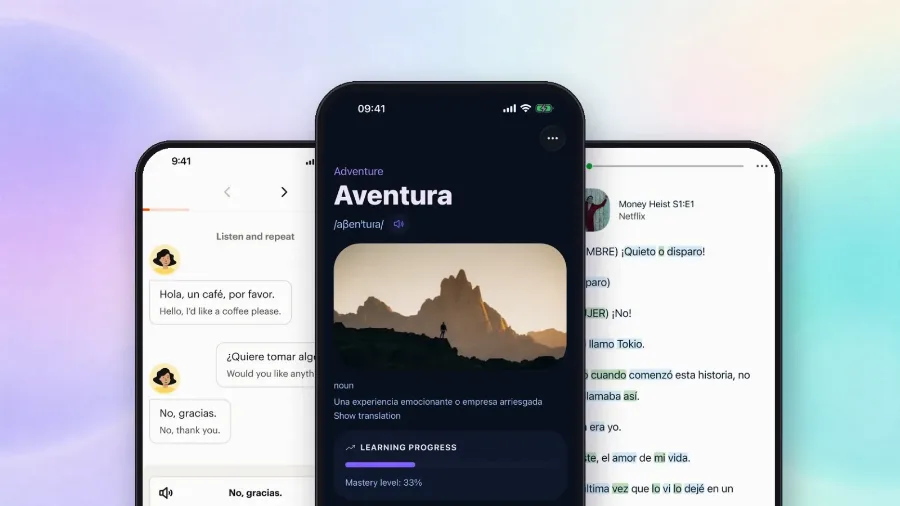
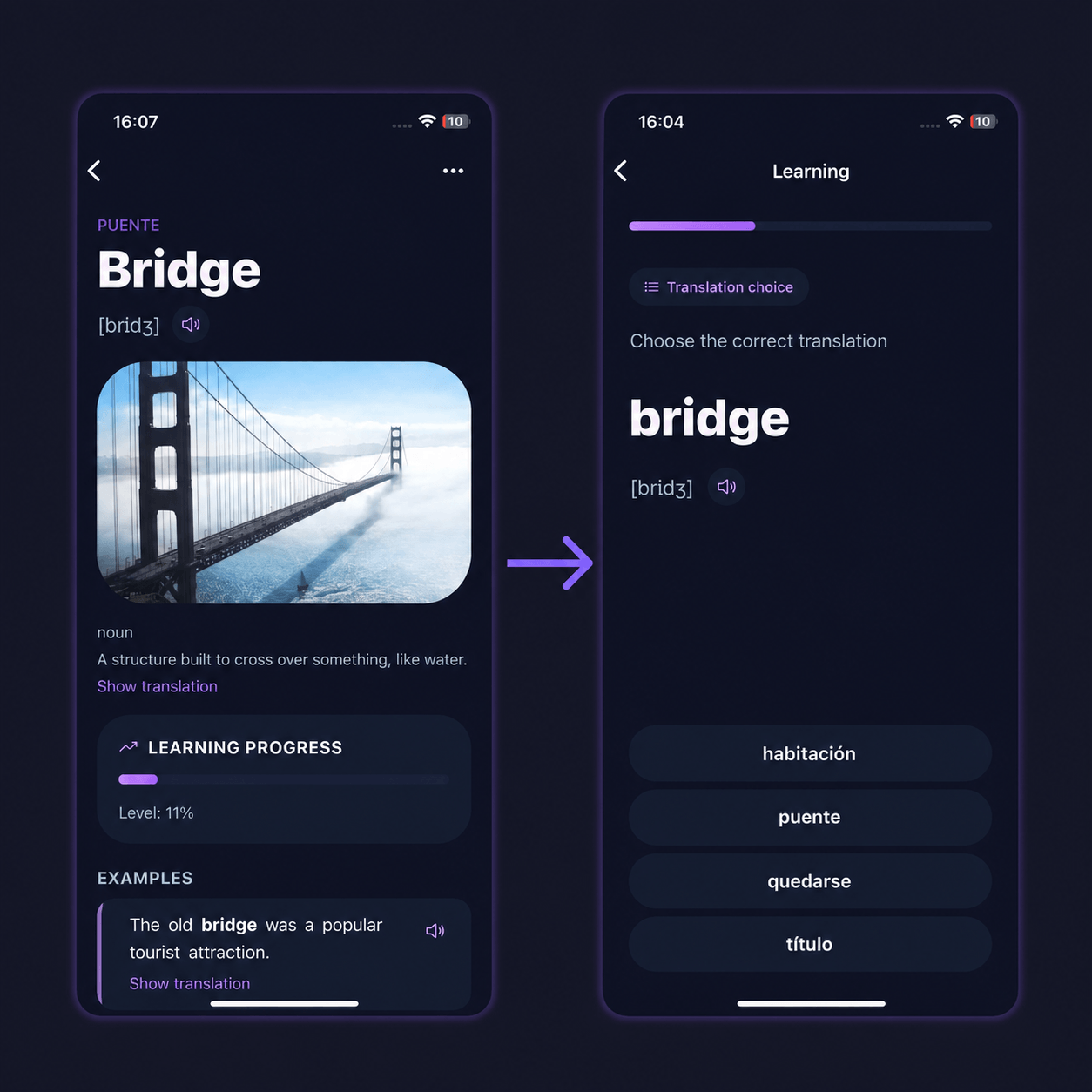
That gap is what VibeLing is built for. You type a word you met, and the app builds the card itself: translation, examples, audio and a picture, with each meaning as its own card, and then brings it back with spaced repetition. It is free, with an optional Pro subscription. It does not replace Anki for medicine or Quizlet for a class, and it does not import decks. Here is the same word, bridge, as it arrives in VibeLing:
If you are weighing more options than these two, see our comparisons of Anki alternatives and free Quizlet alternatives.
Who should pick which
- Medical or law student with thousands of facts: Anki.
- High-school or college student before a test: Quizlet.
- Teacher sharing sets with a class: Quizlet.
- Language learner who likes building a system: Anki.
- Language learner who wants the words they meet, without making cards: VibeLing.
Looking beyond these two? See 7 spaced repetition apps compared.
FAQ
Is Quizlet or Anki better?
For long-term memory, Anki: its spaced repetition is more precise and it is free on almost every platform. For a quick start with ready-made sets, Quizlet.
Is Anki worth the learning curve?
If you will study for months, yes: an evening of setup pays off in reviews that stay short. For one test next week, Quizlet is the faster choice.
Is Quizlet free?
Quizlet has a free plan with limits. The paid Quizlet Plus costs roughly $36–45 a year in the US, depending on where you buy it.
Can I move Quizlet sets to Anki?
Yes. Export the set from Quizlet as text and import the file in Anki on a computer with Tab as the separator. Your progress and any images do not move.
Is Anki or Quizlet better for learning languages?
Anki keeps words better over time; Quizlet is easier to start. If what slows you down is making cards for the words you meet, an app that builds the card for you, like VibeLing, saves the most time.
Price sources, checked 10 October 2026: Anki, AnkiMobile on the App Store, Quizlet on the App Store.