Comprehensible Input: The Natural Way to Absorb Words
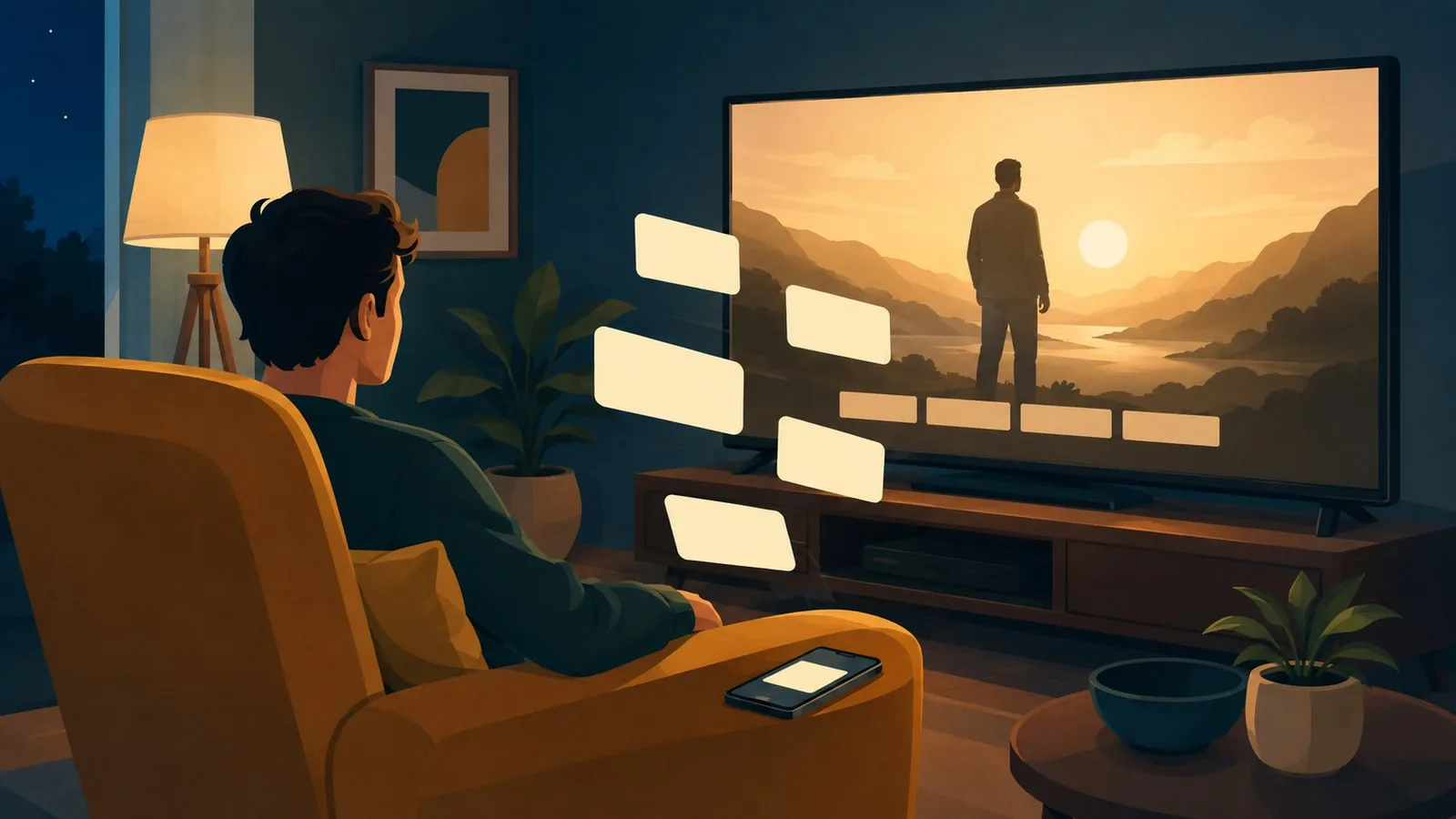
The advice to "just watch shows in Spanish" sounds reasonable right up until you follow it. You start the first episode, understand every fifth word, sit through an hour of it, and remember nothing. Not because the method is wrong, but because at that level of understanding it isn't input yet. It's noise.
The difference between the two comes down to one word — comprehensible. And that word has a measurable meaning.
What comprehensible input is
The idea comes from the linguist Stephen Krashen and is simple enough: you acquire a language when you understand messages slightly above your current level. Not when you study rules, not when you fill in exercises, but when you follow meaning and work out what's missing from context along the way.
Krashen labelled that level i+1, where i is what you understand now and +1 is a small step above it. Too easy and you meet nothing new. Too hard and there's nothing to hold on to: context stops working, and instead of acquisition you get exhaustion.
In fairness: this is a hypothesis, not a proven law. Its strong version — that conscious study never turns into real fluency — is contested, and plenty of researchers disagree. But the practical part has held up: understanding text you actually enjoy does more for your vocabulary than drilling lists.
"Slightly above" in actual numbers
This is where most attempts break. People read "slightly above" as "hard, but I'll manage", when the real corridor is much narrower.
The benchmark is simple: you should understand roughly nine words out of ten, ideally ninety-five out of a hundred. One or two unknown words per ten lines — that's i+1. At that ratio context still carries the meaning, and an unknown word gets worked out from its surroundings almost by itself.
What happens at other levels:
| Words understood | What you're actually doing |
|---|---|
| 100% | Not input, review. Pleasant, but your vocabulary doesn't grow |
| 95–98% | The working zone. Meaning holds, new words attach to context |
| 90% | The upper edge. Workable, but it takes effort and tires you fast |
| 70–80% | You're reconstructing the plot, not understanding it. Nothing sticks |
| under 50% | Background noise. Roughly zero benefit |
Which is why the "watch shows" advice fails so often: a typical B1 learner puts on a Spanish drama and lands somewhere around 60–70%. They're doing everything right in form and getting nothing in substance.
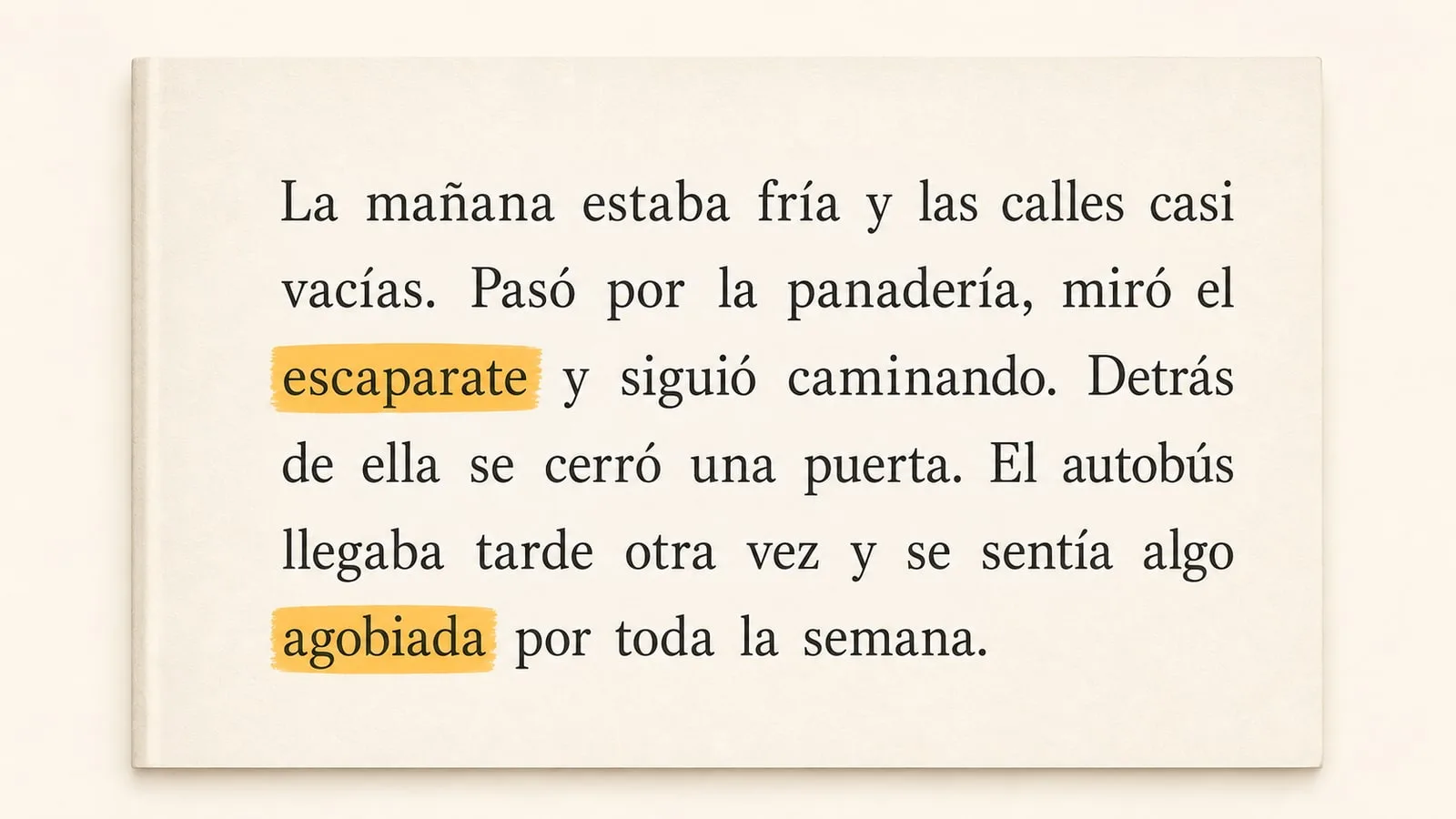
How to find your level in a minute
No test needed. Take one page of text, or two minutes of audio, and count the unknown words.
- 0–1 per page — the material is below your level. Enjoyable, not much use. Go harder.
- 2–5 per page — exactly right. Stay here.
- 10 or more — too early. Not "push through", genuinely too early: at that density your attention goes into decoding instead of following meaning.
Audio works the same way, and it's easier to judge by feel: if you're rewinding more than once a minute, it isn't your material.
The ladder this actually runs on
Comprehensible input isn't "put something on in Spanish". It's a sequence of steps, and you stay on each one until it becomes easy.
- Material made for learners. Podcasts and texts written to a level. A bit dull, but it honestly lands on i+1.
- Graded readers. The same principle for reading: the vocabulary is limited on purpose.
- Children's and teen content. Your first genuinely unadapted material. Simple vocabulary, real language.
- Adult content in simple genres. Sitcoms, cooking shows, vlogs, gadget reviews. Conversational language, but a narrow predictable topic, and the picture does half the work.
- News and popular science. Clear delivery, standard register, repeating vocabulary.
- Drama, stand-up, regional accents, slang. The hardest, which is exactly why it comes last rather than first.
Sign you're ready to move up: you understand nearly everything and notice you haven't met a new word in days. Sign you moved too soon: you rewind more often than you follow the story.
One step that speeds up every transition is subtitles. They turn speech you can't parse into comprehensible input, because they solve the core problem of spoken Spanish: you can't hear where one word ends and the next begins. Which subtitles to use and when to drop them is worth its own breakdown.
Why context teaches a word better than a dictionary
A dictionary entry gives you the translation. Context gives you everything else, and that everything else is exactly what's missing when you try to speak.
Meet agobiado in a dictionary and you get "overwhelmed, weighed down". Meet it in a show, in the line "estoy completamente agobiado con el trabajo", and you also get: that it takes estar and not ser; that completamente sits naturally next to it; that it's an everyday complaint rather than a clinical term; and the tone people say it in.
None of that is in the dictionary. And it's precisely what's absent when a word feels learned but never shows up in your own speech.
The limitation nobody mentions
Comprehensible input grows comprehension beautifully and barely grows speech.
Recognition and retrieval are separate skills stored separately. With enough input you'll start understanding fast and broadly. But a word you've heard twenty times and never said won't arrive when you need it: it lives in the half of memory that handles "oh, I know that one", not the half that handles "I'll say it now".
So input alone isn't enough. You need the other half — something that pulls the words you met back out and makes you produce them. Otherwise you end up as the person who watches Spanish shows without subtitles and goes silent in conversation, and there are a lot of those.
The second limitation is that words from input evaporate. A word you meet in an episode lives in your head for a minute or two. Miss that window and you'll meet it again in three weeks feeling equally new. That's ordinary forgetting at work, and it's why people watch years of original-language content while their vocabulary stands still: there's input, but no retention.
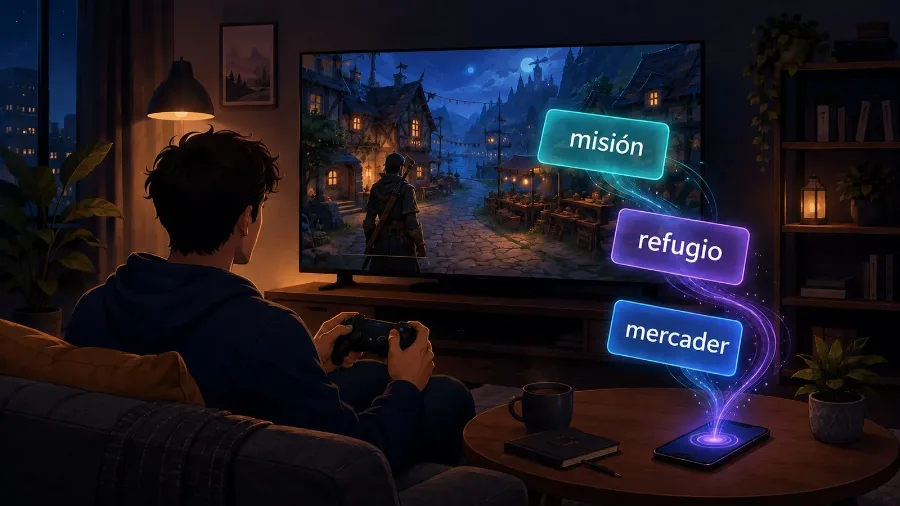
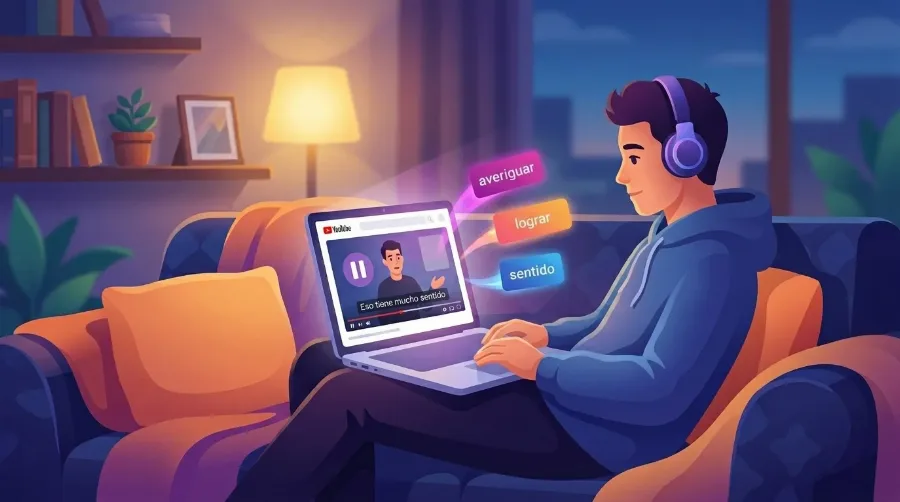
The working combination is simple: watch or read at your level, pause once for a word that's clearly worth it, drop it into VibeLing and carry on. The app brings it back for review before you forget it, and asks you to produce it rather than recognise it. Input supplies the words; review turns them active.
The one-pause rule
The practical trap: looking up every word destroys the flow and the enjoyment with it, while looking up nothing means nothing settles.
The compromise that works: per page, or per scene, you get one stop. Pick the word that's blocking you most, or the one you've now met more than once. Mark the rest and leave them — you'll either sort them out later or they'll surface on their own a couple of episodes down.
One pause doesn't break the flow. Twenty do, and what you get instead of input is translation practice, which is a different activity with different benefits.
What to do today
- Take whatever you're watching or reading now and count the unknown words per page. More than ten? Step down a level — that isn't surrender.
- Hold the "two to five new words per page" corridor. You won't be bored there, and progress shows up.
- One pause per scene. Word goes into the app, you keep watching.
- Once a week, test production: take five recent words and build your own sentences with them out loud. Whatever won't come isn't learned yet.
Comprehensible input isn't about suffering through difficult material. The opposite: it works precisely when things feel easy and interesting, and the unfamiliar shows up rarely enough to be memorable. Build your own word list out of what you actually met in real content — that's the +1 that moves your level.