A Memrise Alternative That Uses Real-Life Spanish Words
Memrise used to be the app people picked up a language for. The community uploaded its own courses: slang from a TV show, the word list from one specific university textbook, the vocabulary you need to wait tables abroad. Plus the videos with native speakers — short clips of ordinary people on the street saying a phrase the way it actually gets said.
Then Memrise shut down user-made courses. Decks, the web service where those courses lived and got built, was switched off, and what stayed in the app was the company's own programme plus an AI chatbot. The app got tidier and more uniform. And quite a few people went looking for a replacement afterwards.
What people actually lose when they leave Memrise
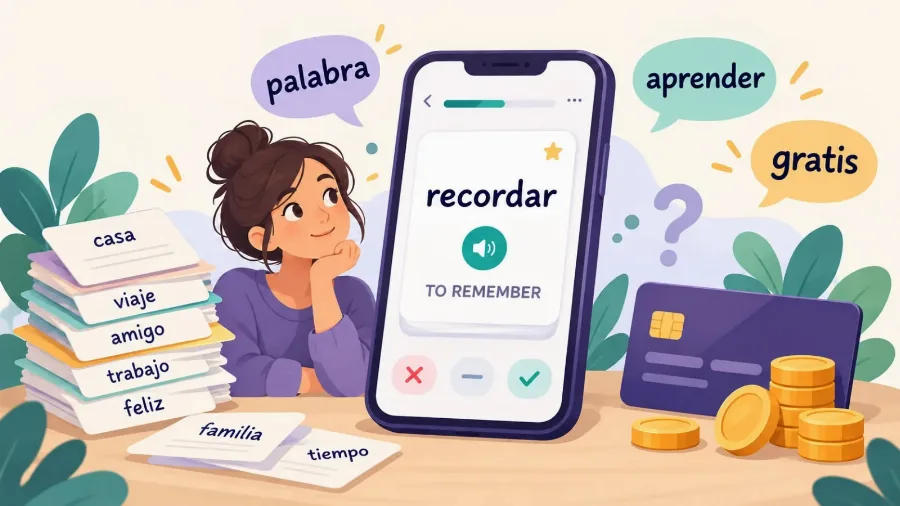
Read what the leavers write and the complaint is almost always the same one, and it isn't about the interface. A Memrise course hands you a word list the company put together. It's a decent list, the words are frequent, it all makes sense. But it's someone else's list.
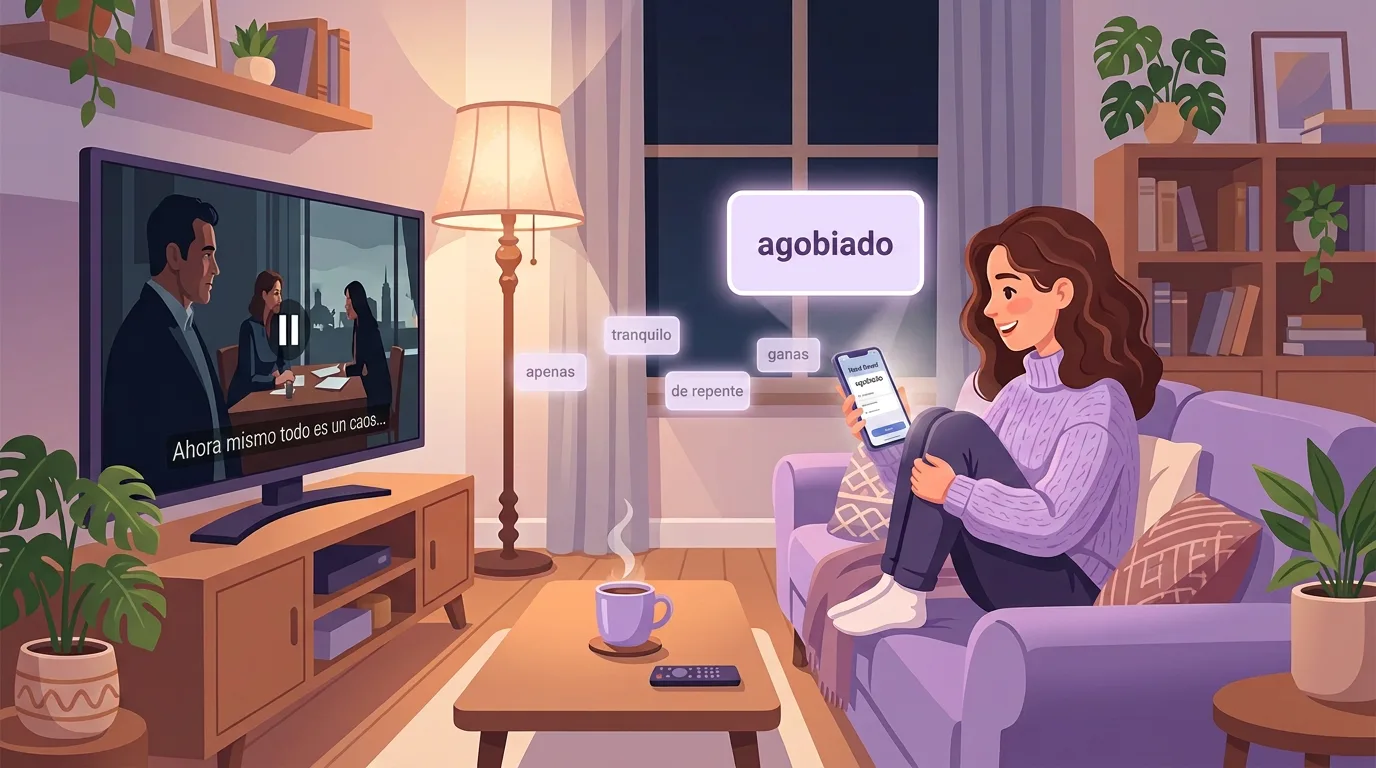
And the words that trip you up mid-conversation or mid-episode are yours. You don't know agobiado because a character said it in episode three and you had no idea what she meant. It isn't in the official A2 course — it will come around in six months, once you've forgotten why you needed it.
The native-speaker clips were solving exactly that feeling: a word from real life rather than from a syllabus. Except someone other than the learner still picked the words.
"Real-life words" isn't a content genre, it's a source of words
There's a swap here that's easy to fall for. An app can show you a lively clip of a native speaker and the word still stays a textbook word, because you weren't the one looking for it. Or it can hand you a dry card with no video at all — but with a word you heard yourself yesterday, and it sticks for good, because it already has context: who said it, to whom, in what tone.
The gap between those two things is wider than it looks. The first is consuming content. The second is a vocabulary of your own that grows out of what you watch, read and listen to. That's what ex-Memrise users are missing, and that's what VibeLing does.
How it works in VibeLing
The logic is flipped: the app doesn't bring you words, it helps you catch the ones that already came your way. Heard a word you didn't know in a show — open search, type it in, see the translation, add it with one tap.
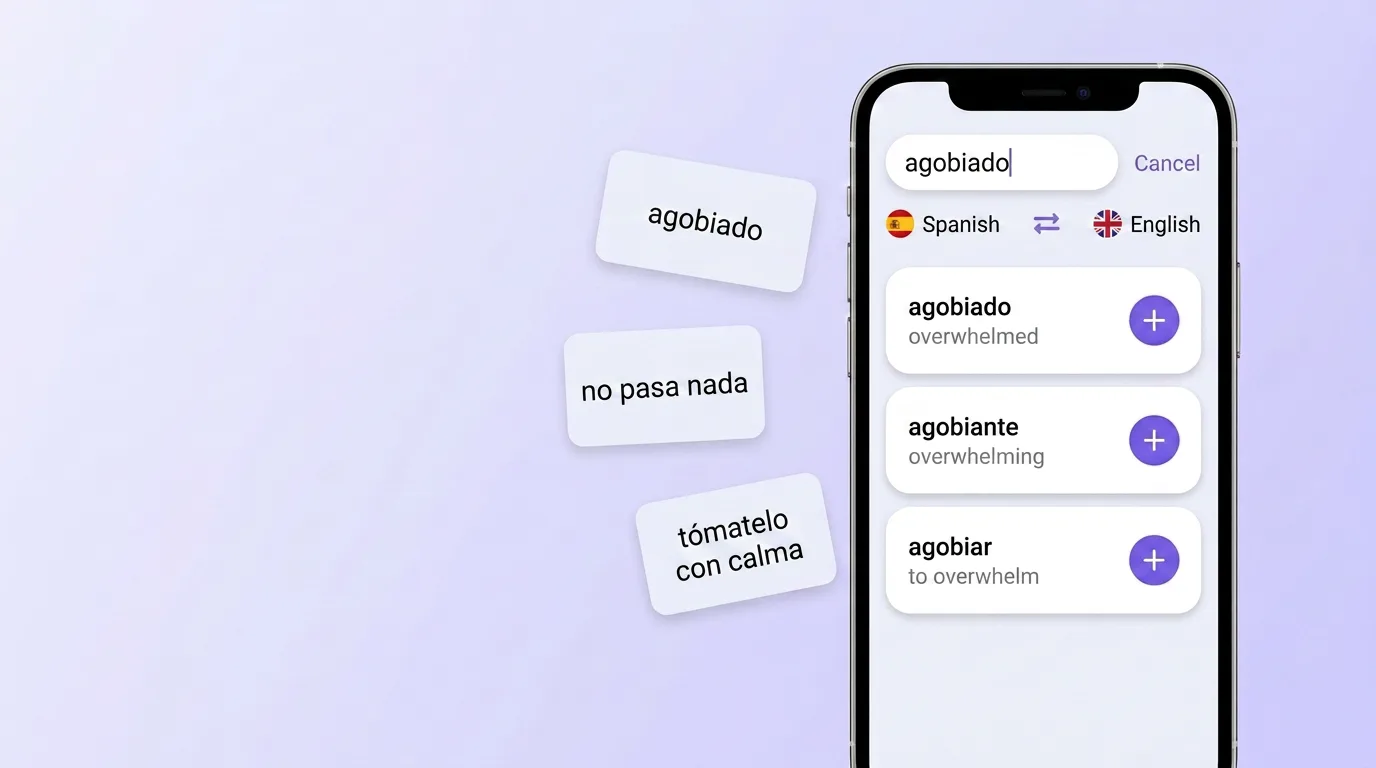
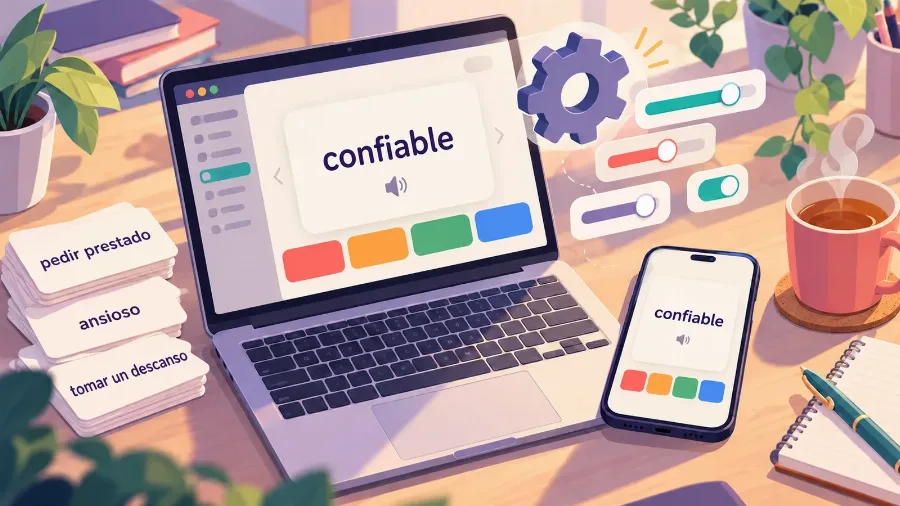
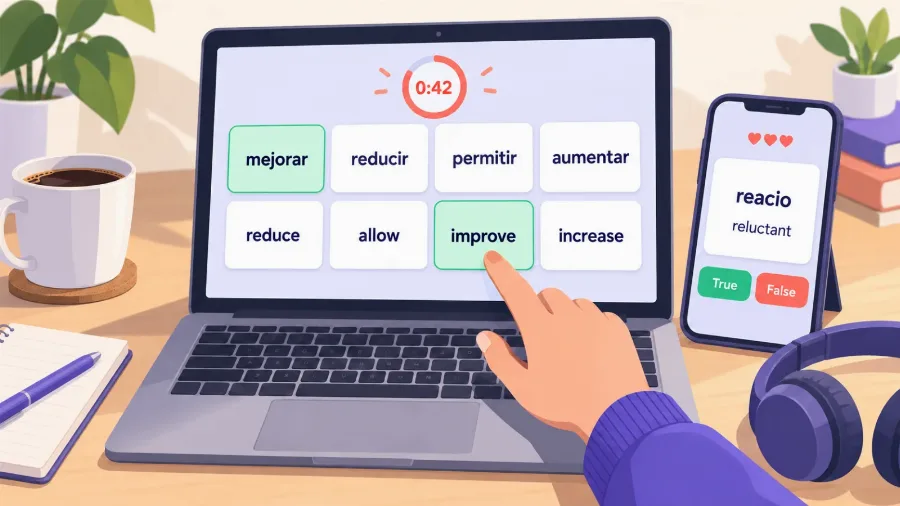
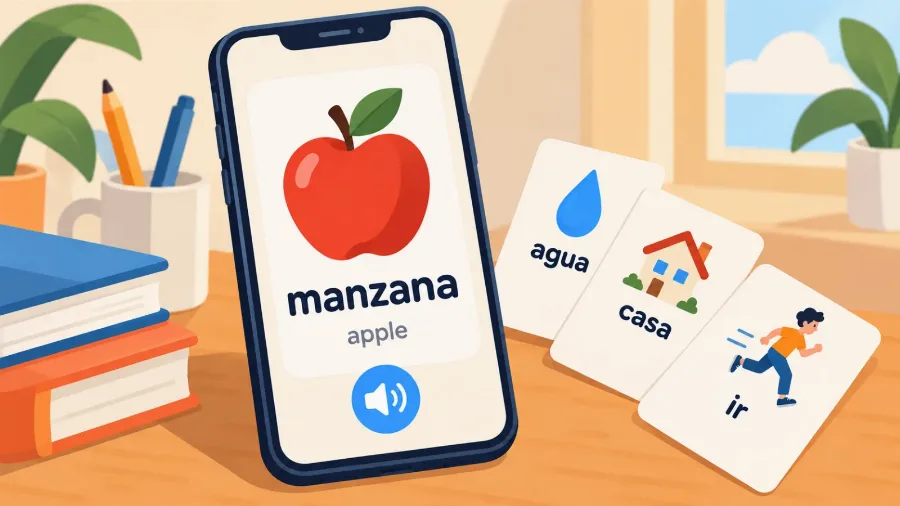
From there the word lives its own life. Usage examples, pronunciation and a picture get attached to it. It lands in a collection — you can keep separate ones for shows, work, a trip. And it comes back for review on a schedule: spaced repetition shows you the word right when you're about to forget it. Practice isn't limited to "guess the translation out of four options" — there's a fill-in-the-missing-word exercise and there's saying it out loud with pronunciation checking.
The same principle works with books and podcasts, but the most obvious source is TV series: there's a separate walkthrough of that — learning Spanish words from movies.
How one evening looks
So this doesn't stay abstract — here's what actually settles after a single episode, if you watch with Spanish subtitles on and don't get lazy about hitting pause:
Estoy completamente agobiado ahora mismo — "I'm completely swamped right now." Not the dictionary's "overwhelmed", but precisely that state where everything has piled up at once.
No pasa nada — "it's no big deal." A phrase a textbook hands you at B2 and a show hands you every other episode.
Five phrases like that in an evening is roughly thirty-five a week and fifteen hundred a year. And fifteen hundred of exactly the expressions that show up in what you watch, not in somebody's programme. The difference from a course isn't speed, it's aim: course words you learn just in case, these ones because you already tripped over them.
Memrise and VibeLing: where they differ
| Memrise | VibeLing | |
|---|---|---|
| Where words come from | A ready-made course from the company | You add the ones you ran into yourself |
| User-made courses | Gone along with Decks | Your own word collections |
| Order of study | Course levels, in sequence | Your vocabulary, spaced repetition |
| Speaking | Native-speaker videos | Saying words out loud with a check |
| Strong point | A programme from zero, if you'd rather not decide anything | The words you personally need |
Download Memrise: App Store · Google Play
Download VibeLing: App Store · Google Play
Where Memrise is still better
Honestly: if you're starting a language from absolute zero and don't want to decide anything yourself, a ready-made course is a sensible option. You'll be handed your first five hundred words in a workable order, and that beats staring at an empty vocabulary list with no idea where to begin. A collection of your own assumes you're already watching, reading or listening to something in the language — and that you have somewhere to take those words from.
The native-speaker clips are useful too: they show you the pace and intonation that a studio recording doesn't have. It's just that they're a supplement to a vocabulary, not the vocabulary itself.
How to switch, if you've decided to
- Pull out what you've already learned. Don't try to carry the whole course over — carry the words you still mix up. The rest you already know.
- Set up a source. A show, a podcast, a book — anything you're watching or listening to anyway. Without a source the new vocabulary won't fill up.
- Cap the pace. Five to seven new words per episode is the ceiling. The urge to save twenty ends with none of them getting reviewed at all.
- Don't skip reviews. Adding a word takes a second, and what works isn't the adding, it's coming back to it. More on why the interval specifically matters in the Anki alternative walkthrough.
In short
Memrise closed off the very part people loved it for: the option to learn your own words instead of a general course. If that's what you're missing, the replacement isn't among the apps with prettier ready-made courses — it's among the ones where you build the vocabulary. Try keeping a personal Spanish vocabulary — start with one episode and five words from it, and after a week you'll see whether it works for you.