How to Understand Spoken Spanish: Training Your Ear for Words

A familiar situation: you recognize a word instantly in a text, but in a native speaker's mouth it flies past, and you only guess from context that something was there. Then you turn on the subtitles and see cómodo, a word you have known since your first month. Out loud it sounded like "komo", and your brain simply did not match it.
This is not a vocabulary problem and not a hearing problem. Recognizing a word by its sound is a separate skill, and it does not appear on its own just because you learned the word with your eyes. This article looks at why that happens and how to train the skill.
Why familiar words go unrecognized by ear
When you learn a word from a card or a list, what settles in memory is its spelling and its meaning. The sound image either does not settle at all, or it settles the way you read the word to yourself: letter by letter, with your own accent and the stress in a random place. In real speech the word sounds different, and nothing in your head matches it.
There are three concrete reasons why written and spoken Spanish diverge.
Dropped sounds: half the letters disappear
In fast speech, consonants between vowels and at the end of syllables get weaker or vanish. Cansado turns into "cansao", está into "ehtá" or just "tá", para into "pa". In much of Spain's south, the Caribbean and the Río de la Plata the final -s is barely there: los amigos comes out as "lo amigo". The word is the same, the sound is not.
Linking: words glue together
Spanish speakers do not pause between words. Vamos a ver sounds like one word, "vamoaver". Mi hijo becomes "mijo", te he dicho becomes "tedicho". You are waiting for three separate words and you hear one long one, with no idea where to cut it.
Speed: no time to translate
Even when you do recognize a word, it takes you a second. In that second the speaker has said three more words. You missed them, lost the thread, and from then on you only catch isolated familiar chunks.
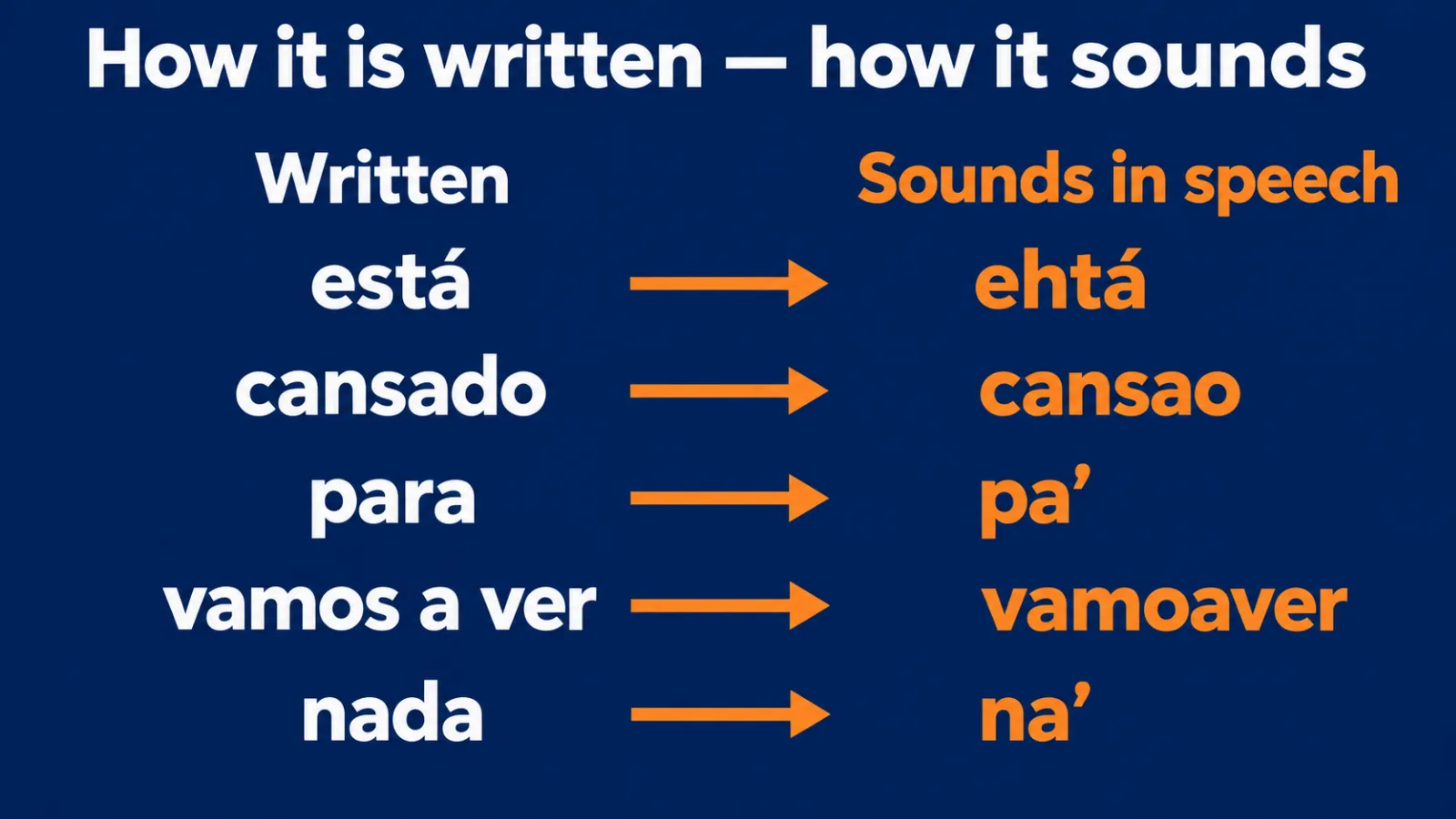
The good news: none of these reasons requires learning new words. What it requires is teaching your ears to recognize the ones you already have.
What does not work
Listening in the background. A podcast in your headphones on the way to work gets you used to the tempo and the intonation, but it does not teach you to recognize specific words: an unfamiliar sound flies by and leaves no trace. After a month of that you are still losing every third word.
Learning words with your eyes only. A card with no audio locks in a wrong sound image. Later you have to relearn it, which is harder than learning it right the first time.
Slowing the audio down. At 0.75 you understand more, but you get used to speech that does not exist in real life. Slow down once, to take apart one specific bit, then go straight back to normal speed.
How to train word recognition by ear
1. Every new word comes with its sound
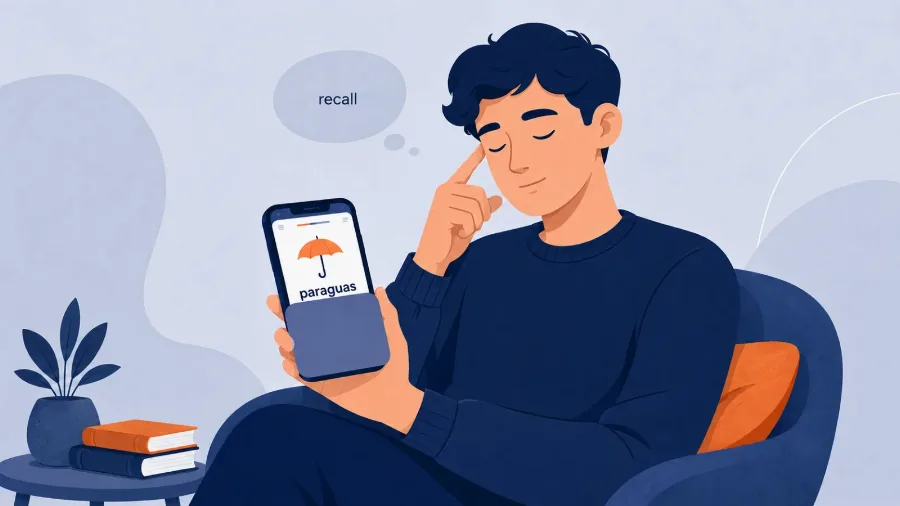
The cheapest rule: do not add a word to your dictionary without hearing how it sounds. Not reading the transcription, actually hearing it. In VibeLing every card has audio, and it is worth tapping when you add the word and at every review, so that the sound is stored next to the spelling.
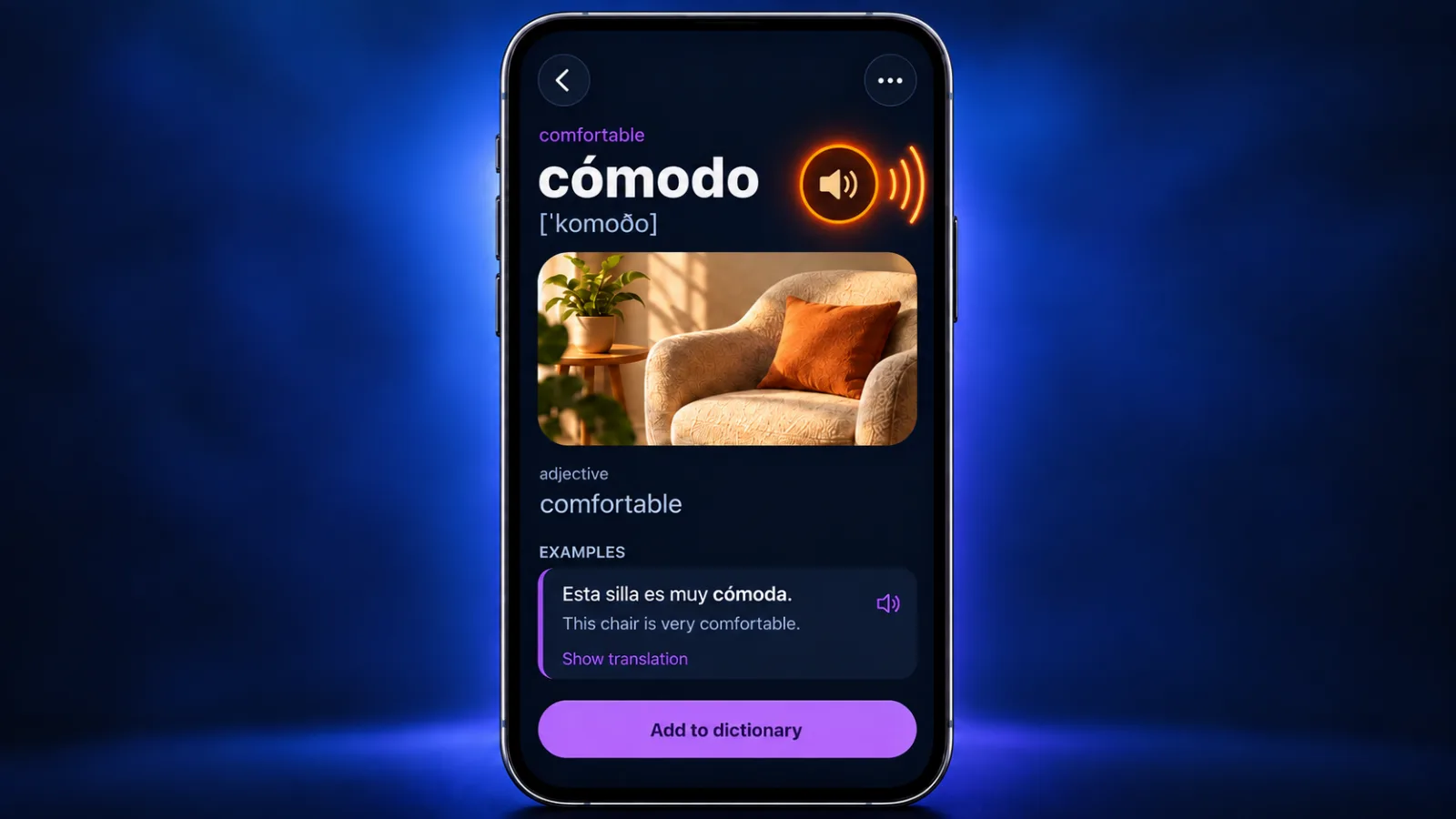
Check the stress while you are at it. In cómodo it is on the first syllable, in hotel on the second, and hablo and habló are two different words that differ only by stress. A word with the wrong stress in your head is almost never recognized by ear.
2. Train recognition separately from reading
A regular review shows you the word written down, and you recognize it with your eyes. For your ears you need a different kind: the word is spoken, and the screen shows only the answer options. That is exactly how the Listening sprint game works: ten words, each read aloud, twelve seconds to choose the translation, and you can play the audio again. It runs in the browser with no sign-up, and the words come from the shared VibeLing dictionary.
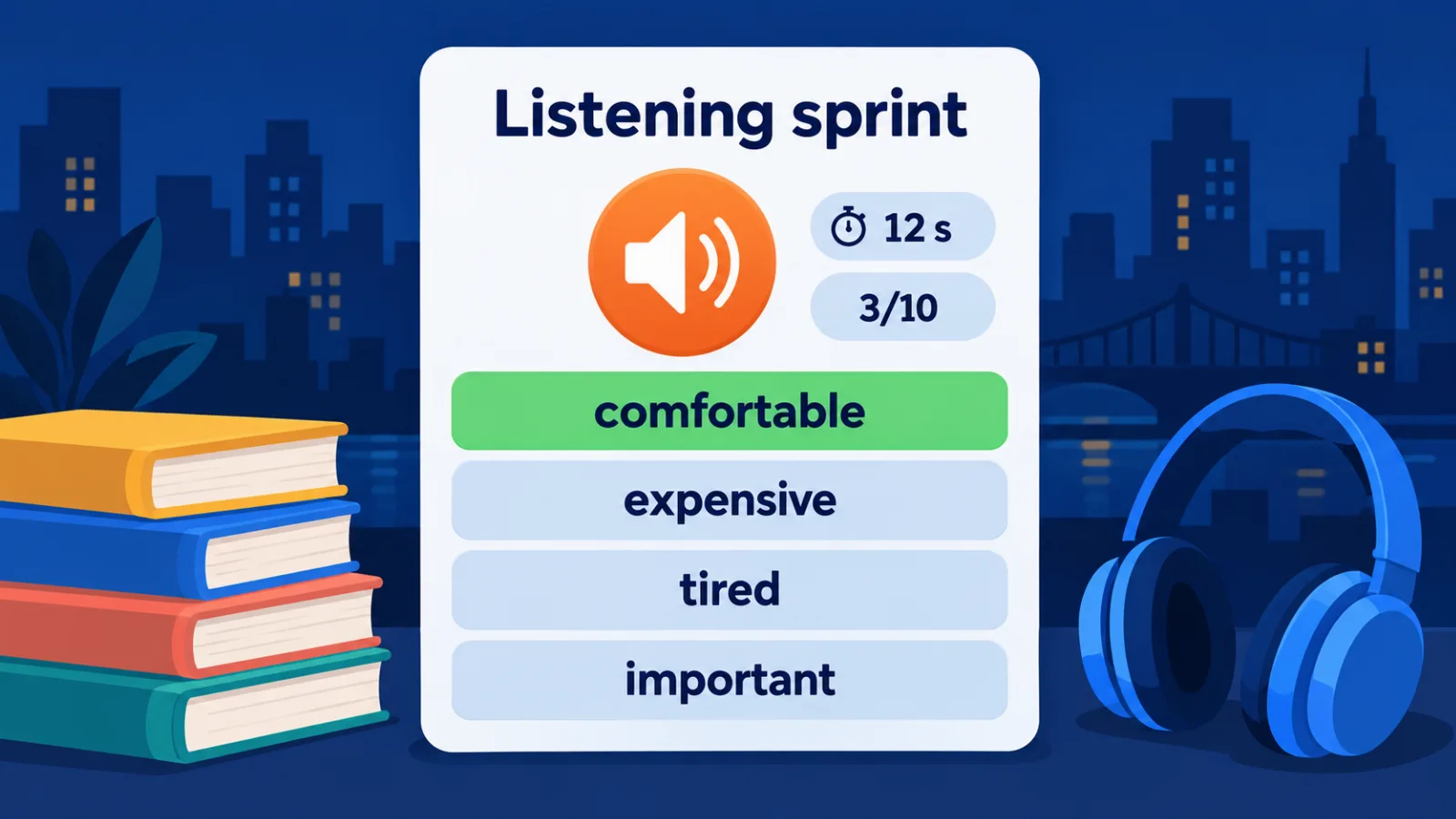
Twelve seconds is plenty for recognition but not enough for translating letter by letter. The game forces you to rely on sound rather than reading, and the words you got wrong can go straight into your own dictionary for review. The rest of the word games are collected on one page.
3. One clip, several times
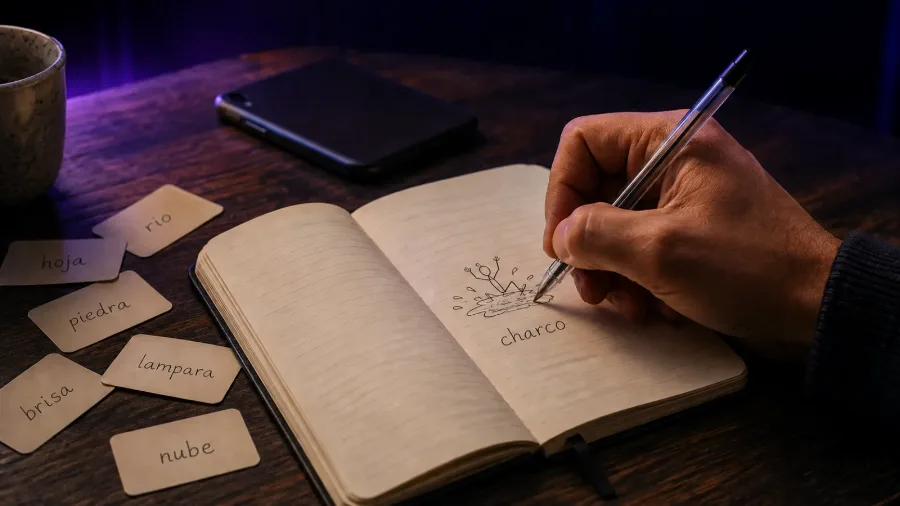
Take one minute of speech: a bit of a podcast, a scene from a series, a YouTube video. Listen without the text and note what you understood. Then listen with subtitles or a transcript: this is where you will find the familiar words you failed to recognize. Write them down. Then once more without the text, and now they should come through.
One minute taken apart three times does more for your ear than an hour of background podcast. How to pick material for your level and where to find transcripts is covered in the article on learning Spanish vocabulary with podcasts, and how to work with subtitles so they help instead of replacing your ear is in a separate guide.
4. Say the words yourself
It sounds backwards, but recognition by ear depends heavily on whether you can pronounce the word. Your brain compares what it hears with how it would say the thing itself. If in your head you say "ko-MO-do", then "KO-mo-do" will not match. If you say it right, it will.
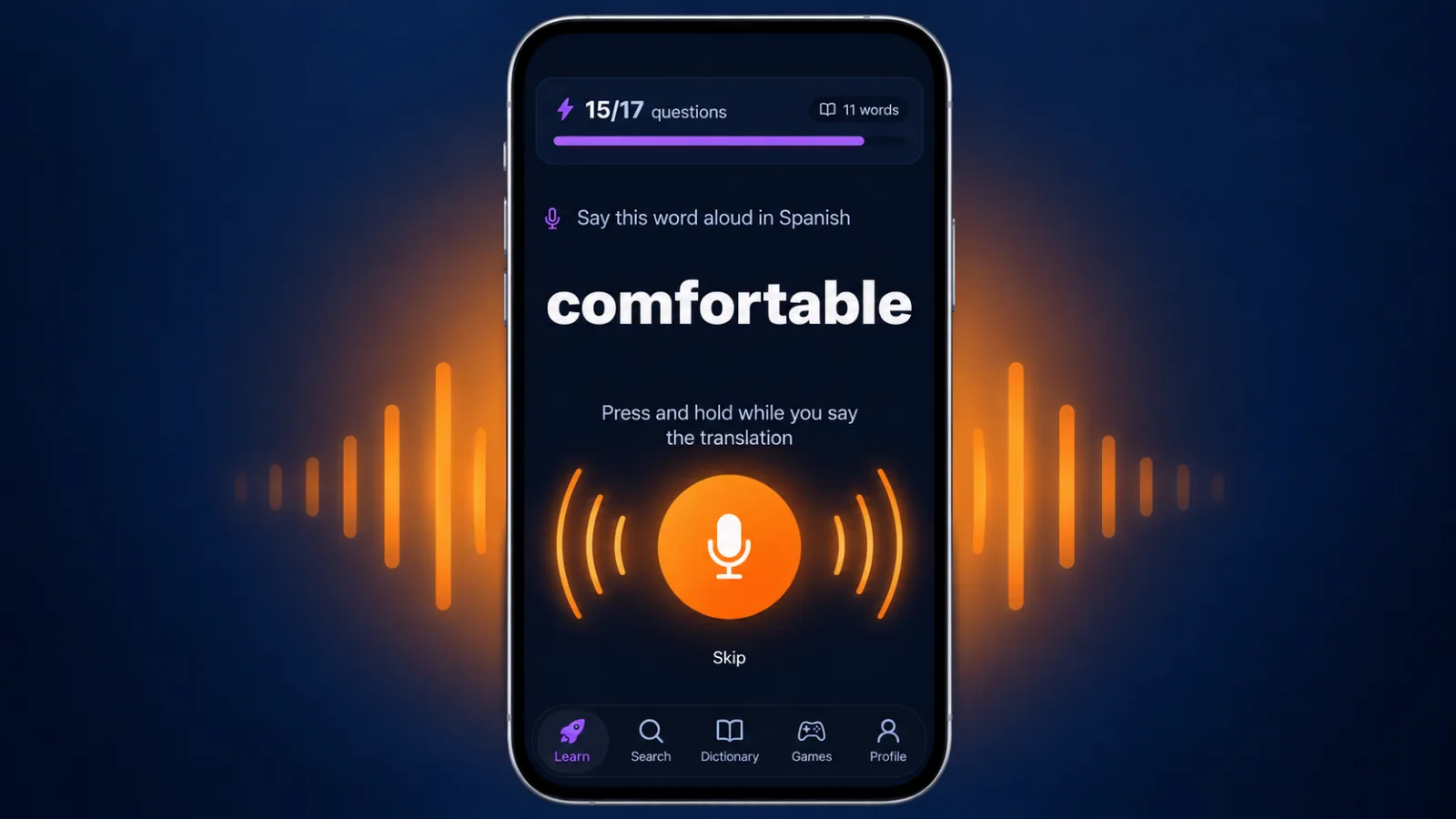
So repeat words aloud after the audio, without embarrassment. VibeLing has a pronunciation exercise: the app shows the translation, you say the Spanish word, and speech recognition checks whether it came out right. It trains speaking and tunes your ear to the correct sound at the same time.
5. Learn the common shortcuts as a set
There is a small set of reductions that half of everyday speech is made of. They are easier to learn as a list than to meet one at a time:
| Written | How it sounds |
|---|---|
| para | pa' |
| está | 'tá |
| nada | na' |
| todo | to' |
| cansado | cansao |
| para adelante | pa'lante |
| mi hijo | mijo |
| vamos a ver | vamoaver |
Plus the vowels that merge at word boundaries: la amiga → "lamiga", de esto → "desto", que es → "ques". Once you know that ¿qué es esto? sounds like "quesesto", you stop looking for a separate es in that spot and hear it correctly.
How long it takes
Recognition by ear catches up faster than you would expect, because there is nothing new to learn, only something already learned to reassemble. A realistic plan for one month:
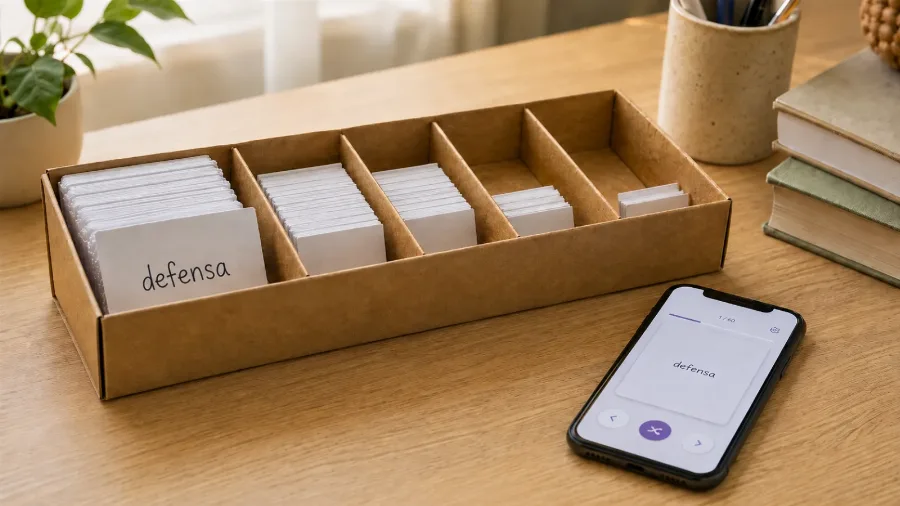
- Every day, a word review in the app with the audio played every time: 10 minutes.
- Three times a week, the Listening sprint or any exercise where the word is only heard: 5 minutes.
- Three times a week, one minute of real speech taken apart three times: 10 minutes.
- Words you failed to recognize by ear go into your personal dictionary for review.
After a month of this, familiar words start to surface in the stream, and that is the first thing you will notice: speech stops being one solid block, familiar anchors appear in it, and guessing the rest between them becomes easy.
If you want the simplest first step, start a dictionary where every word comes with audio and listen to it at every review. You can get VibeLing for learning Spanish vocabulary for free, and your own words can be added without limits.