How to Learn Vocabulary with Pictures
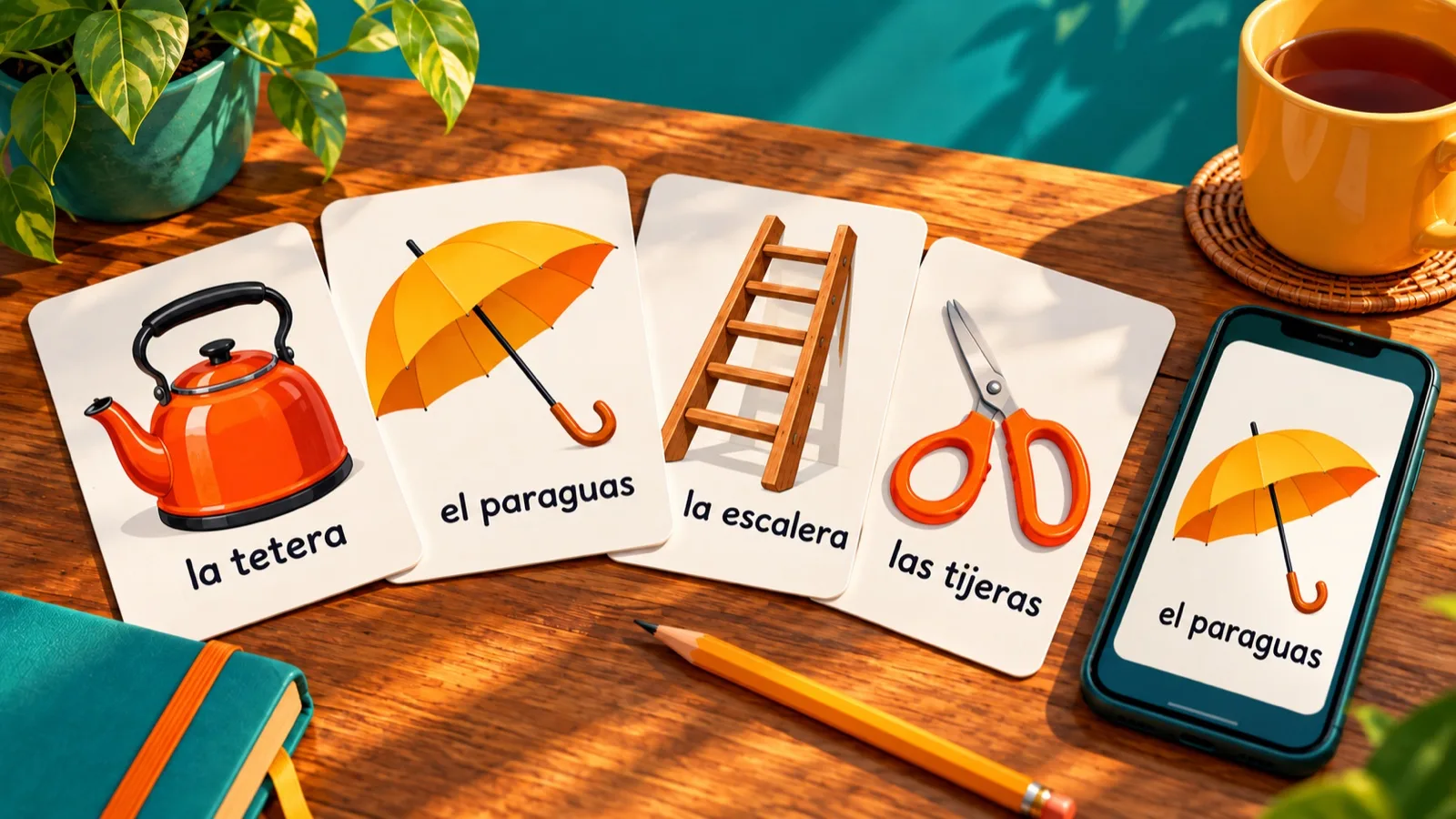
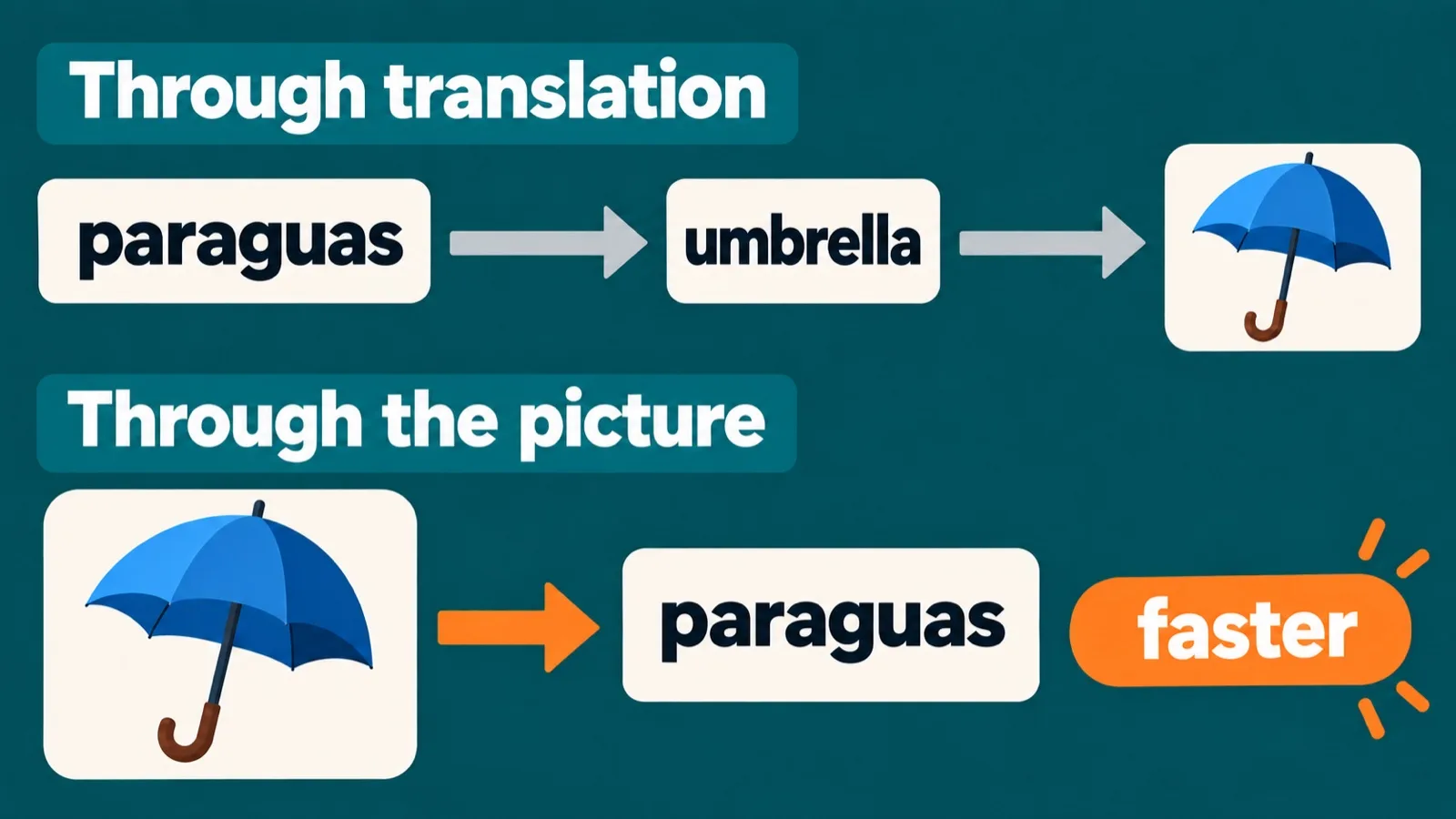
When you learn a word through translation, your head builds a chain: you see paraguas, recall "umbrella", and only then picture the umbrella itself. In conversation this chain slows you down: while you translate, the other person has already said the next sentence. A picture lets you connect the word directly to the thing, with no English in between. Below we look at why this works, which words it suits and which it doesn't, and how to fit pictures into your regular practice.
Why pictures help you remember
Memory research has the idea of dual coding: information you got both in words and as an image is stored as two traces instead of one. If one trace fades, the other helps you pull the word back. That's why la escalera you saw drawn comes back more easily than la escalera from a list that says "la escalera — ladder".
There's a second, practical reason. A picture removes translation from the middle. You look at the image and go straight for the Spanish word. That's exactly how you'll need the word in real life: you see an object or a situation and want to name it, not translate it.
Which words to learn with pictures and which not
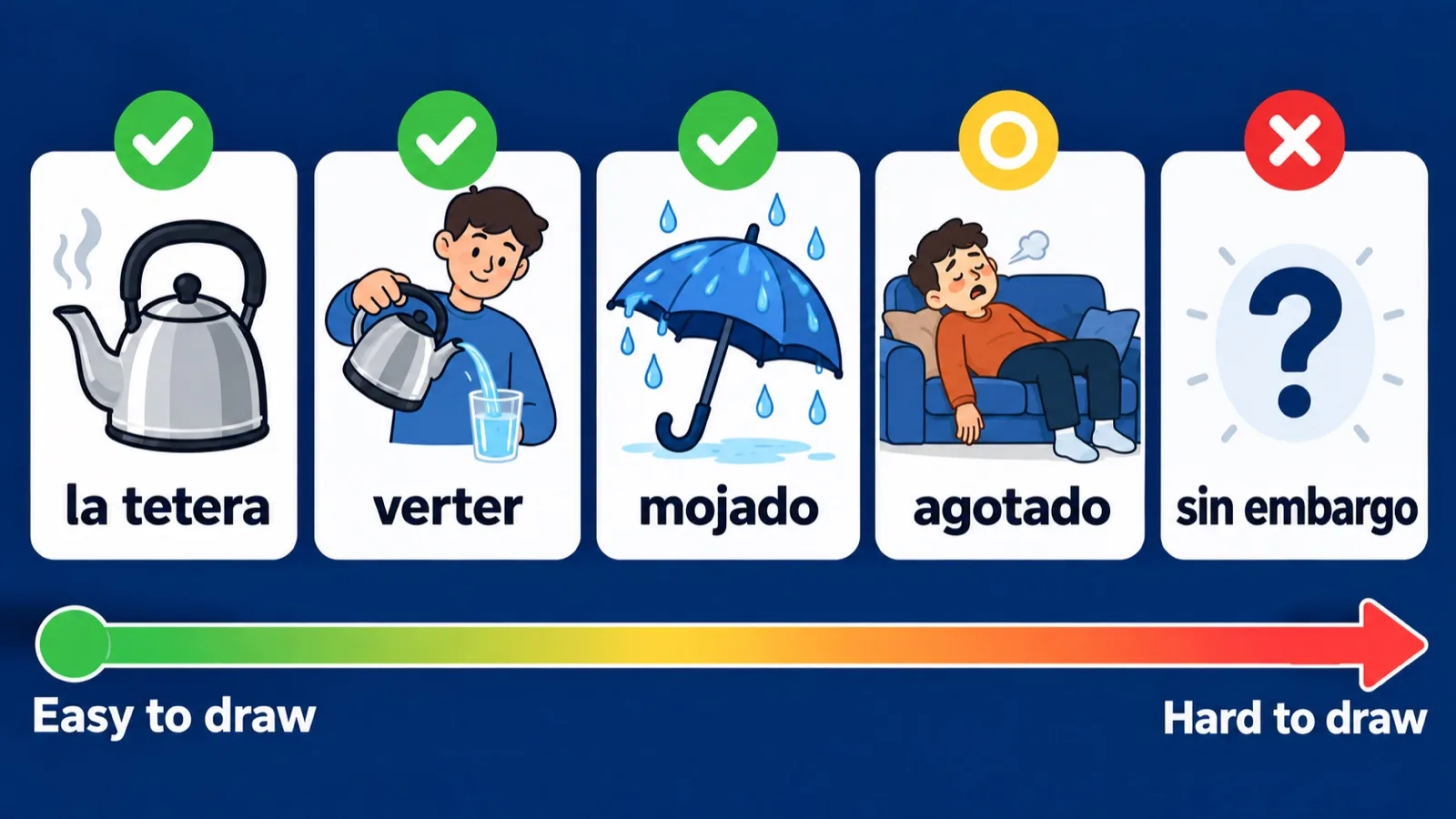
Pictures don't work equally well for every word. The more concrete a word is, the easier it is to draw and the more it gains.
| Type of word | Examples | Do pictures work? |
|---|---|---|
| Objects | la tetera, las tijeras, la escalera, el paraguas | Very well: one word, one image |
| Actions | verter, subir, doblar, estornudar | Well, especially if the picture shows movement |
| Qualities | mojado, lleno, vacío, oxidado | Well, if the picture shows a contrast |
| Emotions and states | agotado, avergonzado, aliviado | So-so: you need an expressive scene |
| Abstract words | sin embargo, aunque, mantener, asunto | Poorly: a picture gives no hint |
For abstract words and linking words, don't look for a picture: learn them in sentences instead. We covered this in detail in the article on how to learn words in context. For emotions, your own little scene sometimes helps: picture a specific moment when you were avergonzado and tie the word to it.
How to learn words with pictures, step by step
- Start with concrete words. Home, kitchen, street, clothes, transport. These are words you can see, and you need them every day.
- One picture per word. If the picture has a kettle, a cup and a spoon, it's unclear which word it belongs to. The object should be the main thing in the frame.
- Look at the picture first, then recall the word. Not the other way round. The goal is for the image to bring up the Spanish word without an English hint.
- Add sound. Listen to how the word is pronounced and say it out loud while looking at the picture. That gives you three links instead of two: image, sound and spelling.
- Review at intervals. A picture speeds up memorizing, but it doesn't replace reviews. It's better to see the same image a day later, three days later, a week later.
Your own pictures work better than other people's
A stock photo of a kettle is fine for a first meeting with a word. But what sticks best is what's tied to your own life. A few ways to use that:
- Photograph things around you. Your own tetera in your own kitchen will stick better than any kettle from the internet.
- Draw them yourself, even badly. A clumsy stick figure who estornuda is memorable because you put effort into it.
- Add something absurd. If you imagine rain falling upwards out of a paraguas, the image gets brighter. That's already a mnemonic trick; read more in the article on mnemonics for memorizing words.
Pictures in the app: the word card
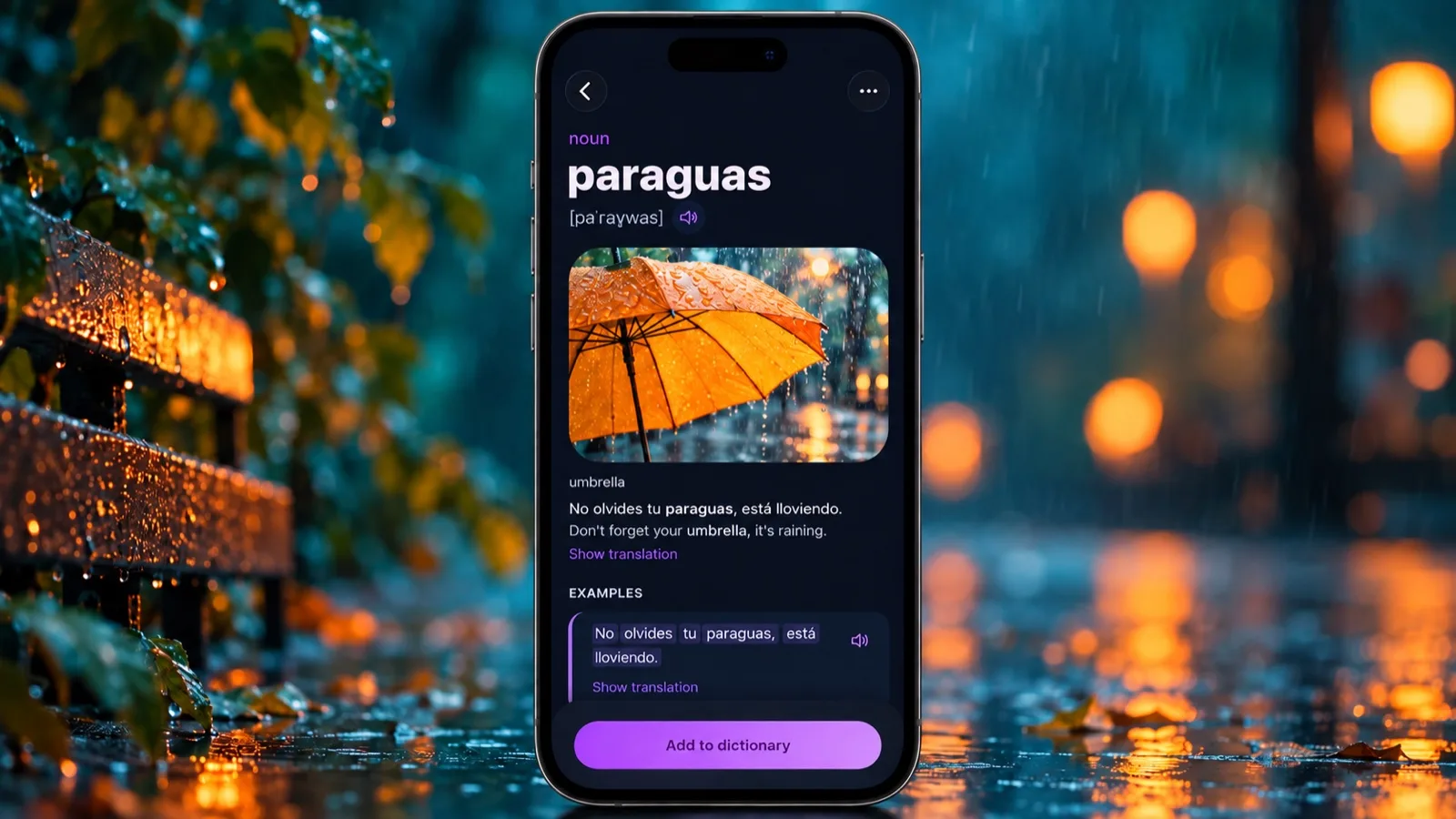
Collecting pictures by hand takes a long time, so it's easier when they're already there. In VibeLing many words come with an image right in the card, next to the translation, pronunciation, audio and examples. You add a word to your dictionary, and later it shows up in your practice together with its picture. The app schedules reviews itself, so the word comes back just when it starts to fade.
The "Guess the picture" game
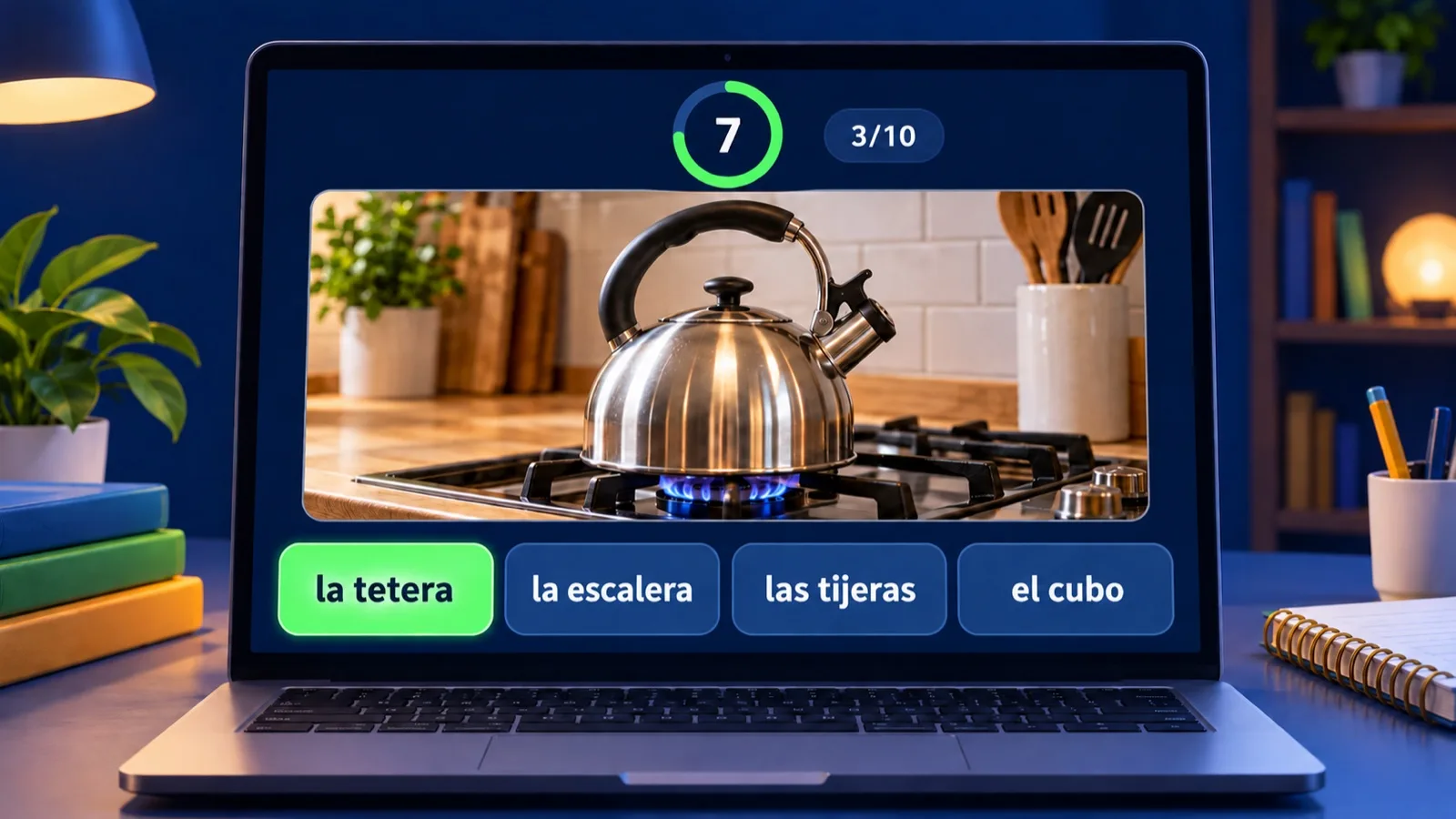
If you want to test yourself right now, try the "Guess the picture" game. The mechanics are simple: you see a photo and four Spanish words and pick the one that fits. Ten pictures in total, ten seconds for each. The time limit is useful here: there simply aren't enough seconds to translate in your head, so you have to recognize the word from the image. You can play in the browser, no sign-up needed.
Words you got wrong can go straight into your dictionary, and they'll keep coming back for review. Other word games, for example matching pairs or listening, are collected on the VibeLing games page.
Common mistakes
- Learning abstract words with pictures. A picture for sin embargo will be random and only confuse you.
- Looking at the word and the picture at the same time. If the Spanish word is written under the picture, you see it but don't recall it. Cover the caption first and try to name the object.
- Using pictures where the main thing is unclear. A photo of a kitchen won't teach you tetera if the kettle is off in a corner.
- Stopping after one look. Without reviews, even a vivid image fades in a few days.
Summary
Pictures work well for concrete words: objects, actions, qualities. They take translation out of the middle and give the word a second trace in memory. Abstract words are better learned in sentences, and everything you learn with pictures still needs spaced reviews.
If you'd like to learn words with pictures without the manual work, give VibeLing a try: you add a word, and the picture, translation, examples and reviews are already in place.