How Sleep Locks In the Spanish Words You Learn
You know the pattern: you work through a dozen new Spanish words in the evening, go to bed, and in the morning half of them sit better than they did the night before. There is nothing mystical about it. While you slept, your brain was doing exactly the thing you sat down with those flashcards for.
Sleep is not a pause between study sessions. It is the second half of the session itself, and without it the first half only works at half strength.
What happens to a new word overnight
When you first meet a word like agobiado, it enters memory in a very fragile form. It is held together with tape: get distracted, switch to something else, and it is gone.
At night the brain goes back over the day's impressions and files them properly. This is called memory consolidation, and both main sleep stages take part in it:
- Slow-wave sleep (the deep kind, most of it in the first half of the night) handles moving fresh traces into longer-term storage. Roughly speaking, this is where yesterday stops being a draft.
- REM sleep (more of it towards morning) is associated with how the new material gets woven into what you already know: the word links up with others like it in meaning, in sound, in the situation you met it in.
That is why it is not only the length of sleep that matters but its wholeness. A night cut short at either end takes away almost all of one stage: go to bed at four and you lose deep sleep; get up four hours earlier than usual and you take REM away from yourself.
Short sleep costs you twice
The first cost is obvious: what you studied yesterday consolidates worse.
The second one is rarely connected to sleep at all. A tired brain is worse at taking in new material — not at recalling it, but at encoding it in the first place. So after a bad night you sit down with your words and work at a loss: the session happens, the time goes, and noticeably less of it sticks.
Which gives you a practical rule that saves a lot of time: if the night was genuinely short, do not load new words that day — run a review of old ones instead. Reviewing something familiar tolerates sleep debt far better than meeting something unfamiliar.
You cannot learn in your sleep
Since we are on the subject, let us close an old idea: putting on an audio course at night and waking up with a bigger vocabulary does not work. That is hypnopaedia, and a sleeping brain does not take in new information from scratch.
Something else does work, and the difference matters: sleep only consolidates what you learned while awake. It can strengthen and connect traces that already exist; it cannot create them out of sound in your headphones. So audio is useful during the day, and at night what is useful is sleeping.
How to use this in practice
Review as the last thing before bed
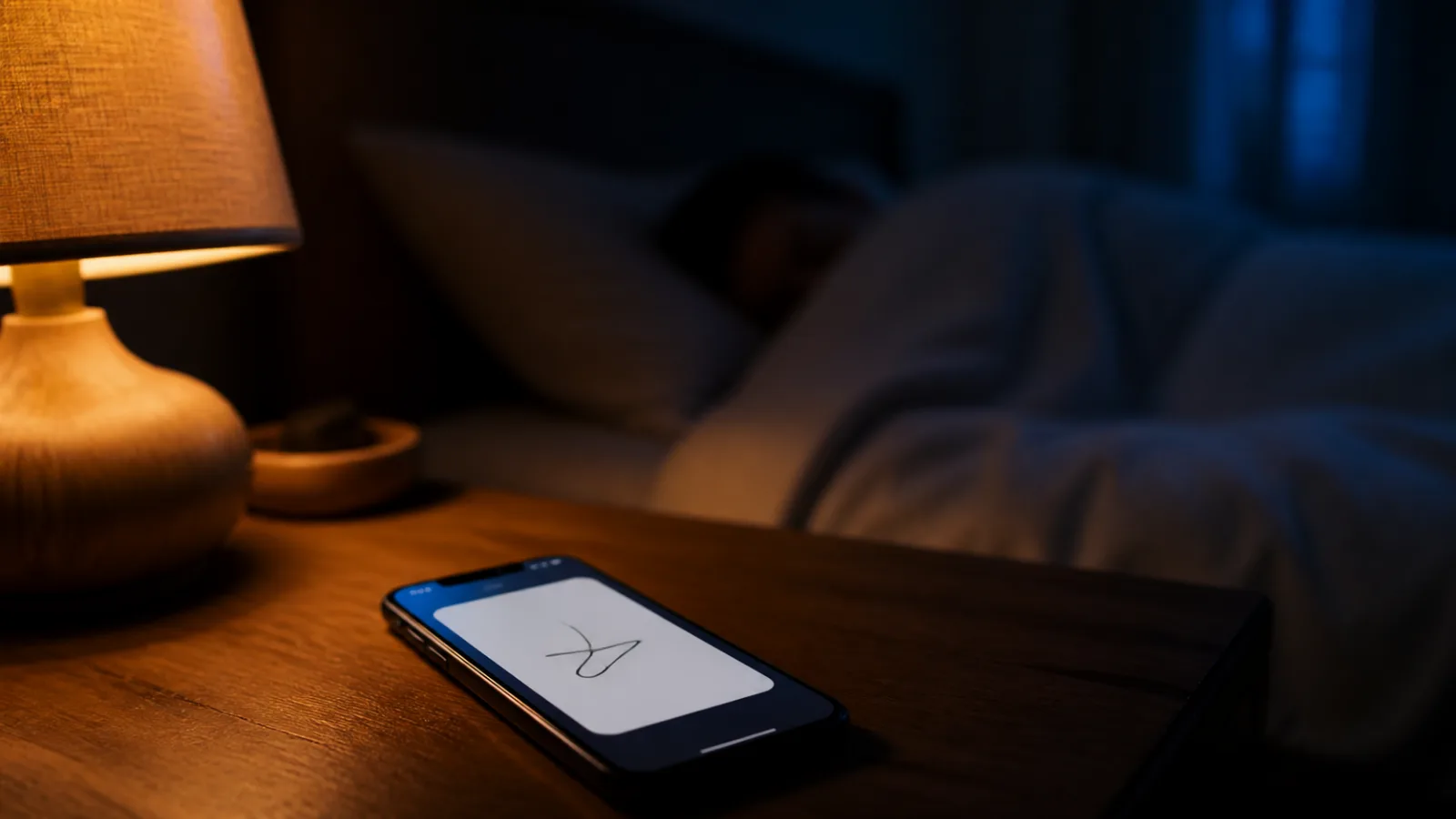
Five to ten minutes of flashcards right before you turn off the light is the most profitable window in the whole day. Between the session and sleep there is no stream of daytime information to paint over what is still fresh.
One caveat: this means a short review, not an hour of cramming in bed. A long, stimulating session with a bright screen pushes falling asleep back, and you lose more than you gain.
Test yourself in the morning
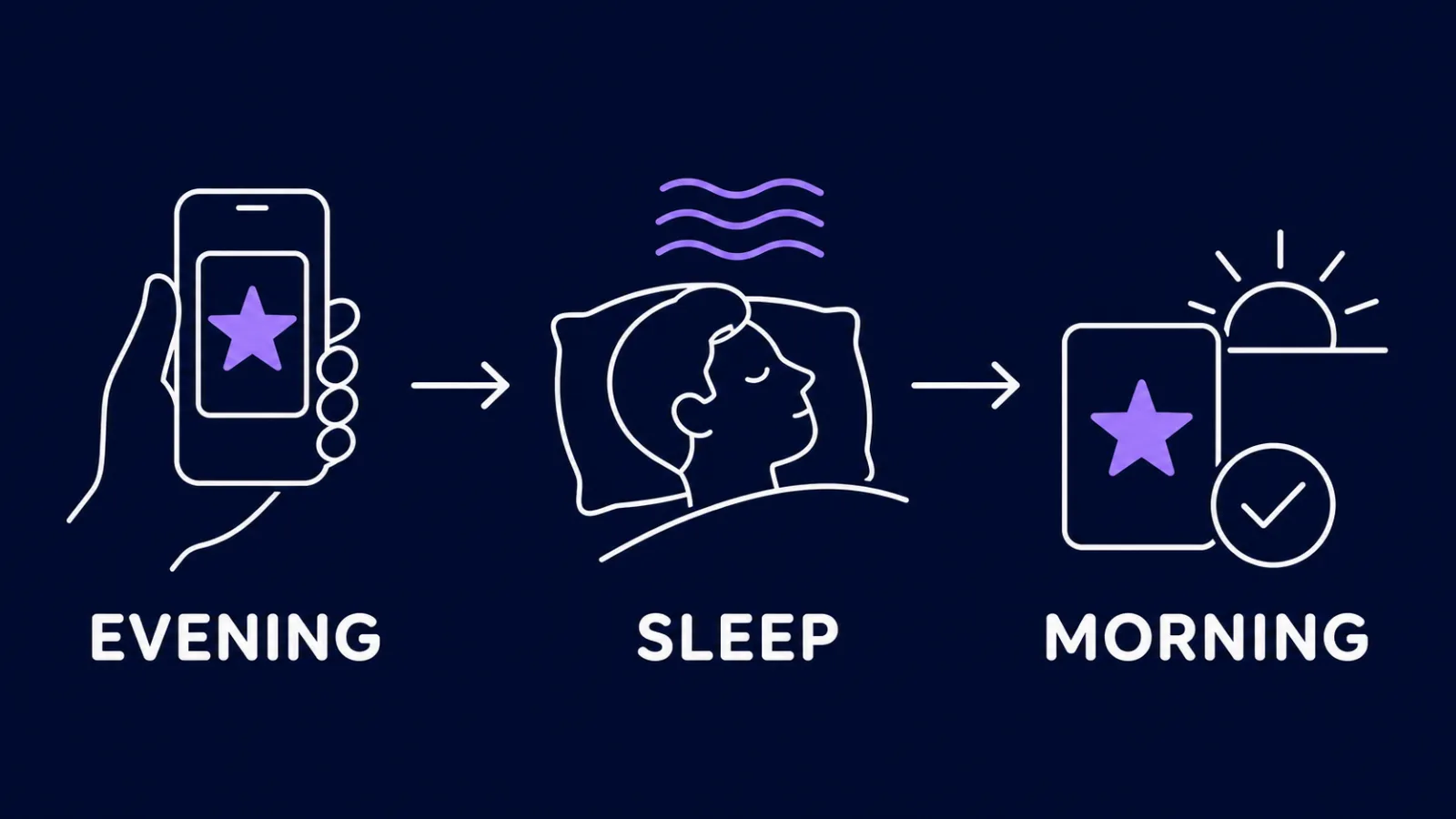
A morning check of yesterday's words gives you two things at once. First, it is a review at an ideal moment — the trace has consolidated but is still fresh. Second, it is an honest measurement: anything that does not come back in the morning was not actually learned yesterday, only recognised inside a card.
Keep a schedule, not just a total
For memory, a regular bedtime matters as much as the number of hours. A floating schedule shifts the stages, and deep sleep no longer falls in the part of the night it was meant for. It is the same principle as with study itself: an even rhythm beats heroic pushes — there is a separate piece on why consistency beats cramming.
Naps count too
A short daytime nap — twenty or thirty minutes — also takes part in consolidation. If you studied words in the morning and can doze after lunch, that works as an extra pass. A long nap usually damages the following night, so there is no point stretching it.
Do not trade the night before an exam
The most common mistake: sitting up until three the night before something important, going through word lists. What you learn in those hours does not have time to consolidate, and a sleep-deprived head is worse at retrieving even what you knew solidly a week ago. Finishing early and going to bed is the smarter move: at that point sleep is worth more than another twenty words.
Sleep and spaced repetition are the same story
Both ideas rest on one mechanism. Spaced repetition stretches your meetings with a word across time, because memory strengthens in the gaps between them rather than during the review itself. Sleep is the part of the gap where most of the work gets done.
That is also why a review schedule copes so badly with sleepless stretches: the intervals assume nights that actually happened. If you want to understand how the intervals themselves are built, there is a detailed piece on spaced repetition and why it works.
The practical consequence is simple: evening reviews beat daytime ones, and words added right before a sleepless night are worth an extra pass, because they consolidated worse than the rest.
Building an evening routine
You do not need much: a short list of words within easy reach before bed, and reviews that show up on their own at the right time.
The easiest version is when words accumulate through the day straight out of your life — a line from a show, an unfamiliar word from an article, an expression from a message — and in the evening all that is left is to run whatever is due. That is how VibeLing works: you save a word together with the phrase you met it in, the app decides when to show it again, and it puts yesterday's words in front of you in the morning, when checking them is most useful.
In short
Sleep locks in the Spanish words you learn: the deep stage moves them into long-term memory, the REM stage links them to what you already know. Sleep loss interferes both with consolidating yesterday and with encoding today. You cannot learn words in your sleep, but you can — and should — consolidate what you already learned.
Review for ten minutes before bed, test yourself in the morning, go to bed at the same time, and do not sit over word lists all night before an exam. It is the cheapest boost to memory available: you were going to sleep anyway.