The First 100 Words to Learn in Any Language
Almost everyone who starts a language from scratch downloads a list of the 1000 most common words in the first week — and closes it the next day. The list is accurate, but it is unusable at the very beginning: hundreds of words with nothing connecting them, and not one of them lets you say something whole.
The first hundred works differently. It is not the top of a frequency list but a working set for the first real situations: greeting someone, asking for something, asking the way, admitting you did not catch that. Here is how that hundred is put together and why.
Why a frequency list is a bad start
Take the hundred most frequent Spanish words and you get roughly this: de, la, que, el, en, y, a, los, se, del. Function words. They really do cover a huge share of any text, but there is nothing to say with them: try building a meaningful sentence out of "de", "que" and "se".
There is a second problem. Function words are almost impossible to learn one by one on flashcards — "de" has no single translation you can memorise and then slot in. They stick inside ready-made phrases, not inside lists. So the first hundred is assembled by task, not by frequency: what does a person need to be able to say in the first few days?
How the first 100 words break down
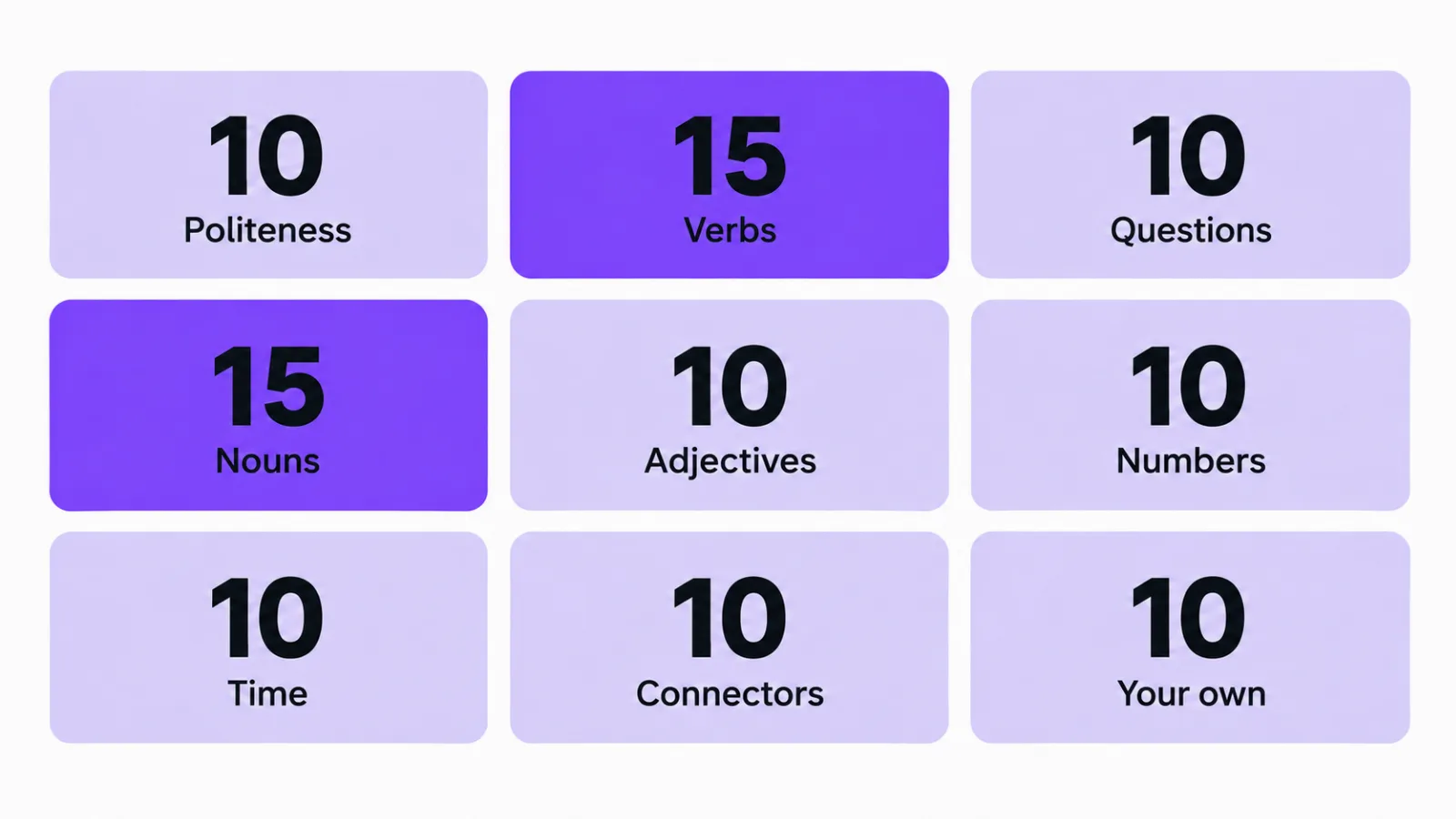
A working hundred has nine groups. The proportions matter more than the exact words: you need a lot of verbs and everyday nouns, and very few pretty adjectives.
| Group | How many | Examples |
|---|---|---|
| Politeness and contact | 10 | hola, adiós, por favor, gracias, perdón, disculpe, sí, no, vale, ayuda |
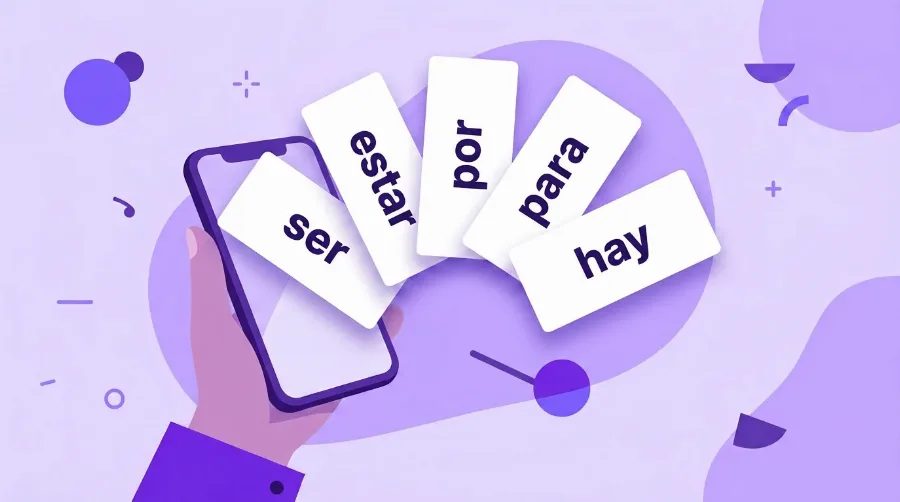
| Core verbs | 15 | ser, estar, tener, querer, necesitar, poder, ir, venir, hacer, saber, entender, decir, dar, ver, hay |
| Question words and pointers | 10 | qué, dónde, cuándo, quién, por qué, cómo, este, ese, aquí, allí |
| Everyday nouns | 15 | agua, comida, dinero, tiempo, día, nombre, lugar, teléfono, casa, trabajo, habitación, billete, precio, calle, baño |
| Adjectives in pairs | 10 | bueno, malo, grande, pequeño, caliente, frío, barato, caro, cerca, lejos |
| Numbers | 10 | uno, dos, tres, cuatro, cinco, seis, siete, ocho, nueve, diez |
| Time and frequency | 10 | ahora, hoy, mañana, ayer, por la mañana, por la tarde, siempre, nunca, a veces, luego |
| Connectors | 10 | y, pero, o, con, sin, para, en, a, muy, no |
| Your own ten | 10 | your job, your city, your hobby, the food you eat — whatever you say about yourself |
The difference between this hundred and the frequency top is immediate. Here almost every word can go straight into a sentence and produce something people actually say.
More verbs than feels necessary
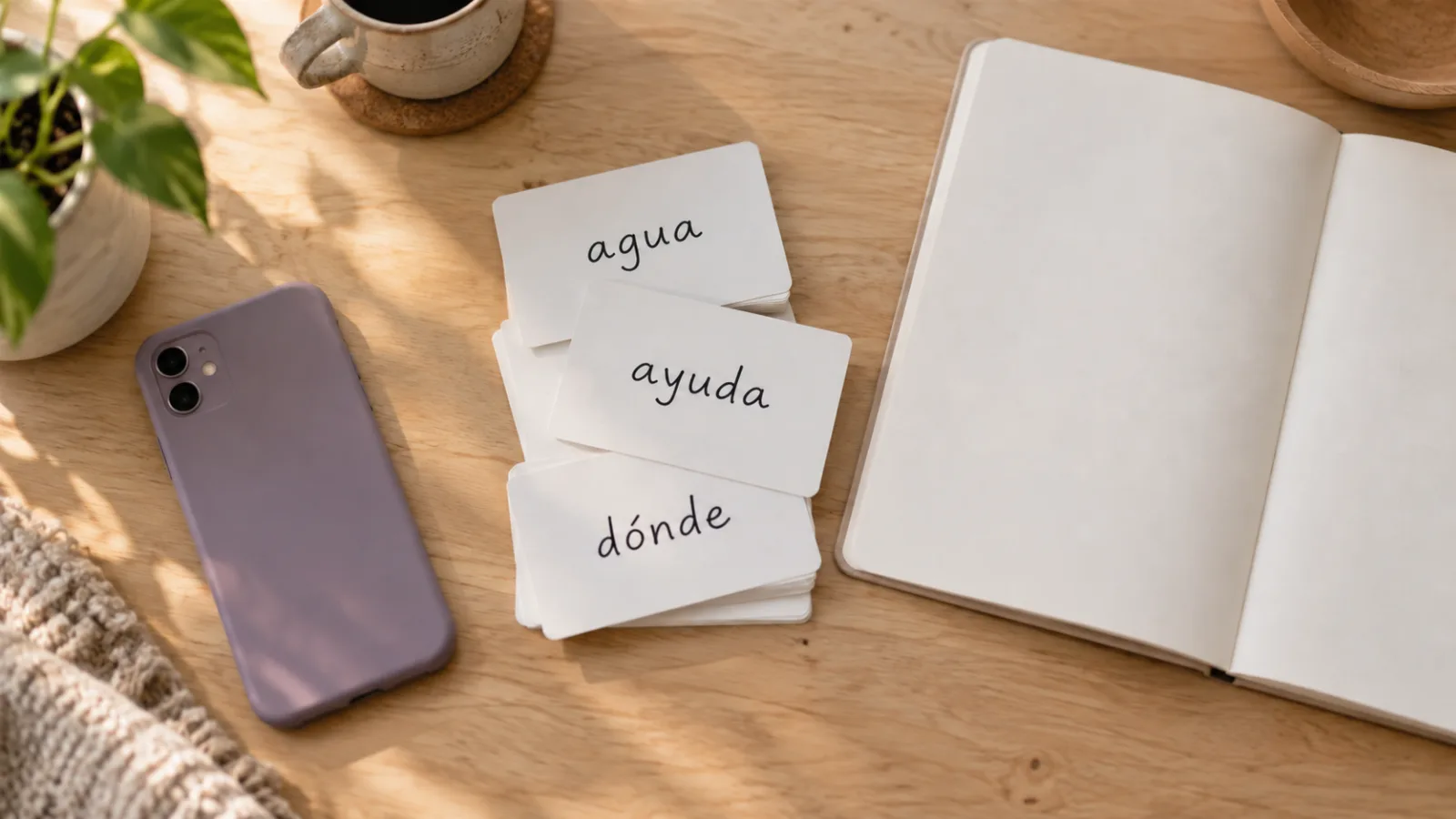
Fifteen verbs out of a hundred is a lot, and it is deliberate. A noun without a verb stays a label: "agua" is not a request, it is a word. Add the verb and you get an utterance: "Necesito agua".
Beginners usually tilt the set the other way: they learn dozens of nouns and then stand there silent, because there is nothing to connect them with. Fifteen basic verbs cover almost everything you need to say in the first month, and a missing noun can be pointed at or looked up mid-conversation.
Learn phrase templates, not single words
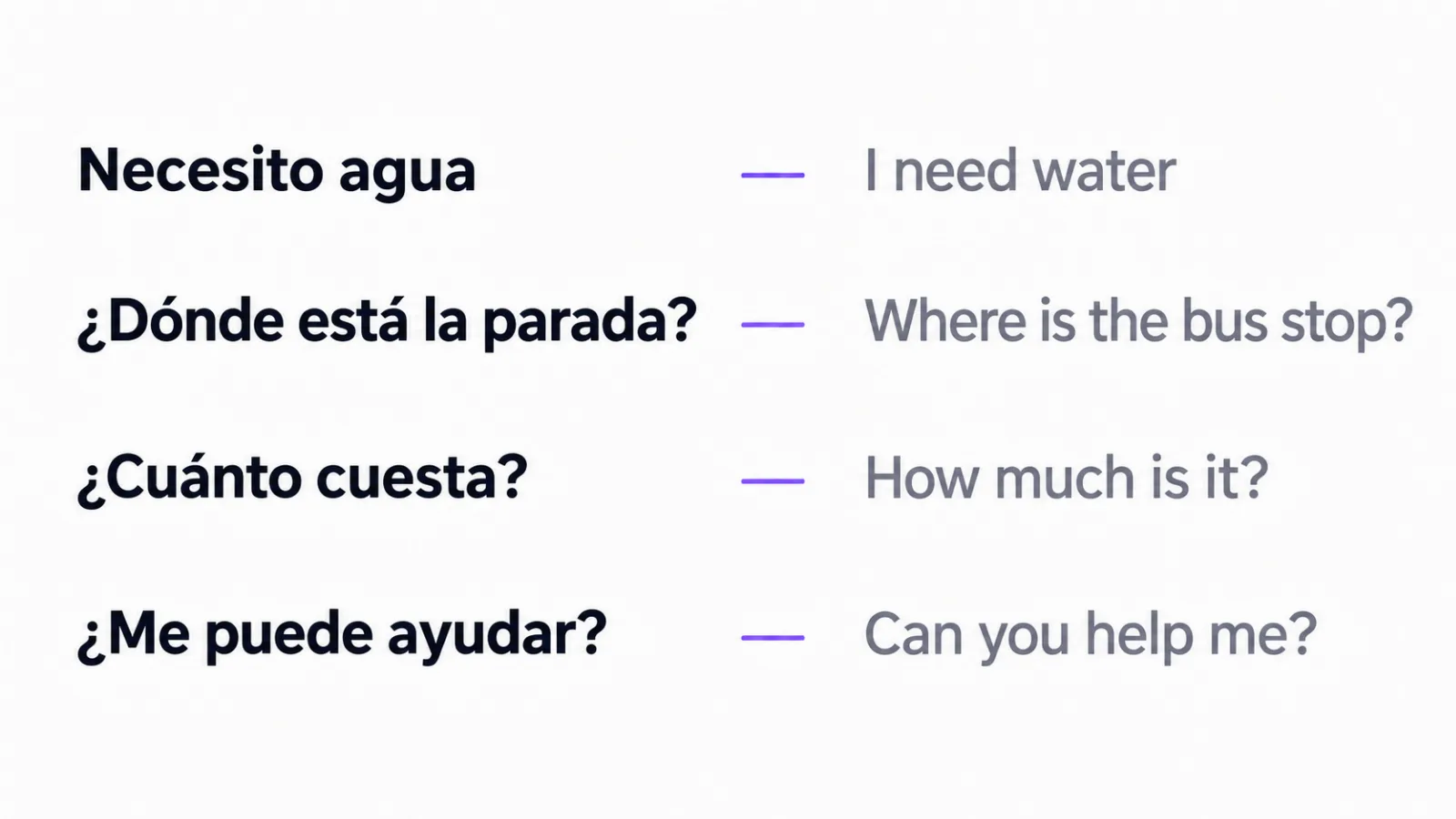
An isolated word does not stay in your head: it has no situation and no neighbours. So the first hundred is assembled straight away into short templates where exactly one word changes.
Necesito agua. — I need water.
¿Dónde está la parada? — Where is the bus stop?
¿Cuánto cuesta? — How much is it?
No entiendo. ¿Puede repetir, por favor? — I don't understand. Can you repeat that?
¿Me puede ayudar? — Can you help me?
Each template takes a new word from the list: necesito dinero, necesito ayuda, dónde está el baño, dónde está la calle. One construction gives you a dozen ready sentences, and the function words come along with it — which is the only way they are ever learned.
Your own ten matter more than anyone else's
The last ten words do not come from a ready-made set. They are yours: what you do for a living, where you are from, what your evenings look like, what you eat and what you avoid. A developer and a nurse have a first hundred that differs on exactly those ten words.
The reason is that first conversations in any language are almost always about you: who you are, where you are from, what you do. Without those words the exchange dies on the second question, even when you know the other ninety cold. There is more on why a personal list beats a ready-made one in the piece on why your own word collections beat ready-made lists.
How long it actually takes
A hundred words is not a weekend project. Realistically: two to three weeks at ten or fifteen minutes a day, if each word is not just read but recalled several times without a prompt and said out loud at least once.
Going faster does not help. A word you meet once is gone within days; to keep it you have to come back to it after a day, then after three, then after a week. At a hundred words you can still run that schedule by hand — once you have several hundred, you cannot.
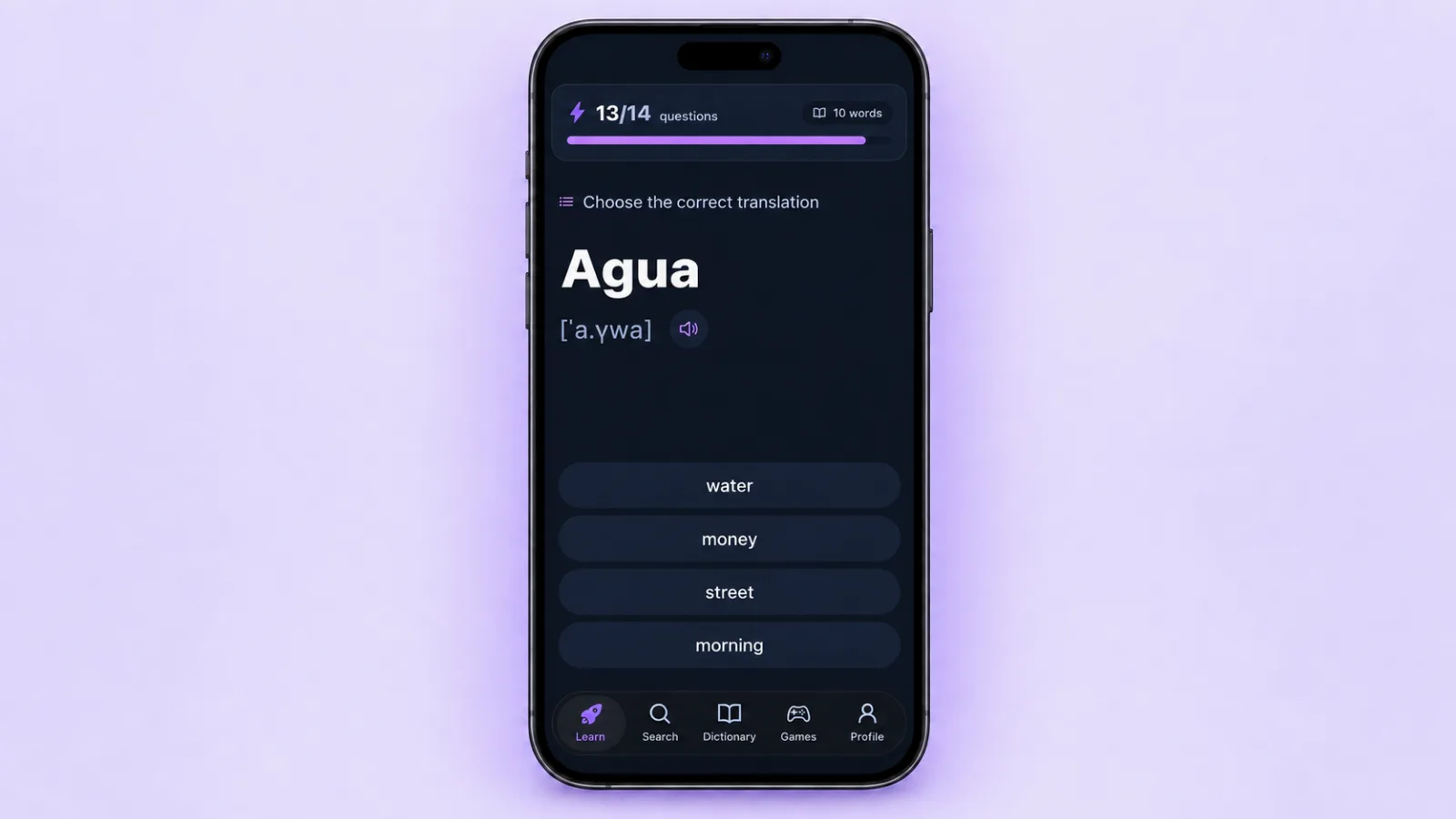
That part is worth handing to an app. In VibeLing a word goes in as one line, the app fills in the translation, an example and the audio, and then brings it back exactly when it is starting to fade. Your own words are unlimited, and your own ten are precisely the part a personal dictionary exists for.
What comes after the hundred
After the first hundred you do not expand in every direction — you expand into your own situations. Someone heading on a trip needs transport and food; someone starting a job needs tasks and meetings. There is no universal second list, and the next hundred does not have to come from the frequency top either.
Frequency lists do become useful at that point: you finally have a frame to attach things to. If you want to know how much those rankings really give you, there is a breakdown of the 1000 most common Spanish words.
Start with the nine groups above, add your own ten, and review the set for two or three weeks. A hundred words is not fluency, but it is the first point where you can say something to an actual person and be understood, instead of only recognising words in a textbook.