← All updates

VibeLing 85.11.0

Grammar under every word in every language you can learn: article, gender, cases, plural, verb forms and aspect, Russian stress.

01

Spanish: article, gender and forms

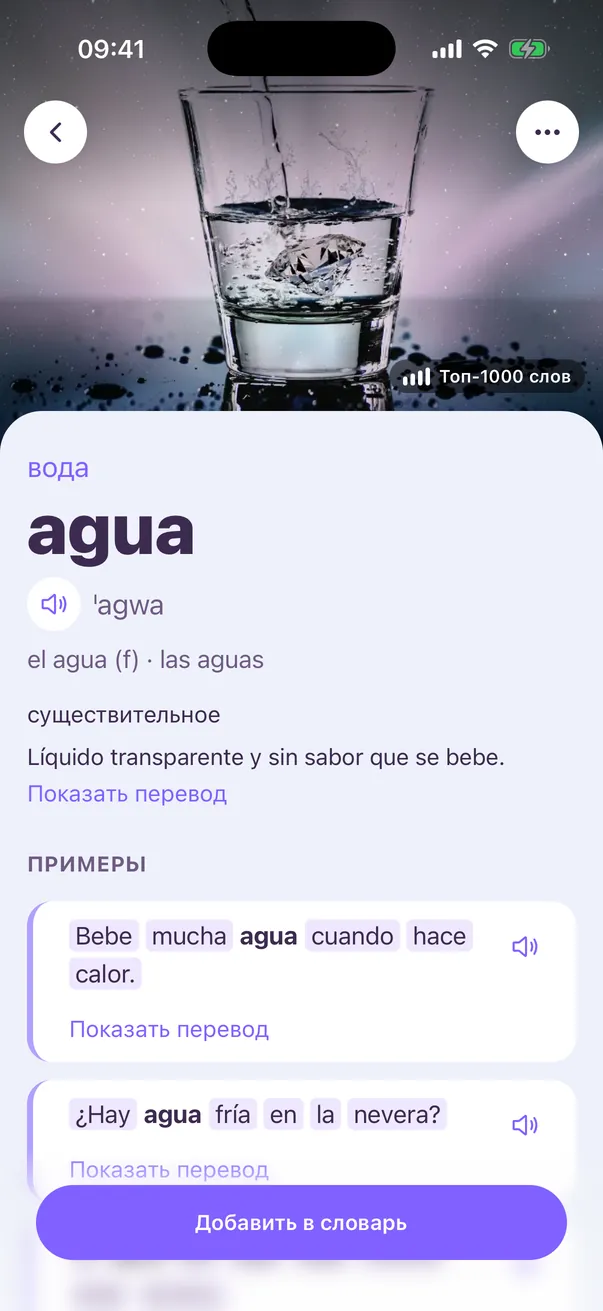
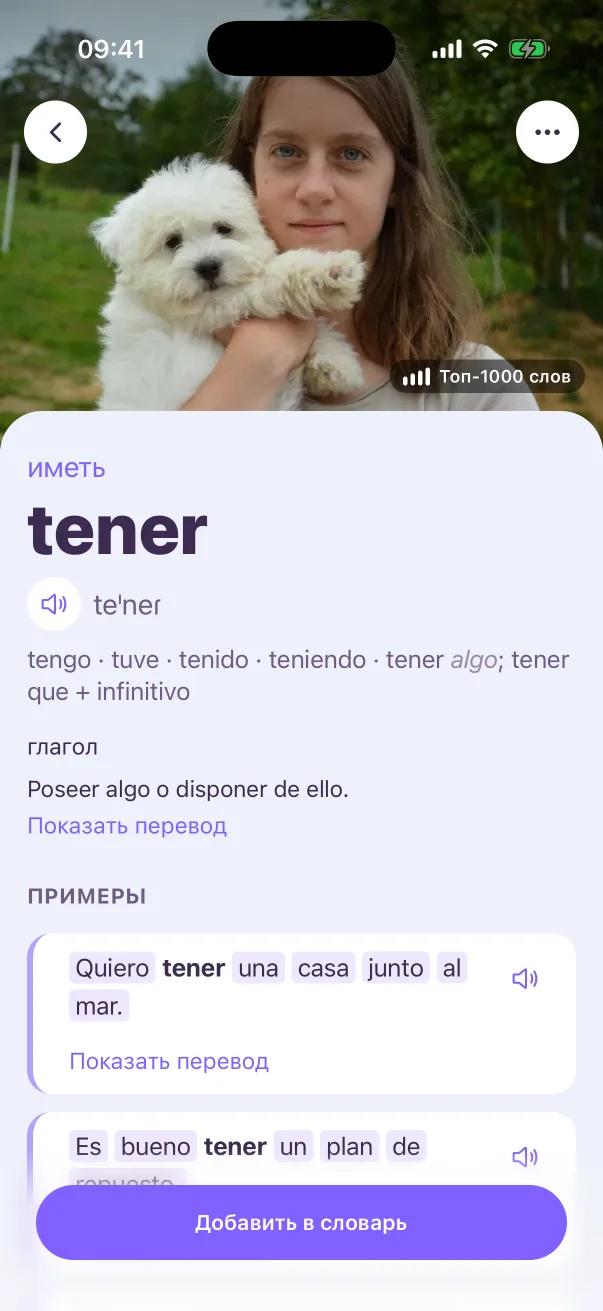
Spanish words now show their article, gender and how they change: el agua (f) · las aguas, rojo, roja · rojos, rojas. Irregular verbs show their key forms — tengo · tuve · tenido — along with the patterns you need to use them, like tener que + infinitivo
Spanish: article, gender and forms
02

English: what rules won’t tell you

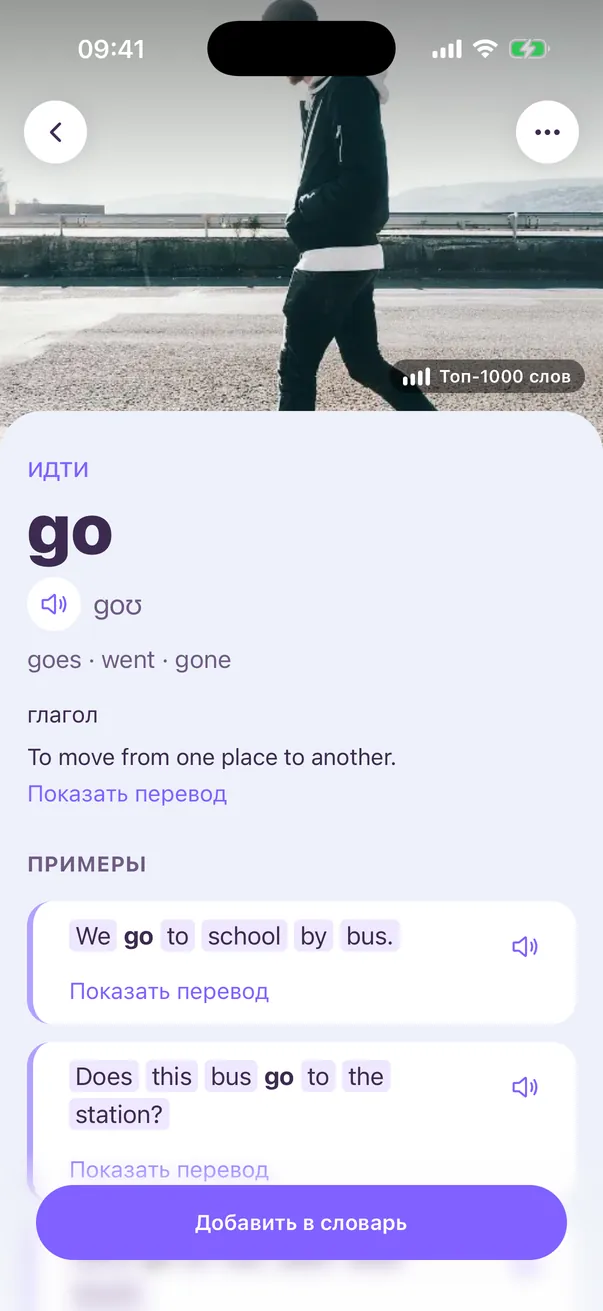
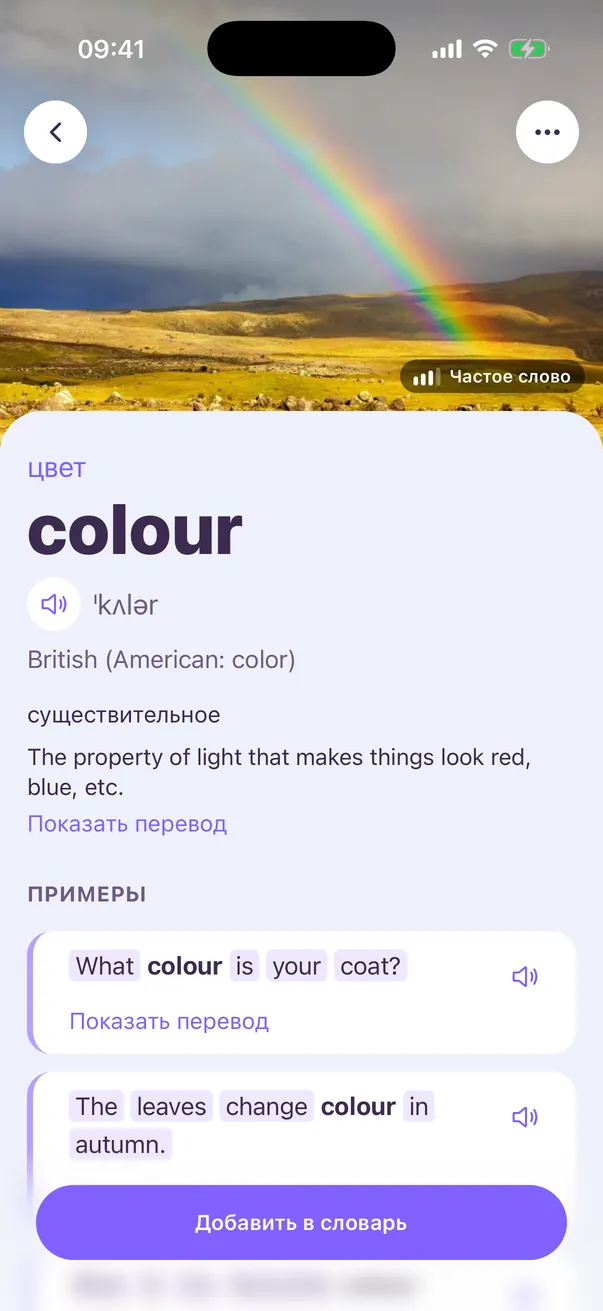
English words show only what learners get wrong: irregular forms (goes · went · gone, child · children), uncountable nouns (advice), the article by sound (an hour), irregular comparison (good · better · best), British or American spelling (colour — British, American: color) and the preposition after a verb (depend on somebody/something).

English: what rules won’t tell you
03

German: cases, forms and prepositions

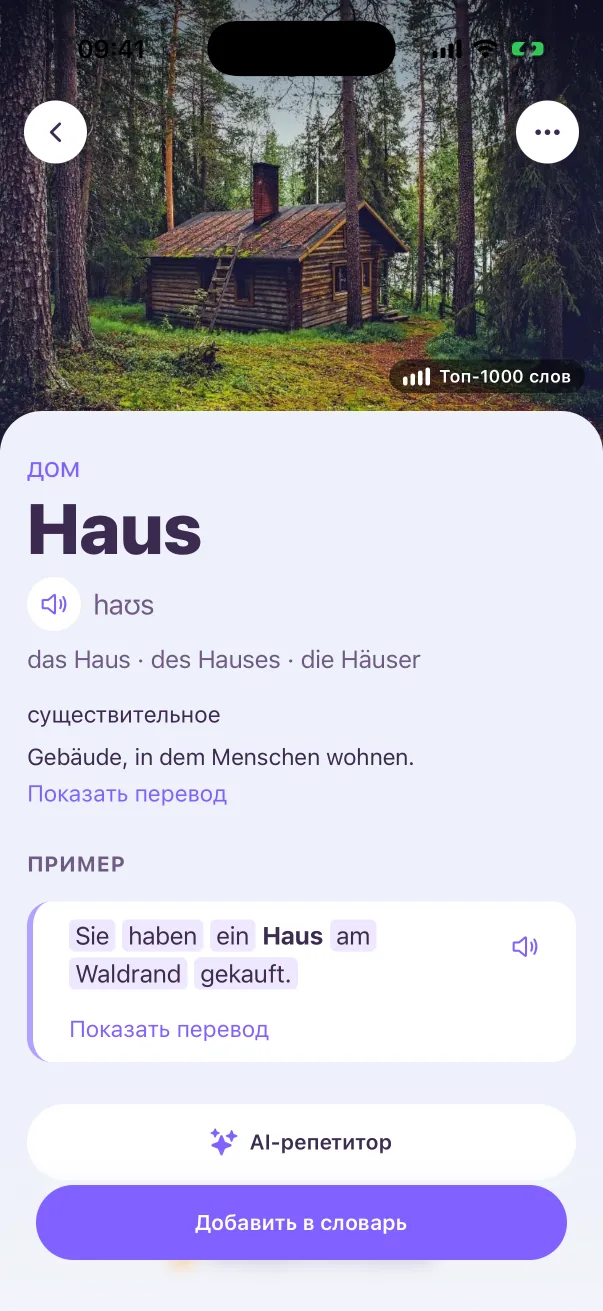
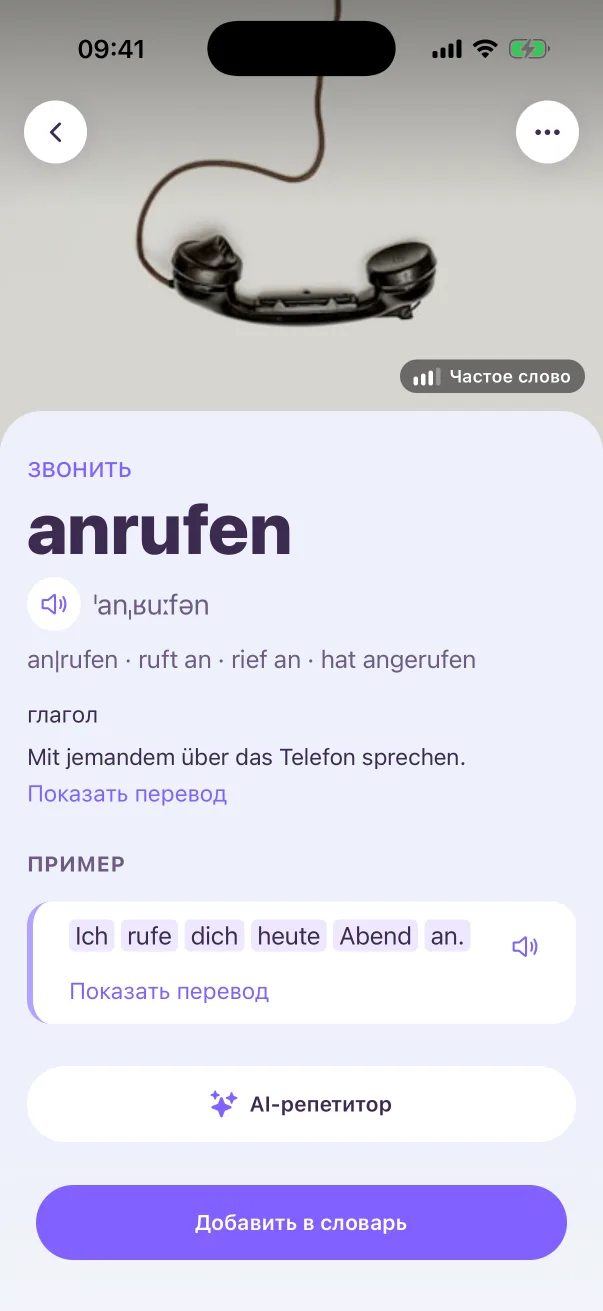
German nouns show their article, genitive and plural: das Haus · des Hauses · die Häuser, der Junge · des Jungen. Verbs show their three key forms with the auxiliary, the separable prefix (an|rufen · ruft an · rief an · hat angerufen) and the case or preposition they take: helfen + Dat., warten auf + Akk. Prepositions show their case (mit + Dat.), adjectives their irregular comparison (gut · besser · am besten), and jobs their feminine form (der Lehrer · die Lehrerin).

German: cases, forms and prepositions
04

French: gender, verb forms and prepositions

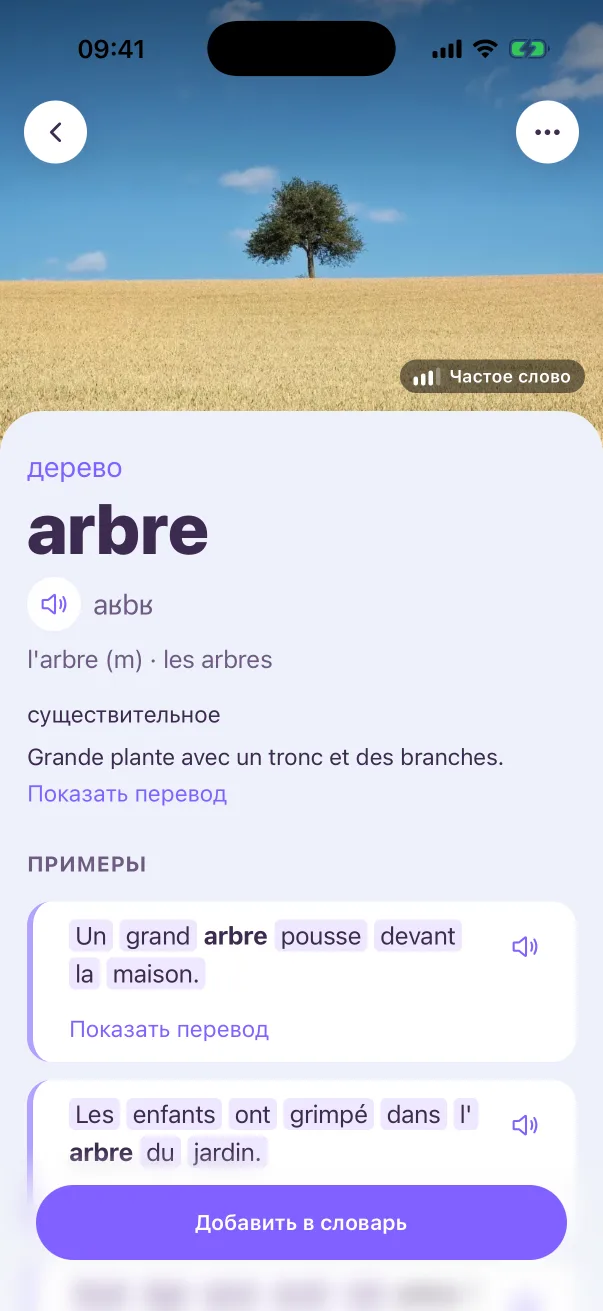
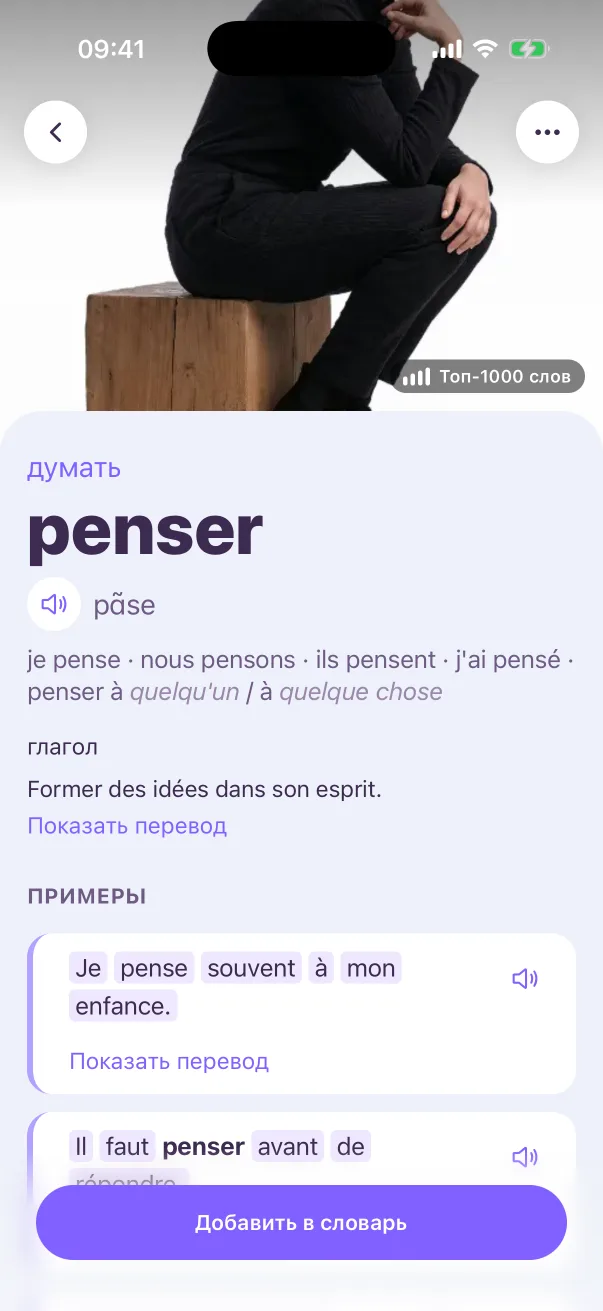
French nouns show their gender and plural, even when the article merges with the word: l'arbre (m) · les arbres, le héros · les héros. Adjectives show the feminine: beau (bel), belle · beaux, belles. Verbs show je, nous, ils and the passé composé with the right auxiliary, plus the preposition they need: je pense · nous pensons · ils pensent · j'ai pensé · penser à quelqu'un / à quelque chose.

French: gender, verb forms and prepositions
05

Italian: article, plural and verb forms

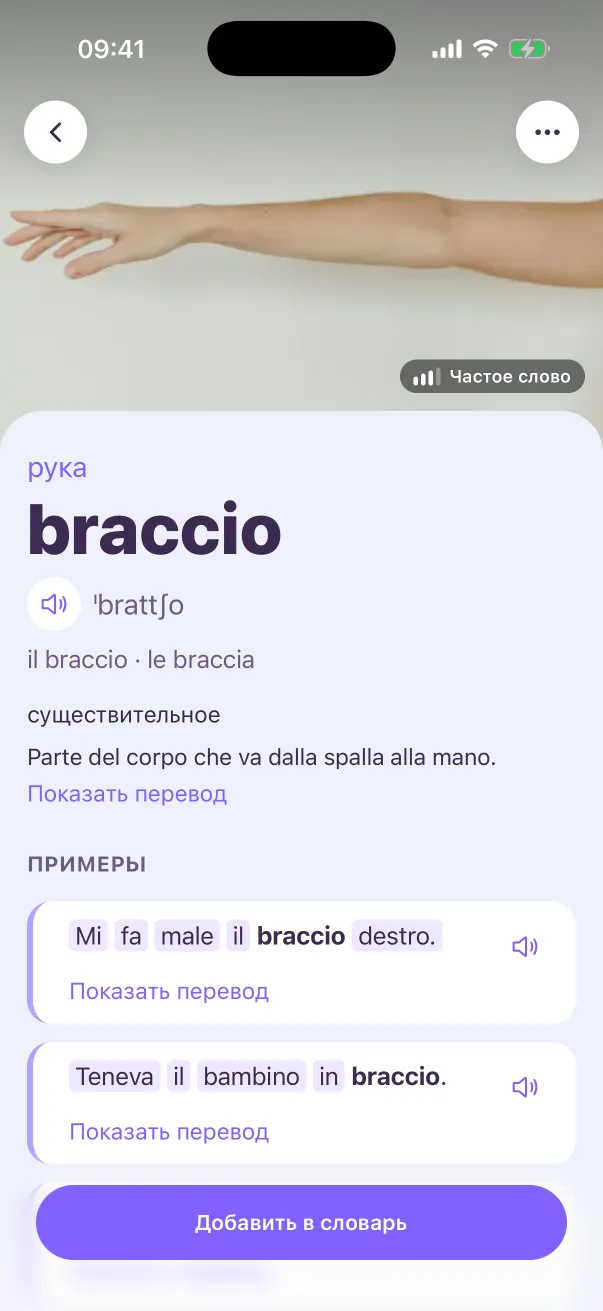
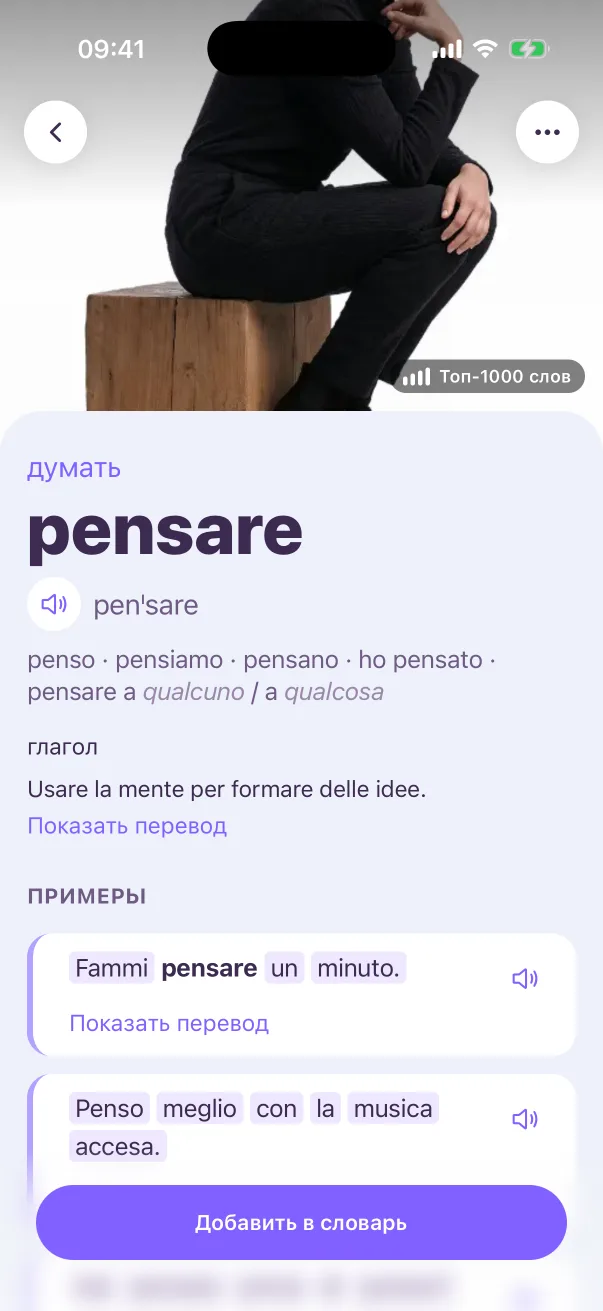
Italian nouns show the article, which depends on how the word begins, and the plural: lo studente · gli studenti, l'amico (m) · gli amici — including plurals that switch gender: il braccio · le braccia, l'uovo · le uova. Adjectives show the feminine: rosso, rossa · rossi, rosse. Verbs show io, noi, loro and the passato prossimo with the right auxiliary, plus the preposition they need: penso · pensiamo · pensano · ho pensato · pensare a qualcuno / a qualcosa.

Italian: article, plural and verb forms
06

Portuguese: article, plural and verb forms

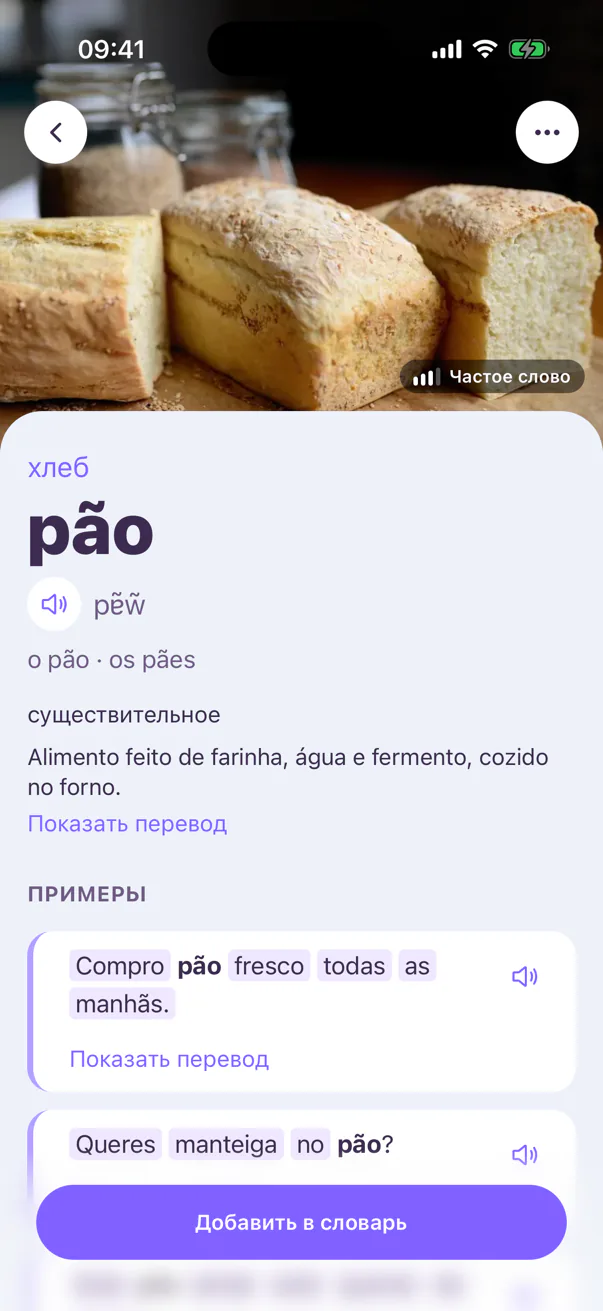
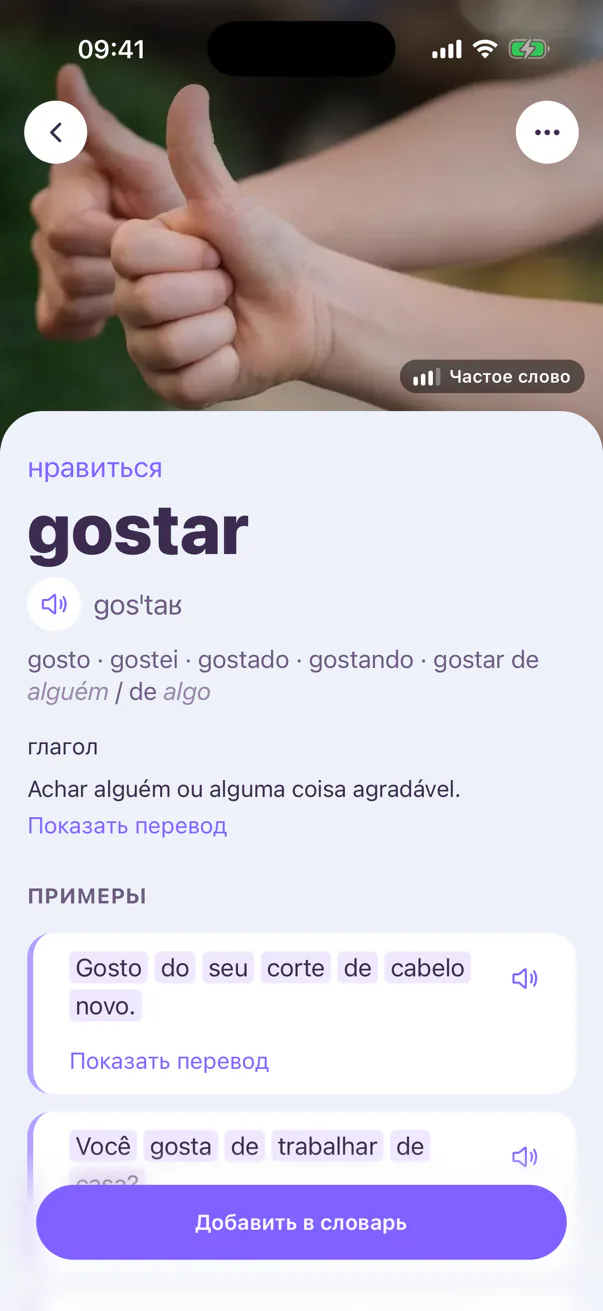
Portuguese nouns show the article and the plural: o pão · os pães. Verbs show eu in the present and past and the participle — plus the gerund in Brazilian Portuguese — and the preposition they need: gosto · gostei · gostado · gostando · gostar de alguém / de algo.

Portuguese: article, plural and verb forms
07

Romanian: article, cases and verb forms

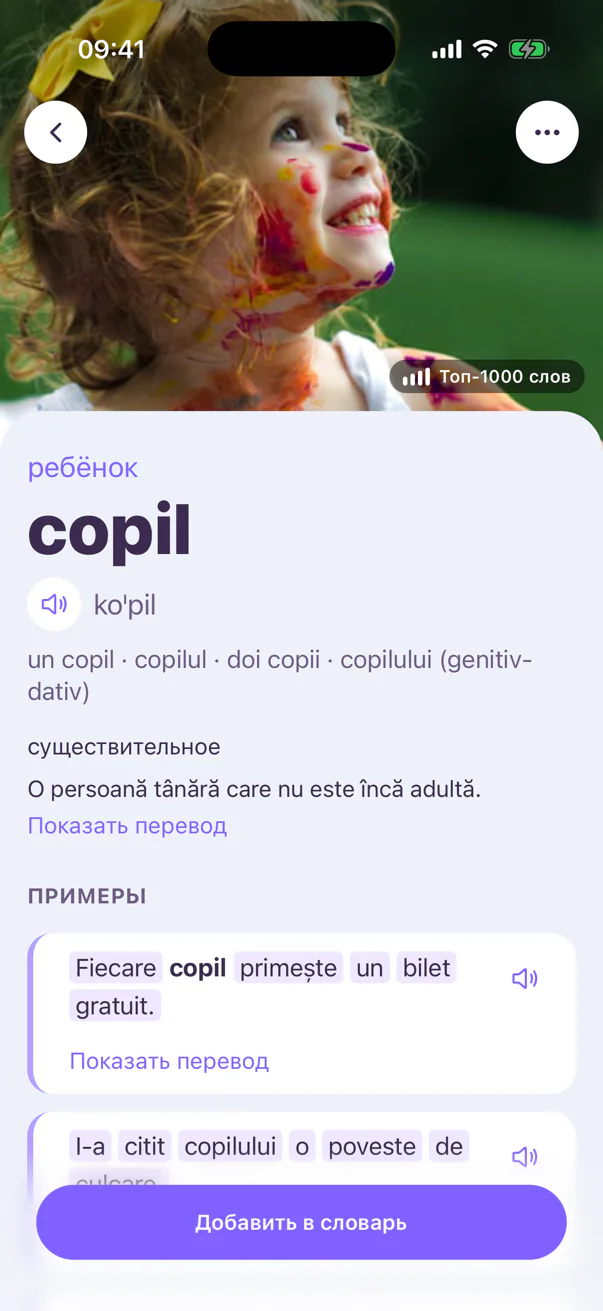
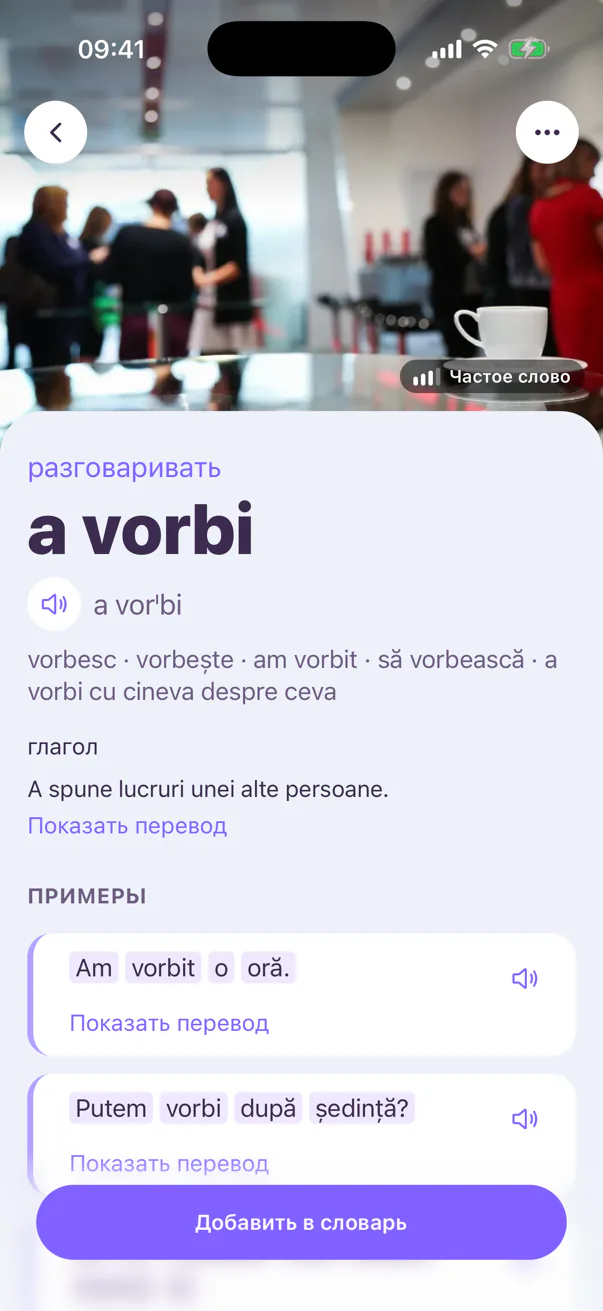
Romanian nouns show the indefinite and definite article, the plural with a numeral and the genitive-dative: un copil · copilul · doi copii · copilului. Verbs show eu and el in the present, the past, the conjunctive and the prepositions they need: vorbesc · vorbește · am vorbit · să vorbească · a vorbi cu cineva despre ceva.

Romanian: article, cases and verb forms
08

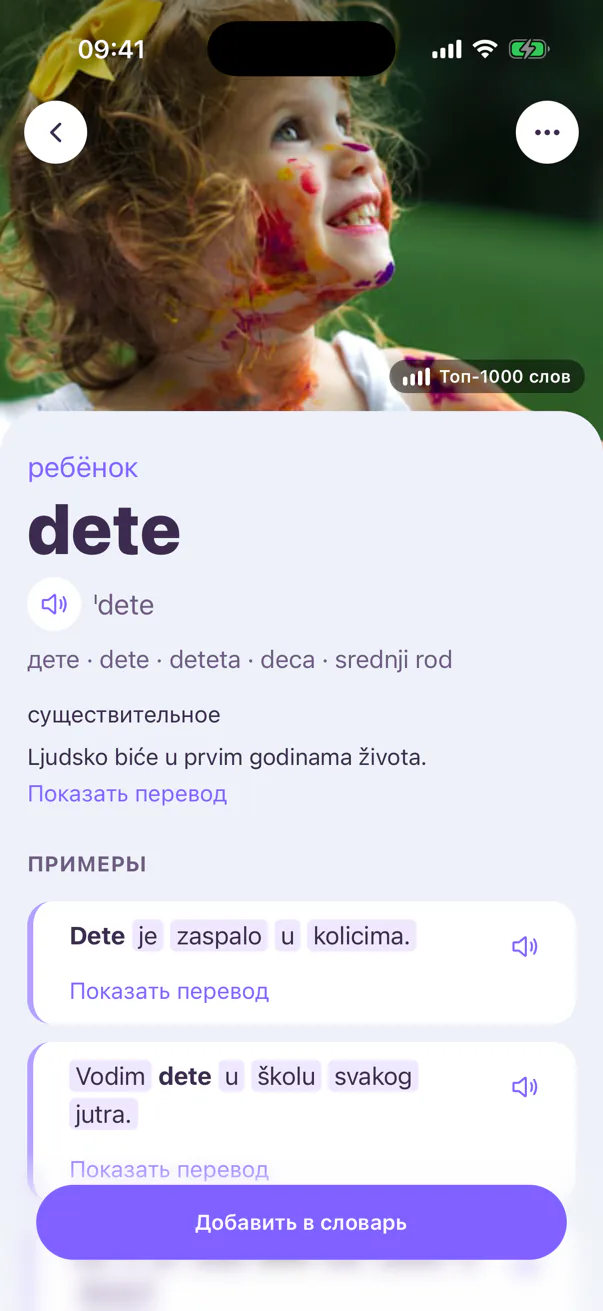
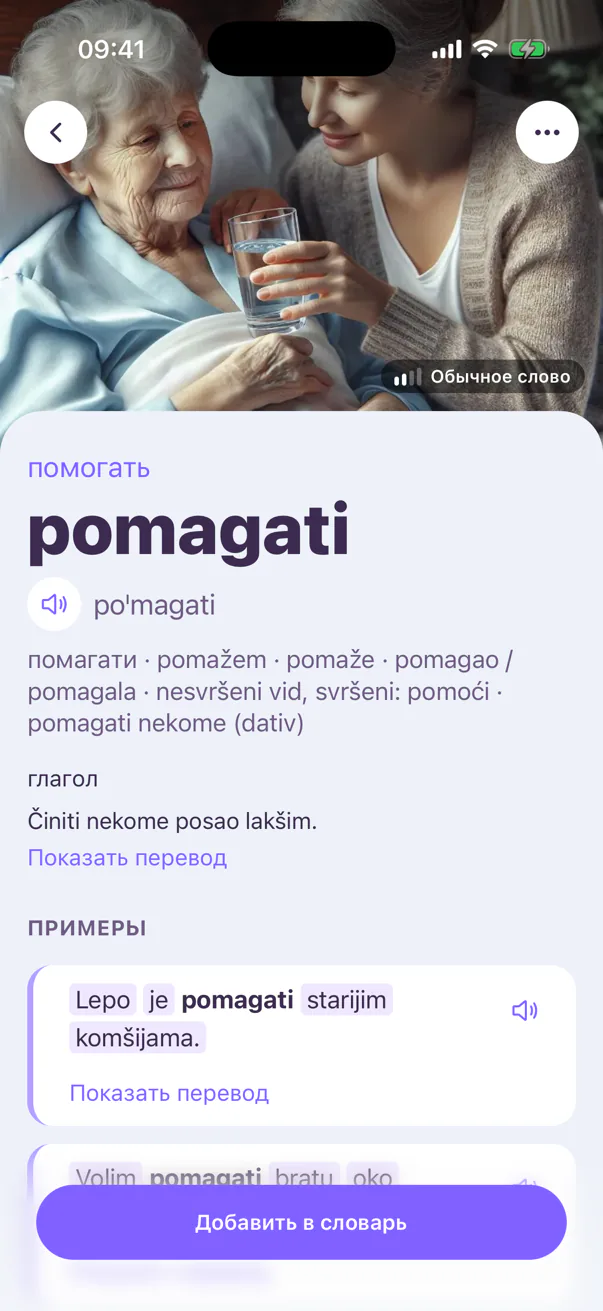
Serbian: Cyrillic, cases and verb aspect

Serbian words show their Cyrillic spelling, the genitive, the plural and the gender: дете · dete · deteta · deca · srednji rod. Verbs show present and past forms, the aspect with its pair and the case they take: pomažem · pomaže · pomagao / pomagala · nesvršeni vid, svršeni: pomoći · pomagati nekome (dativ).

Serbian: Cyrillic, cases and verb aspect
09

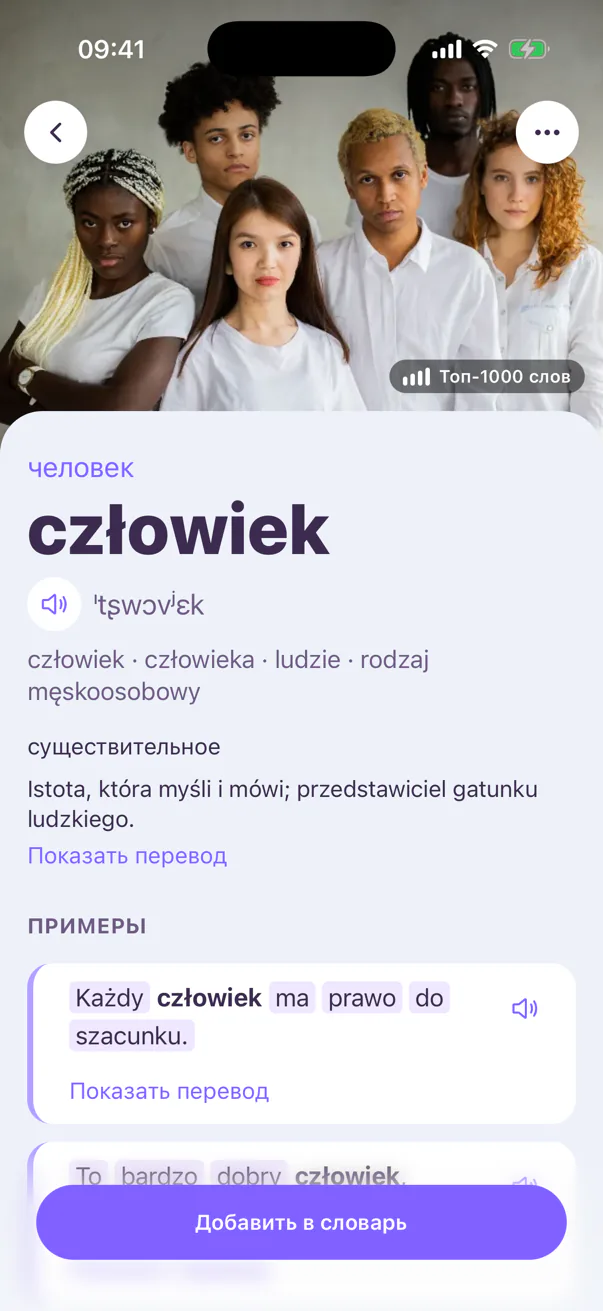
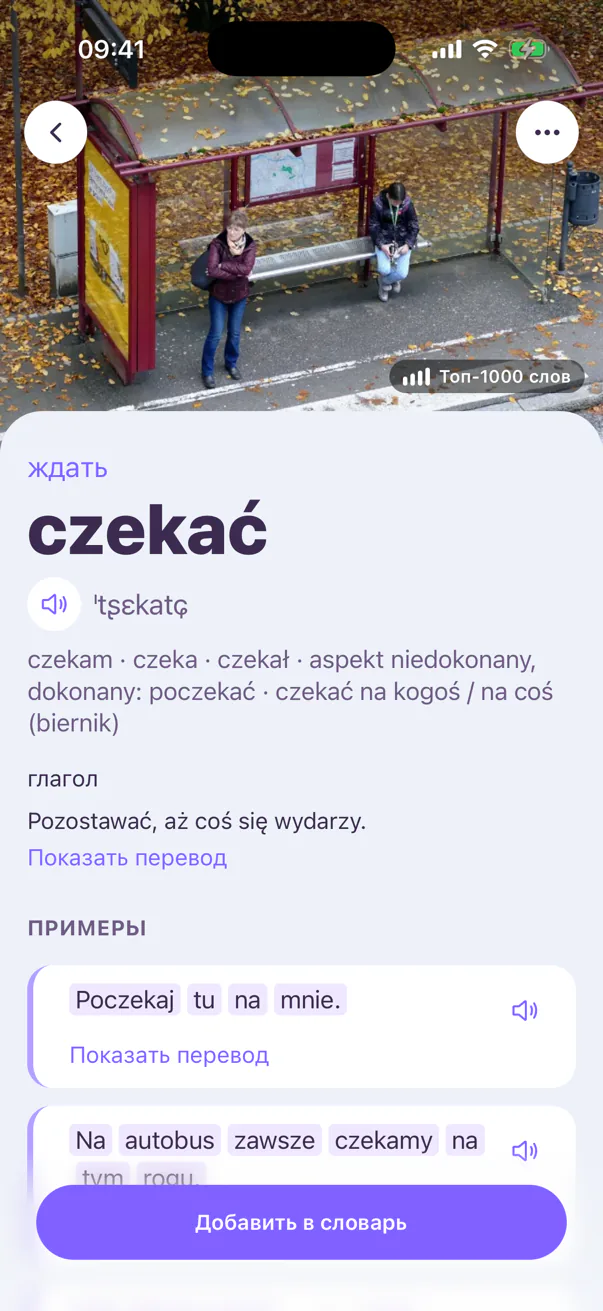
Polish: masculine subgenders, cases and aspect

Polish nouns show the genitive, the plural and the gender, including the three masculine subgenders: człowiek · człowieka · ludzie · rodzaj męskoosobowy. Verbs show present and past forms, the aspect with its pair and the case they take: czekam · czeka · czekał · aspekt niedokonany, dokonany: poczekać · czekać na kogoś / na coś (biernik).

Polish: masculine subgenders, cases and aspect
10

Czech: animacy, declension pattern and aspect

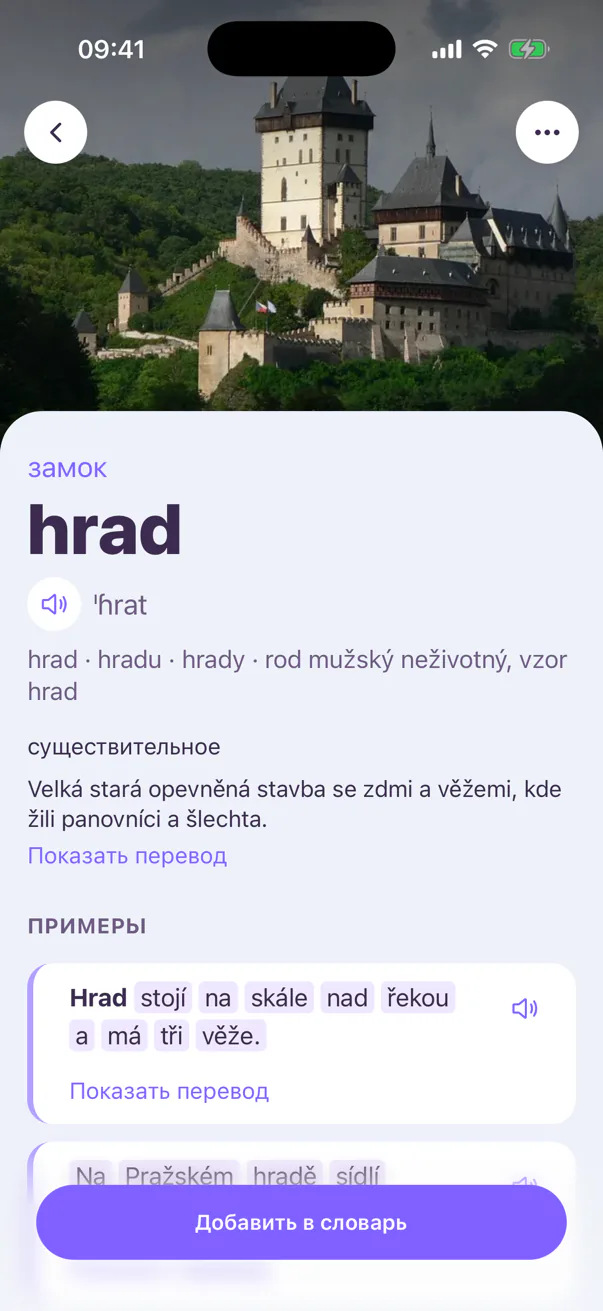
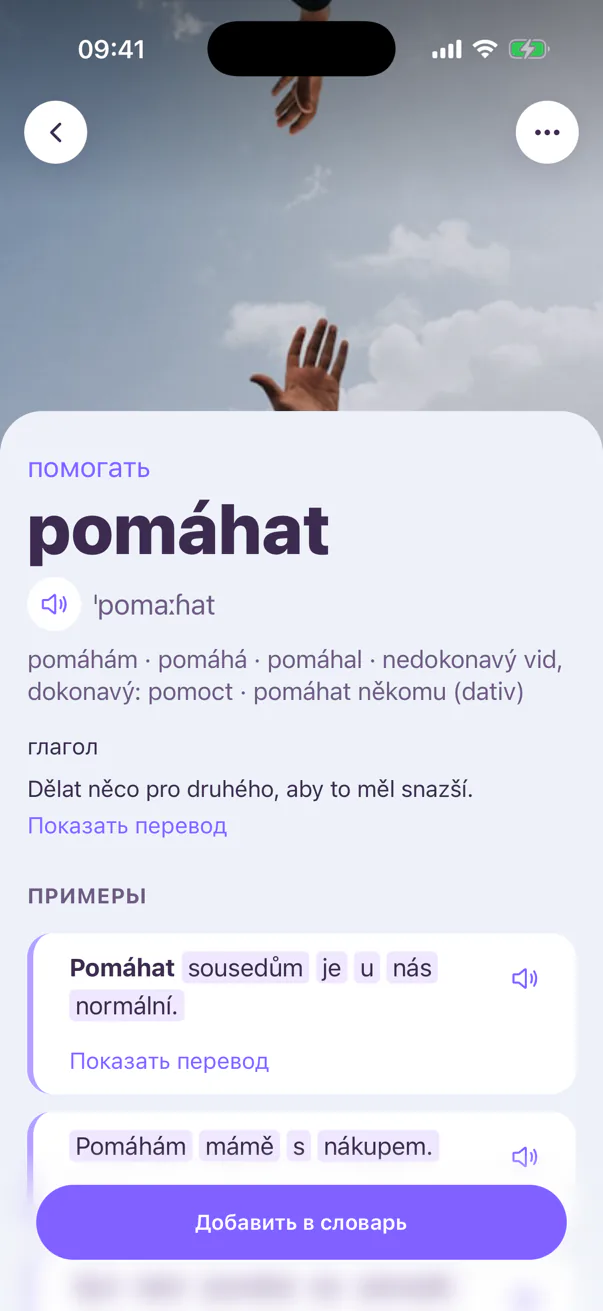
Czech nouns show the genitive, the plural, the gender with masculine animacy and the declension pattern: hrad · hradu · hrady · rod mužský neživotný, vzor hrad. Verbs show standard literary forms, the aspect with its pair and the case they take: pomáhám · pomáhá · pomáhal · nedokonavý vid, dokonavý: pomoct · pomáhat někomu (dativ).

Czech: animacy, declension pattern and aspect
11

Russian: stress, cases and aspect

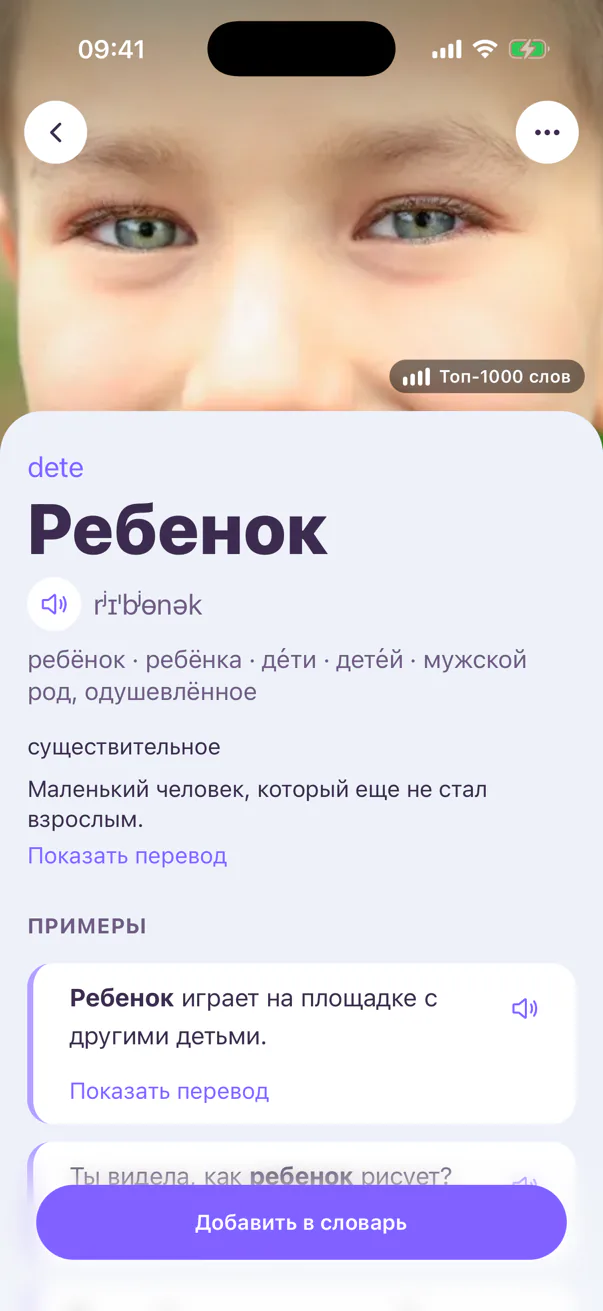
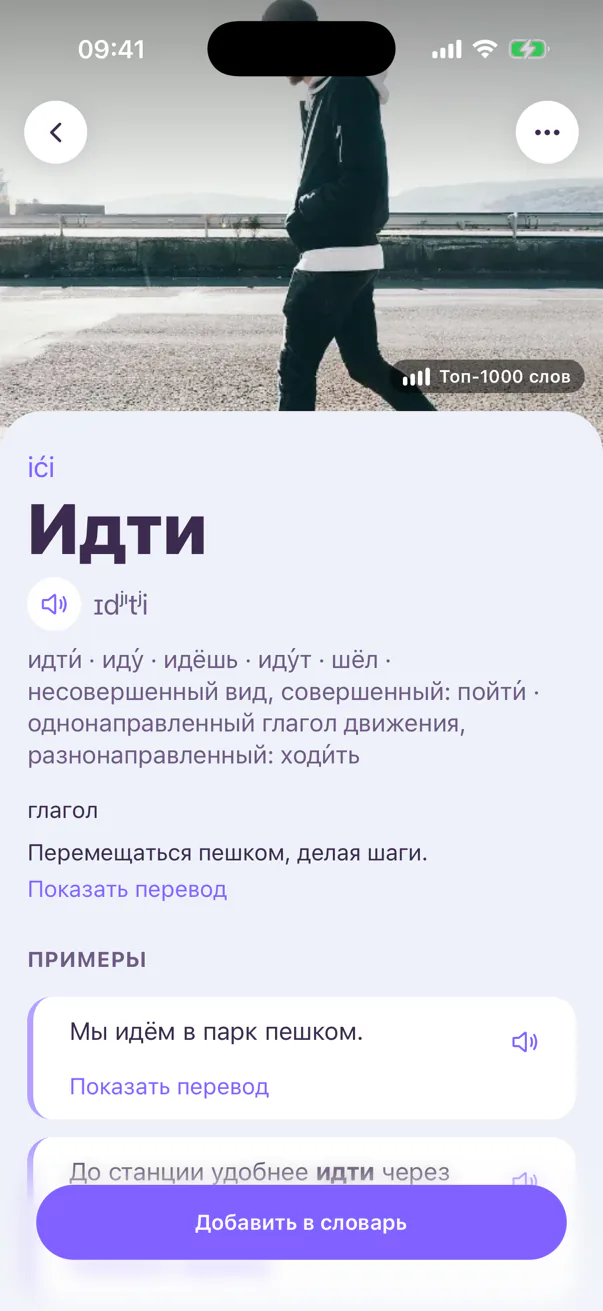
Russian words now show the stress in every form and the letter ё, even when the headword is typed with е: ребёнок · ребёнка · дети · детей · мужской род, одушевлённое. Verbs show я · ты · они and the past, the aspect with its pair, and verbs of motion show their direction: идти · иду · идёшь · идут · шёл · несовершенный вид, совершенный: пойти · однонаправленный глагол движения, разнонаправленный: ходить.

Russian: stress, cases and aspect
12

Turkish: cases, consonant changes and the aorist

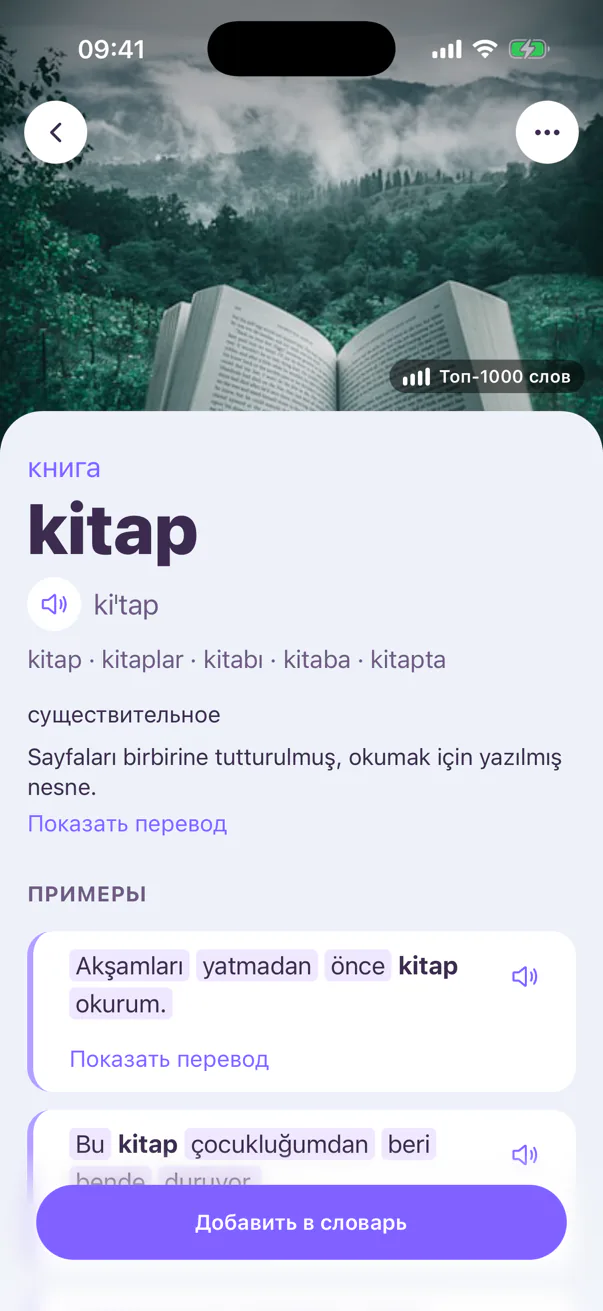
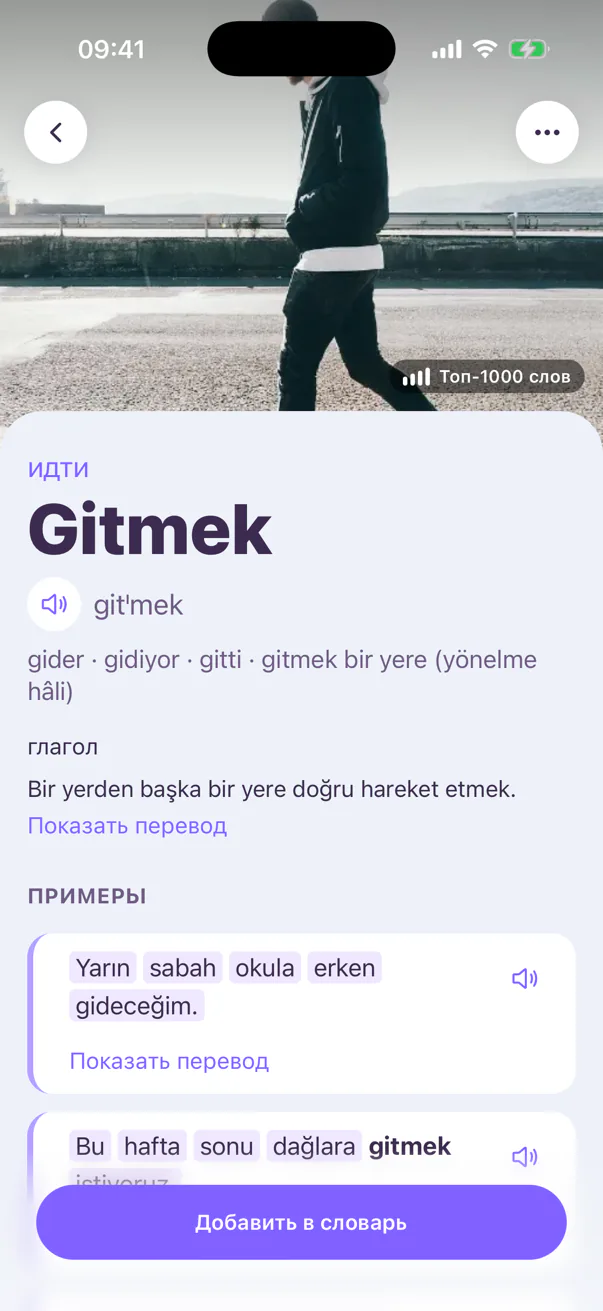
Turkish nouns show the plural and the cases with the right endings, revealing both the consonant change and vowel harmony: kitap · kitaplar · kitabı · kitaba · kitapta. Loanwords that take front-vowel endings are marked: saat · saatler · saati. Verbs show the aorist, present and past, plus the case they take: gider · gidiyor · gitti · gitmek bir yere (yönelme hâli).

Turkish: cases, consonant changes and the aorist
13

Estonian: principal parts and “where to / where / where from”

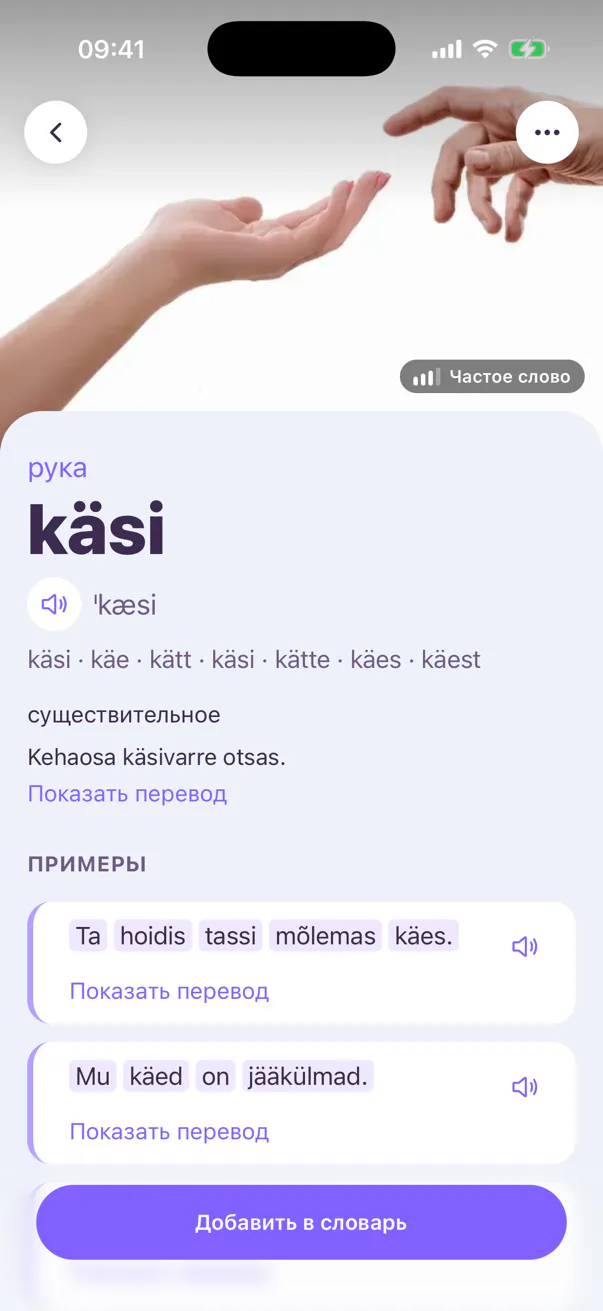
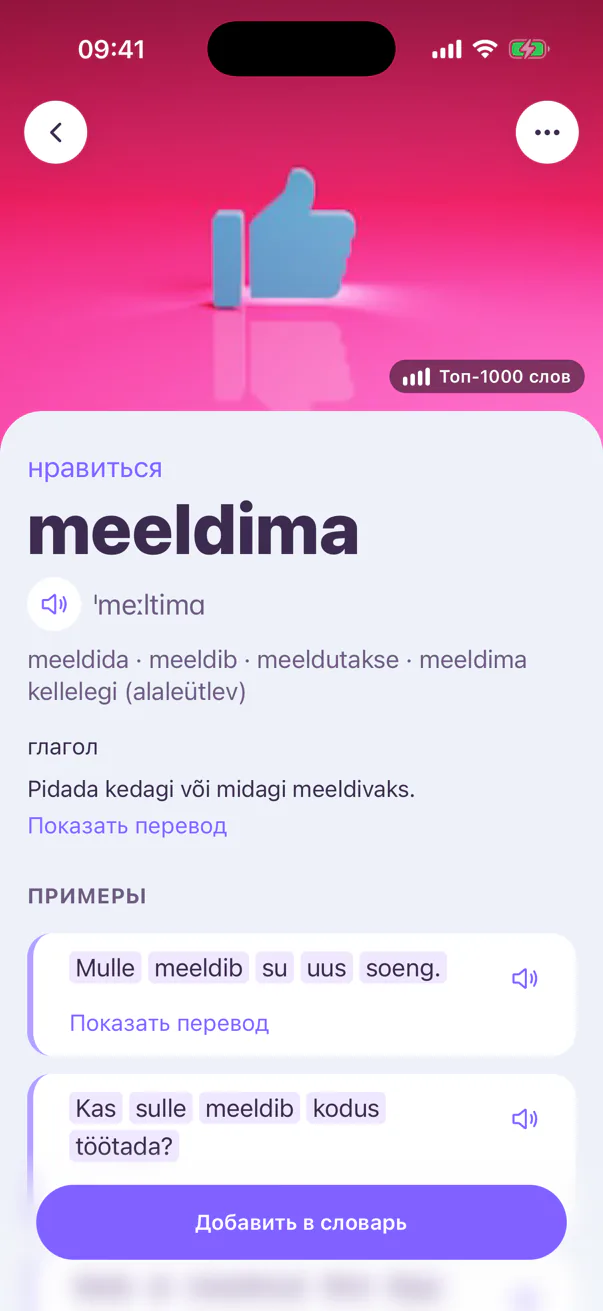
Estonian nouns show their principal parts as in the EKI dictionary, with the stem changes, and the “where to / where / where from” forms: käsi · käe · kätt · käsi · kätte · käes · käest. Verbs show the da-infinitive, the 3rd person and the impersonal — plus the past for irregular verbs — and the case they take: meeldida · meeldib · meeldutakse · meeldima kellelegi (alaleütlev).

Estonian: principal parts and “where to / where / where from”
14

Latvian: gender, declension and verb forms

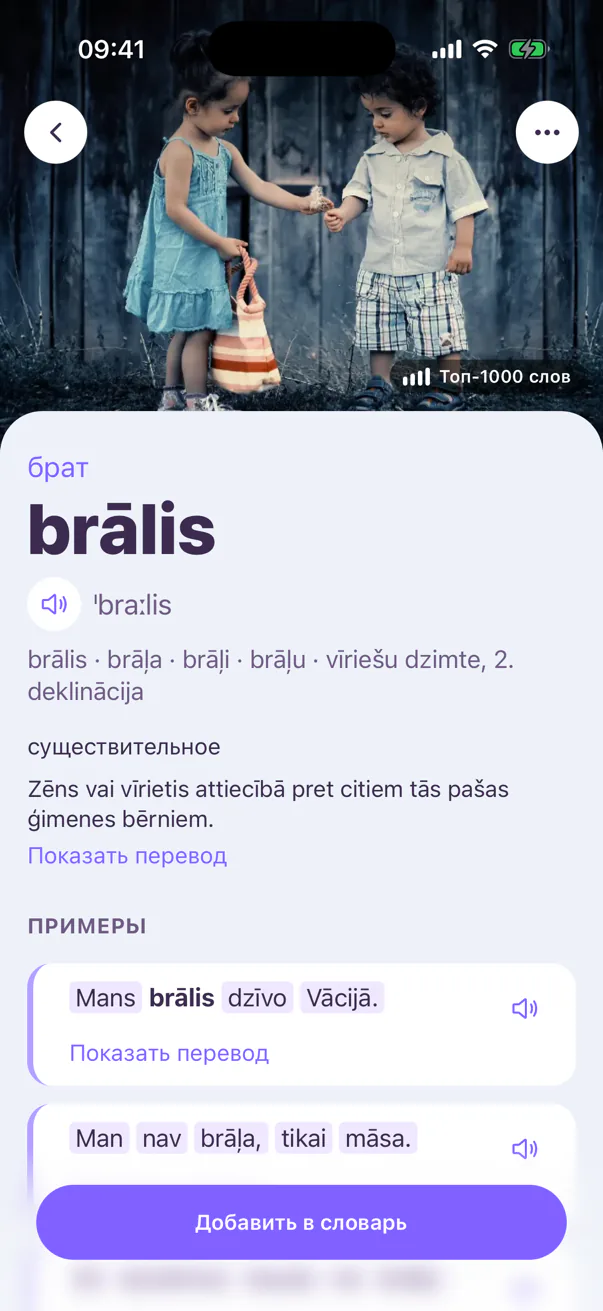
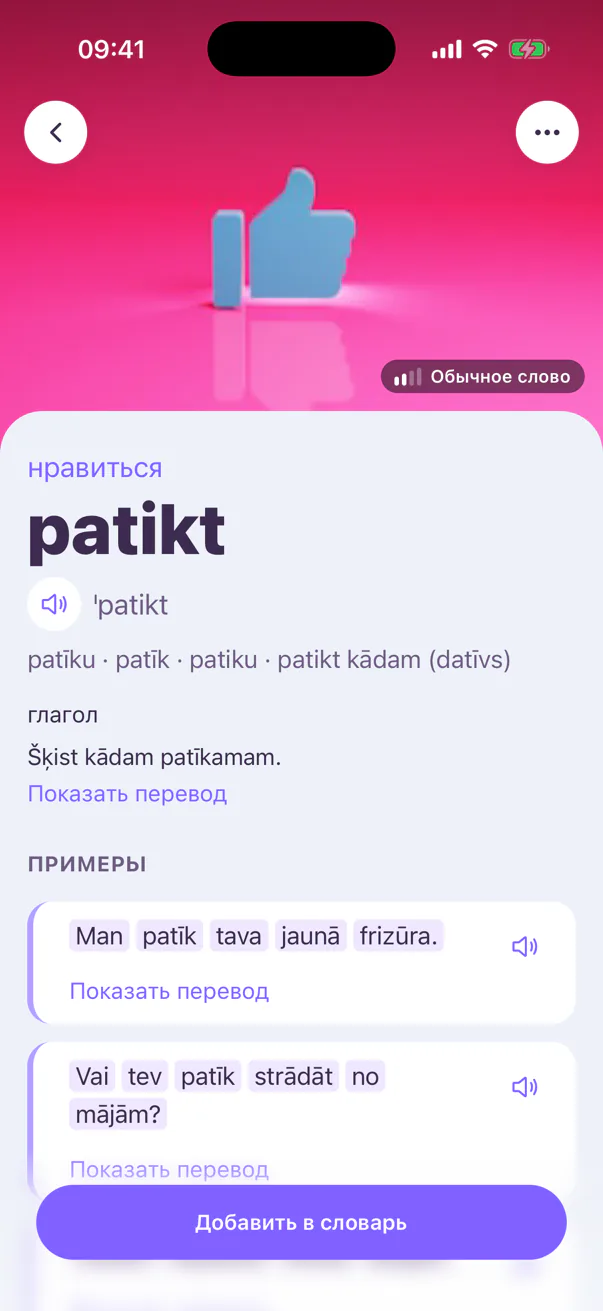
Latvian nouns show the genitive, the plural, the gender and the declension, plus the genitive plural where the consonant changes: brālis · brāļa · brāļi · brāļu · vīriešu dzimte, 2. deklinācija. Adjectives show the definite form (labs · laba · labais · labā), and verbs their key forms and the case they take: patīku · patīk · patiku · patikt kādam (datīvs).

Latvian: gender, declension and verb forms