How is the word stumpf translated from German to English
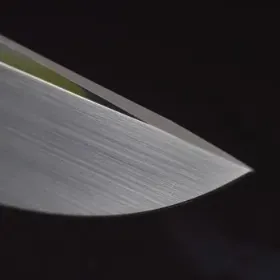
Nicht scharf; mit einer abgenutzten Schneide oder Spitze.
Not sharp, having a dull edge or point.
Couldn’t load the audio. Please try again.

Nicht scharf; mit einer abgenutzten Schneide oder Spitze.
Not sharp, having a dull edge or point.
Couldn’t load the audio. Please try again.

See how the word “stumpf” is used in sentences
Dieses Messer ist zu stumpf, um richtig zu schneiden. — This knife is too blunt to cut properly.
Ich schätze deine unverblümte Rückmeldung zu meiner Arbeit. — I appreciate your blunt feedback on my work.
Bitte stumpfe das Messer ab, bevor du es für das Gemüse verwendest. — Please blunt the knife before using it on the vegetables.
Könntest du mir die stumpfe Schere reichen? — Could you pass me the blunt scissors?
Kannst du die Probleme etwas unverblümter ansprechen? — Can you be a bit more blunt about the issues?
Ich wollte meine Kritik nicht abschwächen; ich wollte nur helfen. — I didn’t mean to blunt my criticism; I just wanted to help.
Ich fand einen stumpfen Bleistift in der Schublade. — I found a blunt pencil in the drawer.
Seine unverblümte Art überraschte alle bei der Besprechung. — His blunt manner surprised everyone at the meeting.
Er bemüht sich, die negativen Auswirkungen schlechter Nachrichten abzumildern. — He works to blunt the negative effects of bad news.
Check the words you know.
words — the estimated size of your passive German vocabulary
An app for learning foreign words
Download the app for free German vocabulary testYour own vocabulary
Learn the words you actually need
A ready-made word card
Translation, examples and audio appear on their own
We help you not forget
We bring words back to practice at the right moment
Add real-life words — VibeLing reinforces them until they become automatic.
Add “stumpf” to your vocabulary and learn it with translation, audio and spaced repetition — right in the app.